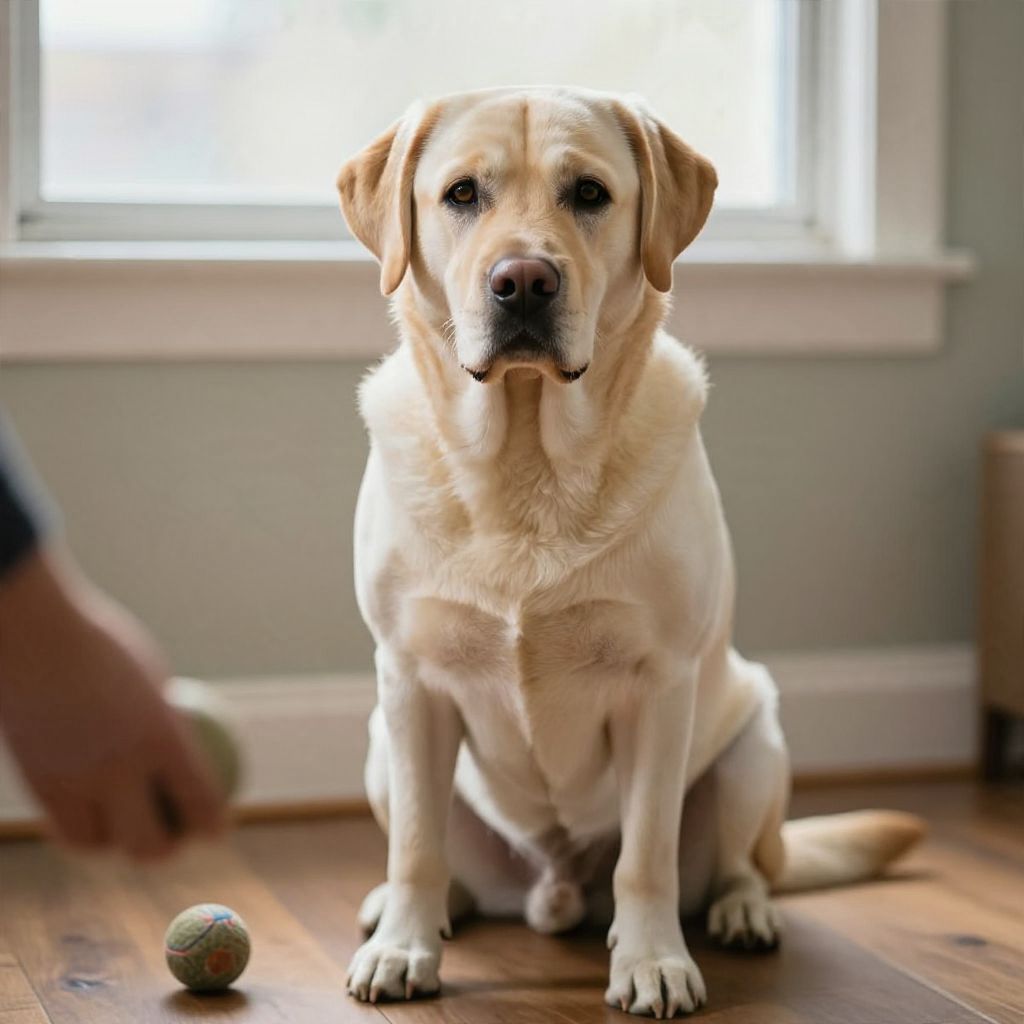
How dogs see the world is different from how people do, but not in a simple “black-and-white” way. Dogs rely heavily on motion, contrast, smell, and hearing, and their vision is built for noticing movement and seeing well in lower light.
Understanding your dog’s vision can help you choose safer toys, improve training, and notice when eye problems may be affecting behavior. It also explains why your dog may react to things you barely notice.
How Dogs See The World?
Dogs see the world with less color detail and sharper motion sensitivity than humans. They are generally better at spotting movement, especially in dim light, but they do not see fine detail as clearly. Their vision works best when combined with smell and hearing, which shape how they explore and understand their surroundings.
What A Dog’s Vision Is Good At
Dogs are often excellent at noticing movement. That is one reason a dog may spot a squirrel, a tossed ball, or a person approaching before you do.
They also tend to do well in lower light than people. This does not mean they see perfectly in the dark, but they usually have an advantage when lighting is dim.
Why motion matters so much
- Moving objects are easier for dogs to detect than still ones.
- Quick gestures can be more noticeable than small visual details.
- Training hand signals often work well because dogs are tuned in to movement.
Why contrast can matter
Dogs may notice high-contrast shapes more easily than subtle color differences. Toys, bowls, and training tools that stand out from the floor or grass can be easier for your dog to track.
What Dogs Do Not See As Well
Dogs usually do not see the same range of colors or the same level of detail that humans do. That means a bright-looking object to you may blend in more for your dog, depending on the background.
They also may have a narrower field of sharp focus than people. A dog can still be very visually aware, but their world is often less crisp and more movement-based.
Common visual differences
- Less color detail: Dogs do not see the full rainbow the way humans do.
- Less fine detail: Small objects at a distance may be harder to distinguish.
- Different depth perception: Distance judgment can vary by individual and situation.
How Color Affects What Dogs Notice
Color vision in dogs is limited compared with human vision, so some colors are easier for them to distinguish than others. This matters most when you are choosing toys, training equipment, or items you want your dog to find quickly.
For practical purposes, strong contrast often matters more than “bright” color. A toy that stands out against grass, snow, carpet, or pavement is usually easier for your dog to see than one that blends in.
- Choose toys that contrast with the environment.
- Use a consistent color for training markers or fetch toys.
- Try to avoid tiny, low-contrast objects during play.
If you want a deeper look at color perception, you may find this guide to colors dogs can see helpful.
How Dogs Use Their Other Senses To Make Sense Of The World
Vision is only one part of how dogs understand their surroundings. Smell is often the most important sense for dogs, and hearing also plays a major role in how they respond to people, animals, and changes in the environment.
This is why a dog may seem to “know” something before you do. They may be picking up scent changes, distant sounds, or subtle movement long before you notice anything unusual.
What this means in daily life
- Your dog may investigate with their nose before looking closely.
- They may react to sounds you cannot hear.
- They may recognize familiar people by scent and movement, not just appearance.
How Age, Breed, And Health Can Change Vision
Not every dog sees the world the same way. Age, breed tendencies, eye health, and overall wellness can all affect how well a dog sees and how they behave in different settings.
Puppies
Puppies are still learning how to interpret the world. Their vision is developing, so they may be clumsy, startled by new things, or slow to judge distance at first.
Gentle socialization helps puppies build confidence. Keep experiences positive, brief, and safe so they can learn without becoming overwhelmed.
Adult dogs
Most adult dogs rely on a stable mix of vision, scent, and hearing. If your dog suddenly seems unsure in familiar places, bumping into things or hesitating on stairs, that change deserves attention.
Senior dogs
Older dogs may develop cloudiness, reduced night vision, or slower visual processing. Some changes are gradual, so you may first notice hesitation in dim rooms, on walks at dusk, or around furniture.
If you suspect vision changes, a veterinarian can check for treatable issues and help you adjust your home safely.
Breed and individual differences
Some dogs may be more visually focused than others, but breed alone does not tell the whole story. Body shape, facial structure, eye position, and individual health can all affect vision and how a dog uses it.
Flat-faced dogs, for example, may have different visual challenges than dogs with longer muzzles, but each dog is an individual. Your veterinarian can help you understand your dog’s specific needs.
Signs Your Dog May Not Be Seeing Well
Vision problems can be subtle at first. Some dogs adapt well by relying more on smell and hearing, so changes may show up as behavior shifts rather than obvious eye trouble.
- Bumping into furniture or door frames
- Hesitating on stairs or curbs
- Startling easily when approached
- Reluctance to go out in dim light
- Missing toys, treats, or hand signals
- Cloudy, red, watery, or squinting eyes
- Rubbing the face or pawing at the eyes
Seek prompt veterinary care if your dog has sudden vision loss, a painful eye, a swollen eye, a very red eye, or a sudden change in behavior linked to sight. Eye problems can become urgent quickly.
How To Help Your Dog Navigate The World More Easily
You can make daily life easier by matching your home and routine to how dogs actually see. Small changes can reduce stress and help your dog feel more confident.
- Keep pathways clear. Avoid clutter, low obstacles, and sharp edges in common walking routes.
- Use contrast. Pick bowls, toys, and mats that stand out from the floor.
- Improve lighting. Add night lights to hallways, stairs, and doorways if your dog is older or hesitant in the dark.
- Use consistent cues. Pair hand signals with verbal cues so your dog can learn through more than one sense.
- Approach calmly. Let your dog see or hear you before touching them, especially if their vision may be reduced.
- Keep routines predictable. Predictability helps dogs feel secure when they cannot rely on clear visual detail.
Training Tips Based On How Dogs See
Because dogs are sensitive to movement and contrast, training can be more effective when you make visual cues easy to read. This is especially helpful for puppies, shy dogs, and dogs with reduced vision.
Helpful training choices
- Use large, clear hand signals.
- Stand where your dog can see you without distractions.
- Reward the behavior you want right away.
- Keep sessions short and calm.
- Use a consistent marker word or sound.
If your dog seems confused by visual cues, do not assume they are being stubborn. They may need a different setup, better lighting, closer distance, or a veterinary eye exam.
Common Mistakes People Make
Many owners expect dogs to see like humans and then misread normal dog behavior. That can lead to frustration or unsafe choices.
- Using toys that blend into the background
- Approaching from behind without warning
- Assuming a dog “ignored” a cue when they may not have seen it
- Waiting too long to check eye changes
- Forcing a nervous dog into unfamiliar spaces without support
When you understand your dog’s visual world, you can set them up for success instead of expecting human-style vision.
When To Call A Veterinarian
Any sudden change in your dog’s vision or eye comfort should be taken seriously. Some eye conditions can worsen quickly and may threaten sight if not treated promptly.
Contact your veterinarian soon if you notice persistent squinting, discharge, cloudiness, redness, frequent blinking, head tilting, or trouble moving around familiar spaces. If the eye looks injured, painful, or suddenly different, do not wait.
Emergency signs include sudden blindness, a bulging eye, severe swelling, bleeding, or a dog that seems distressed and cannot open the eye.
Conclusion
How dogs see the world is shaped by motion, contrast, and low-light awareness more than by fine detail or color. When you choose safer toys, clear training cues, and a clutter-free home, you make life easier for your dog and help them feel more confident every day.
For more related reading, you may also like how dogs see humans.