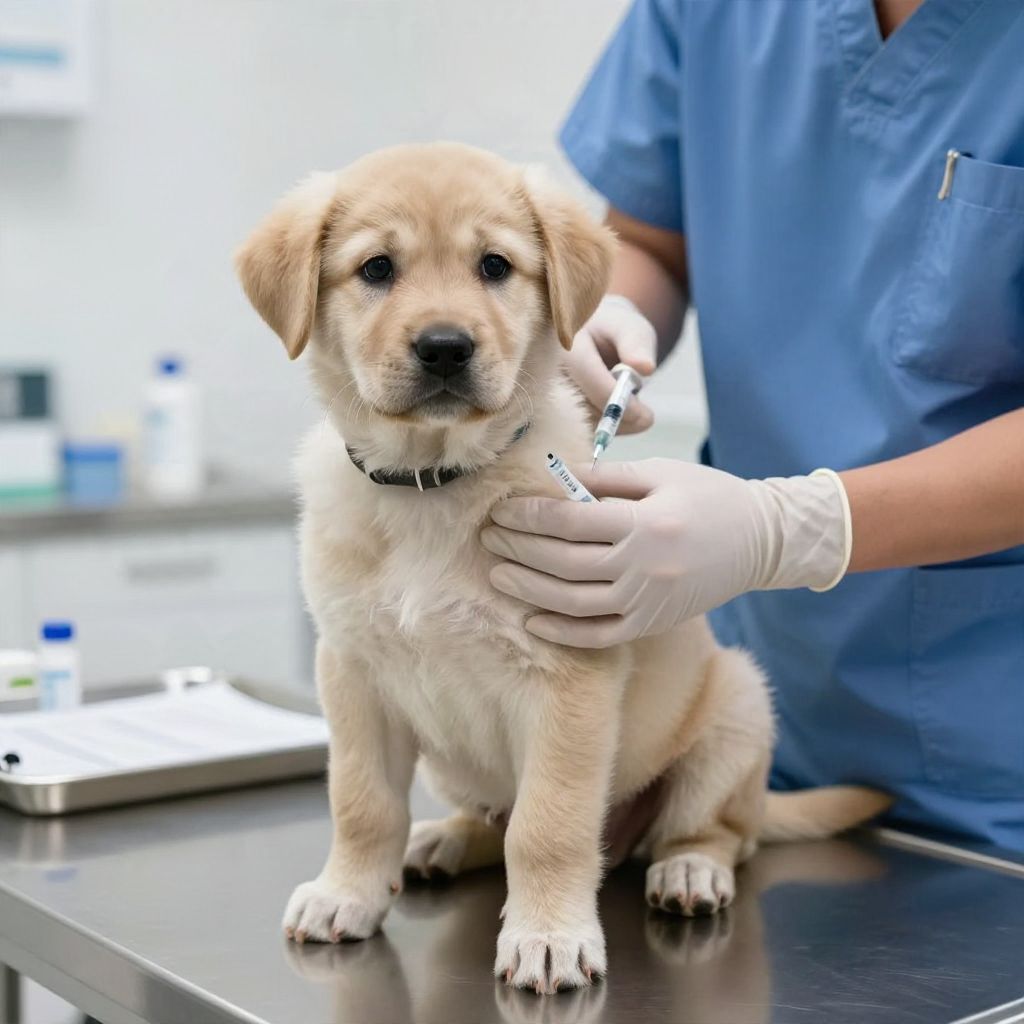
If you’re asking when puppies get a rabies shot, the timing usually depends on local law and your veterinarian’s guidance. In many places, puppies receive their first rabies vaccine at about 12 to 16 weeks of age, but exact timing can vary.
Rabies vaccination is a key part of puppy health and public safety. Your vet can help you follow the right schedule for your area, your puppy’s age, and any health concerns.
When do puppies get rabies shot?
Most puppies get their first rabies shot at 12 to 16 weeks of age, though some regions set a specific minimum age by law. Your veterinarian will tell you the correct timing for your puppy and whether a booster is needed later based on local rules.
Why rabies vaccination matters
Rabies is a serious, almost always fatal disease that affects mammals, including dogs and people. Vaccinating puppies helps protect your dog, your household, and your community.
Because rabies is a public health concern, many areas require proof of vaccination for dogs. That means the schedule is not just about convenience; it is also about legal compliance and safety.
Typical puppy rabies vaccine timing
Your puppy’s vaccine schedule often starts with a series of core puppy shots, then the rabies vaccine is added when your puppy is old enough.
- Before rabies age: Puppies usually receive distemper/parvovirus combination vaccines first.
- Rabies age: The first rabies shot is commonly given around 12 to 16 weeks.
- Booster timing: A follow-up rabies vaccine is often needed later, depending on local law and the product used.
Some veterinarians may adjust the schedule if your puppy is ill, underweight, or recovering from another medical issue. Breed alone usually does not determine rabies timing, but individual health can.
What affects the schedule?
Several factors can change exactly when your puppy gets vaccinated.
Local laws and clinic policy
Rabies vaccination requirements vary by country, state, province, and city. Some places require the first shot at a specific age and require a certificate from a licensed veterinarian.
Your puppy’s health
If your puppy has a fever, vomiting, diarrhea, a significant infection, or another illness, your vet may postpone vaccination until your puppy is stable. A healthy immune response matters.
Exposure risk and lifestyle
Puppies that may encounter wildlife, stray animals, or outdoor environments still need rabies protection on schedule. Even indoor dogs can be exposed if a bat or wild animal gets inside.
Vaccine product and booster rules
Some rabies vaccines are labeled for one year, while others are approved for longer intervals where local law allows. Your vet will know which schedule applies to your puppy.
What to expect at the rabies appointment
The visit is usually straightforward. Your veterinarian will confirm your puppy’s age, review health history, and give the vaccine as an injection.
- Bring any previous vaccine records.
- Tell the vet about recent illness, medications, or reactions to shots.
- Ask for a rabies certificate if your area requires one.
Most puppies handle the appointment well. Mild soreness or sleepiness for a short time can happen after any vaccine, but severe reactions are not normal.
Possible side effects and warning signs
Most vaccine side effects are mild and temporary. Still, you should know what is normal and what needs urgent veterinary attention.
Common mild reactions
- Brief tenderness at the injection site
- Low energy for the rest of the day
- Mild decrease in appetite
Call your veterinarian promptly if you notice
- Swelling that keeps getting larger
- Repeated vomiting or diarrhea
- Persistent lethargy
- Hives, facial swelling, or intense itching
Seek emergency veterinary care now if your puppy has
- Difficulty breathing
- Collapse or fainting
- Seizures
- Severe swelling of the face or throat
These signs can indicate a serious allergic reaction or another urgent problem. Do not wait to see if they improve on their own.
What if your puppy missed the rabies shot?
If your puppy is past the recommended age, contact your veterinarian as soon as possible. The vaccine can often still be given, but your vet may need to confirm the safest timing and help you meet legal requirements.
Do not assume your puppy is protected just because earlier puppy shots were completed. Rabies vaccination is separate from the standard puppy series.
How rabies fits into the full puppy vaccine schedule
Many owners ask about rabies because it comes alongside other important puppy vaccines. The exact schedule varies, but the goal is the same: build protection during the first months of life.
- Core puppy vaccines: Commonly start in early puppyhood and are repeated in a series.
- Rabies vaccine: Usually added once the puppy reaches the legal minimum age.
- Boosters: Needed later according to your vet and local regulations.
If you want a broader look at timing for the rest of the puppy series, you may also find this guide useful: when puppies get shots.
Common mistakes to avoid
Rabies prevention is simple, but a few avoidable errors can create problems.
- Waiting too long: Delaying the shot can leave your puppy unprotected and may break local compliance rules.
- Assuming indoor dogs do not need it: Indoor pets can still be exposed to rabies vectors like bats.
- Skipping records: Keep vaccine paperwork in a safe place for licensing, boarding, or travel.
- Ignoring illness: Tell your vet about any current health issue before vaccination.
Special situations to discuss with your vet
Some puppies need a more individualized plan. This does not mean they cannot be vaccinated, but it does mean your vet should guide the timing.
Very small or medically fragile puppies
A puppy that is under the weather, recovering from surgery, or dealing with another condition may need a short delay. Your vet will balance protection with overall health.
Puppies with prior vaccine reactions
If a previous vaccine caused hives, facial swelling, or breathing trouble, tell your veterinarian before the next appointment. Your vet may recommend extra monitoring or a modified plan.
Travel, boarding, or relocation
Some facilities require proof of rabies vaccination before they will accept a dog. If you are planning travel, ask early so you are not rushed by deadlines.
Practical steps for you as a puppy owner
- Ask your veterinarian when your puppy is old enough for the first rabies shot.
- Confirm whether your area has a legal minimum age or booster interval.
- Keep your puppy’s vaccine record in one easy-to-find place.
- Watch for unusual reactions after the appointment.
- Schedule boosters on time so protection stays current.
When to contact a veterinarian right away
Reach out promptly if your puppy is overdue for rabies vaccination, has had a possible rabies exposure, or is showing concerning symptoms after a vaccine. If a wild animal or bat may have bitten or scratched your puppy, treat it as urgent and call your vet immediately.
Because rabies is so serious, exposure concerns should never be handled casually. Your veterinarian can advise you on the next steps based on local public health guidance.
Bottom line
Puppies usually get their first rabies shot at about 12 to 16 weeks of age, but local laws and your veterinarian’s advice determine the exact timing. Stay on schedule, keep records, and call your vet if your puppy is ill, overdue, or has any concerning reaction.
If you want more help with rabies timing and boosters, you can also read about how often dogs get rabies shots.