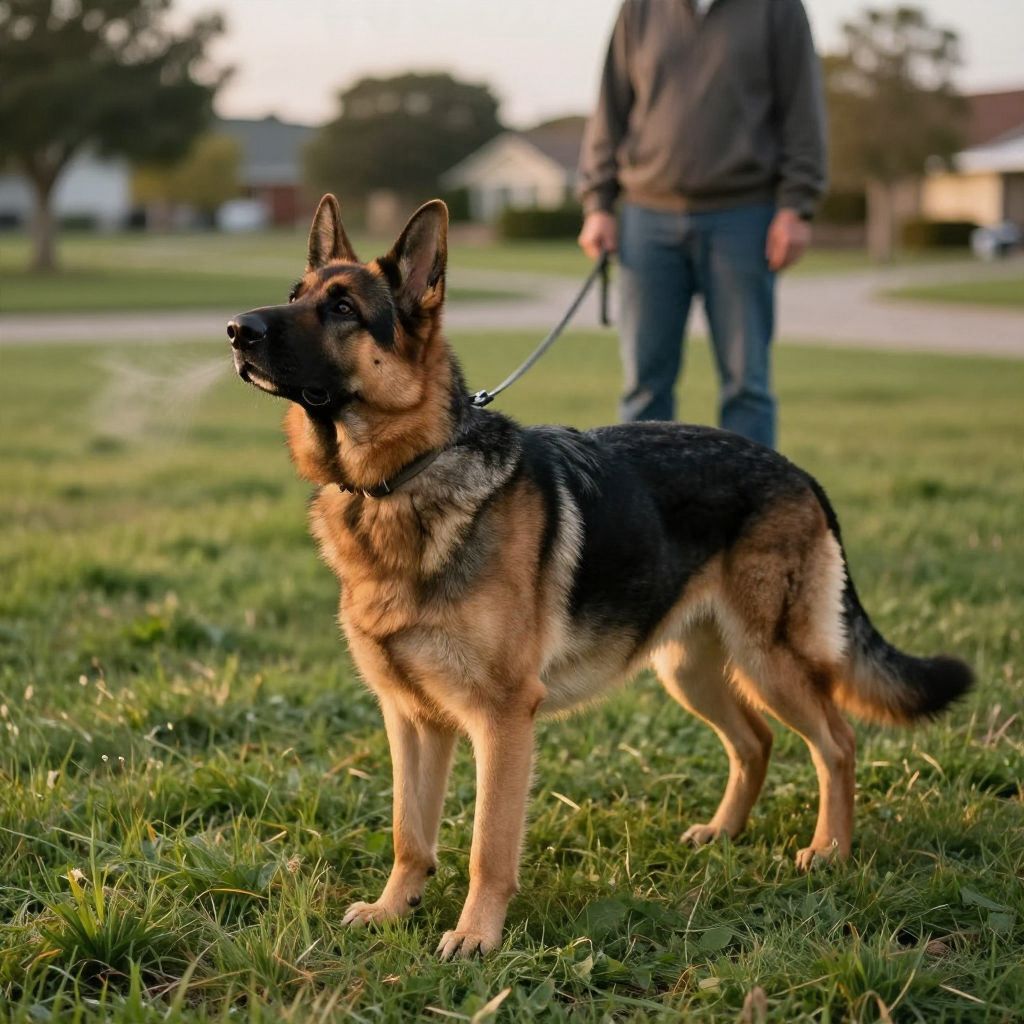
How far can dogs smell? In many everyday situations, dogs can detect odors far beyond human ability, sometimes from surprising distances depending on wind, scent strength, and the environment. There is no single exact number that applies to every dog or every smell.
A dog’s nose is highly sensitive, but real-world scent detection changes with breed, age, health, training, and weather. If you want to understand what your dog can smell, it helps to think in terms of scent conditions rather than a fixed distance.
How far can dogs smell?
Dogs can often smell much farther than people can, but the exact distance depends on the odor, airflow, and the dog itself. Strong scents may travel hundreds of yards or more outdoors, while faint or masked odors may be detectable only nearby. There is no universal distance that applies to all dogs.
What affects how far a dog can smell?
Several factors shape scent detection. A dog may notice a smell at a much greater distance on a windy day than in still air, and some odors carry better than others.
- Scent strength: Stronger odors are easier to detect from farther away.
- Wind and airflow: Moving air can carry scent trails over long distances.
- Humidity and temperature: Moist air often helps odors linger and spread.
- Terrain: Open fields, woods, pavement, and indoor spaces all change how scent moves.
- Dog factors: Breed tendencies, age, health, and training can all matter.
That means a hunting or scent-trained dog may appear “better” at smelling than a pet dog, but many companion dogs still have excellent noses. Individual variation is normal.
How a dog’s nose works
Dogs do not just “smell better” than humans; they process odor differently. Their noses are built to separate and analyze scent particles in a way that helps them track, identify, and follow smells.
Why dogs notice smells humans miss
Dogs can detect tiny scent traces that people would never notice. They also spend a lot of time gathering information through smell, which makes scent a major part of how they explore the world.
That is why your dog may stop suddenly on a walk, pull toward a patch of grass, or seem to know that another animal passed by earlier. To your dog, the environment is full of information.
Does breed change how far dogs can smell?
Breed can influence scenting ability, but it does not guarantee a specific result. Some breeds are commonly bred for tracking, hunting, or scent work, while others may be less specialized. Still, any healthy dog can have a strong nose.
- Scent hounds are often known for strong tracking instincts.
- Working and sport dogs may excel when trained for scent tasks.
- Companion breeds may be less specialized, but can still detect odors well.
What matters most is the individual dog, not just the breed label. A mixed-breed dog with good motivation and training can outperform a purebred dog that is less interested or less practiced.
How age and health affect smell
Your dog’s sense of smell can change over time. Puppies are still developing, and senior dogs may lose some scent sensitivity as they age. Health issues can also reduce smell temporarily or long term.
Common reasons smell may be weaker
- Nasal congestion from illness
- Dental disease or mouth pain
- Allergies or inflammation
- Injury to the nose
- Age-related changes
If your dog suddenly seems unable to smell food, ignores familiar scents, or has discharge, sneezing, or breathing changes, check with a veterinarian. Sudden loss of smell can be a sign of an underlying medical problem.
How far can dogs smell food, people, and other animals?
The answer depends on the scent source. Food smells may travel well, especially if they are strong or warm. People and other animals also leave scent trails that can linger on clothing, grass, furniture, and pavement.
- Food: Often easy for dogs to detect, especially if it is aromatic.
- People: Dogs may recognize a person by scent from a surprising distance or by a trail they left behind.
- Other animals: Dogs can often detect another dog or wildlife through scent marks and body odors.
Outdoor conditions matter a lot. A smell may travel much farther across a breezy yard than inside a closed home.
Why your dog smells things you cannot
Your dog is not being nosy for no reason. Smelling is how dogs gather information about food, safety, territory, and social contact. A single sniff can tell a dog a great deal about what happened in an area.
That is also why some dogs pause to sniff for a long time on walks. Sniffing is mentally enriching and can be a healthy part of exercise when you allow time for it.
Helpful ways to support natural sniffing
- Let your dog sniff during walks when it is safe to do so.
- Use short scent games at home, such as hiding treats in easy places.
- Rotate enrichment toys to keep your dog engaged.
- Give your dog time to explore new environments at a comfortable pace.
When scent ability matters for safety
Because dogs can detect odors so well, they may find food, chemicals, trash, or wildlife before you notice them. This can be helpful, but it can also create risk if your dog investigates something dangerous.
Watch closely outdoors and in unfamiliar places. A dog following a scent trail may ignore recall, pull toward hazards, or try to eat something unsafe.
Red flags that need urgent veterinary care
- Difficulty breathing
- Swelling of the face or muzzle
- Repeated vomiting after exposure to a substance
- Collapse, severe lethargy, or disorientation
- Bleeding from the nose that does not stop
- Sudden severe coughing, gagging, or choking
If your dog may have inhaled, eaten, or touched a harmful substance, contact a veterinarian or pet poison resource right away. Do not wait for symptoms to worsen.
How to use your dog’s nose in a healthy way
You can turn your dog’s strong sense of smell into a positive outlet. Sniffing games, scent walks, and simple training exercises can provide mental stimulation without needing intense physical exercise.
Easy scent-based activities
- Find it: Hide treats or kibble in easy spots and let your dog search.
- Sniff walks: Allow extra time for your dog to explore on leash.
- Box search: Place treats in one of several boxes and let your dog choose.
- Scatter feeding: Toss part of a meal in grass or on a snuffle mat if appropriate.
Keep these activities simple at first so your dog stays successful and confident. If your dog becomes frustrated, make the task easier.
Common mistakes people make about dog smell
One common mistake is assuming all dogs smell equally well all the time. Another is thinking a dog’s nose should never change with age or illness. In reality, scent ability varies and can be affected by health and environment.
- Expecting one exact smell distance for every dog
- Ignoring nasal or dental problems that affect scenting
- Using punishment when a dog follows a scent
- Overlooking safety risks around food, trash, or chemicals
If your dog seems unusually distracted by smells, that may be normal. If the change is sudden or comes with other symptoms, it deserves veterinary attention.
When to ask a veterinarian or trainer for help
Talk to a veterinarian if your dog’s sense of smell seems to have changed noticeably, especially if there is sneezing, discharge, nosebleeds, appetite loss, or breathing trouble. A veterinary exam can help identify whether the issue is medical.
If scent-related behavior is causing training problems, a certified trainer or veterinary behaviorist can help you build better management and recall skills using reward-based methods. That is especially useful for dogs who ignore cues because they are overwhelmed by smells outdoors.
Bottom line
How far can dogs smell? Farther than people can, but not by one fixed distance. The real answer depends on the scent, the weather, the environment, and your individual dog. Support your dog’s nose with safe sniffing opportunities, and get veterinary help if smell changes suddenly or comes with other symptoms.
If you want to understand more about how dogs gather information from the world around them, you may also enjoy why dogs sniff butts and how dogs see the world.