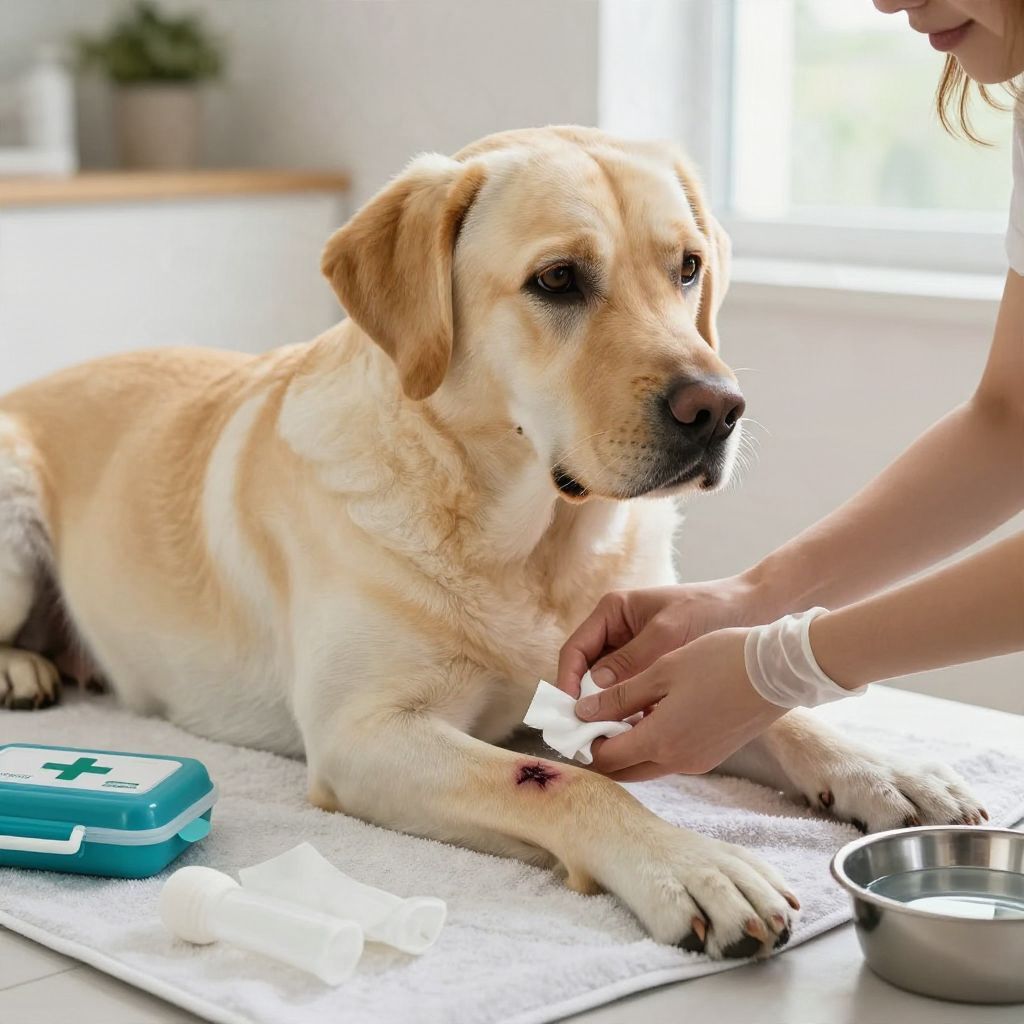
If your dog has a wound, the first goal is to stop bleeding and gently clean the area without making it worse. Most minor cuts and scrapes can be managed at home at first, but deep, dirty, puncture, or rapidly worsening wounds need a veterinarian.
Knowing how to clean a dog wound safely helps lower the risk of infection and lets you judge whether your dog needs urgent care. Use calm handling, clean supplies, and watch closely for swelling, discharge, pain, or any sign the injury is more serious than it looks.
How To Clean A Dog Wound?
To clean a dog wound, first calm and safely restrain your dog, then gently rinse the area with clean lukewarm water or sterile saline. Remove visible dirt with clean gauze, avoid harsh chemicals, and keep the wound from being licked. If the wound is deep, bleeding heavily, or contaminated, contact a veterinarian right away.
What You Need Before You Start
Gather everything first so you do not have to leave your dog mid-treatment. If your dog is painful, anxious, or likely to snap, stop and get help from a veterinarian or trained assistant.
- Clean gauze pads or a clean, lint-free cloth
- Sterile saline or clean lukewarm water
- Disposable gloves, if available
- Pet-safe antiseptic only if your veterinarian has recommended one
- A towel to help safely restrain or dry your dog
- An e-collar or cone if your dog keeps licking the area
Step-by-Step: How To Clean A Dog Wound Safely
- Keep your dog calm and still. Speak softly and use gentle restraint. If needed, have another person help hold your dog in a comfortable position.
- Check the wound first. Look for heavy bleeding, deep gaping edges, embedded objects, punctures, swelling, or anything that suggests urgent veterinary care.
- Stop active bleeding. Apply steady, gentle pressure with clean gauze for several minutes. Do not keep lifting the gauze to check too often.
- Rinse the wound. Flush away dirt and debris with sterile saline or clean lukewarm water. A gentle stream is better than scrubbing.
- Clean around the wound. If fur or skin around the injury is dirty, wipe the surrounding area carefully with gauze. Avoid rubbing the wound bed itself.
- Dry lightly if needed. Pat the area with clean gauze. Do not use rough towels or vigorous rubbing.
- Protect the wound. If the wound is in a place that gets rubbed or dirtied easily, ask your veterinarian whether a light bandage is appropriate. Bandages that are too tight or left on too long can cause problems.
- Prevent licking and chewing. Use an e-collar if necessary. Licking can introduce bacteria and delay healing.
What You Should Not Use On A Dog Wound
Some common household products can irritate tissue or slow healing. When in doubt, plain saline or clean water is the safest first rinse while you arrange veterinary advice.
- Hydrogen peroxide
- Rubbing alcohol
- Powdered products that can cake into the wound
- Human pain relievers or antibiotic creams unless your veterinarian specifically says they are safe
- Essential oils or home remedies that may sting or be toxic if licked
Do not try to close the wound with tape, glue, or improvised materials. If the cut is open enough to need closure, a veterinarian should decide how to treat it.
When A Dog Wound Needs A Veterinarian Right Away
Some injuries should not be managed at home. Get urgent veterinary care if you see any of the following:
- Bleeding that does not stop with direct pressure
- A deep wound, gaping edges, or exposed tissue
- Puncture wounds, especially from bites or sharp objects
- Foreign material stuck in the wound
- Swelling, heat, pus, bad odor, or increasing redness
- Lameness, severe pain, or your dog refusing to bear weight
- Wounds near the eye, mouth, genitals, joints, or chest
- Signs of shock such as weakness, pale gums, collapse, or rapid breathing
If the wound was caused by a bite, assume infection risk is high even if the skin opening looks small. Bites often seal over on the outside while trapping bacteria underneath.
How To Tell If A Wound Is Healing Normally
A minor wound should usually become less painful, less red, and less swollen over time. Your dog should be more comfortable, not less, as the days pass.
- Small amounts of clear fluid may be normal early on
- Scabbing can happen as skin closes
- Redness should gradually fade, not spread
- Swelling should decrease, not increase
Call your veterinarian if the wound looks worse after cleaning, starts draining yellow or green material, smells unpleasant, or your dog becomes more bothered by it.
Special Considerations For Puppies, Seniors, And Dogs With Health Issues
Age and health can change how a wound heals. A puppy may be harder to restrain safely, while a senior dog may have thinner skin or slower recovery. Dogs with diabetes, immune disease, skin allergies, or poor circulation may need closer veterinary monitoring.
Puppies
Puppies can be wriggly and may lick or chew at wounds quickly. Use extra caution with restraint, and do not assume a small wound is harmless just because your puppy seems energetic.
Senior dogs
Older dogs may have arthritis or mobility issues that make bandaging and cleaning more stressful. Keep handling brief and gentle, and ask your veterinarian if a wound check is needed sooner rather than later.
Dogs with long coats or skin folds
Long fur can hide debris and moisture, and skin folds can trap bacteria. You may need to trim fur around the area carefully, but if you are unsure, let a veterinary professional do it to avoid accidental cuts.
Common Mistakes To Avoid
- Waiting too long because the wound “does not look that bad”
- Scrubbing aggressively and damaging healthy tissue
- Using harsh disinfectants that sting or irritate
- Skipping the cone when your dog keeps licking
- Wrapping a bandage too tightly
- Ignoring bite wounds, punctures, or wounds that keep reopening
Even a small wound can become infected if it is dirty, repeatedly licked, or located in an area that moves a lot, such as a paw or joint.
Aftercare: Keeping The Wound Clean While It Heals
After the first cleaning, the main job is to keep the area protected and monitor it closely. Follow your veterinarian’s instructions if they give you specific wound-care directions.
- Check the wound at least once or twice daily
- Keep your dog from swimming, rolling in dirt, or playing roughly
- Replace any dressing only as instructed
- Keep the area dry unless your veterinarian says otherwise
- Watch for licking, chewing, or scratching
If your dog needs medication or a bandage from the vet, use it exactly as directed. Do not stop treatment early just because the wound looks better on the surface.
When To Follow Up With Your Veterinarian
Schedule a follow-up if the wound is not clearly improving within a couple of days, if your dog seems painful, or if you are unsure whether the injury needs stitches, antibiotics, or drainage. A vet visit is also wise if the wound was caused by a fight, a fall, or something sharp and dirty.
Practical Bottom Line
To clean a dog wound, use calm restraint, rinse gently with saline or clean water, avoid harsh products, and stop your dog from licking it. If the wound is deep, bleeding heavily, infected, or caused by a bite or puncture, do not rely on home care alone—get veterinary help promptly.
If you want more related dog-care guidance, you may also find it helpful to read about how to remove ticks from dogs and how to treat mange in dogs at home.