
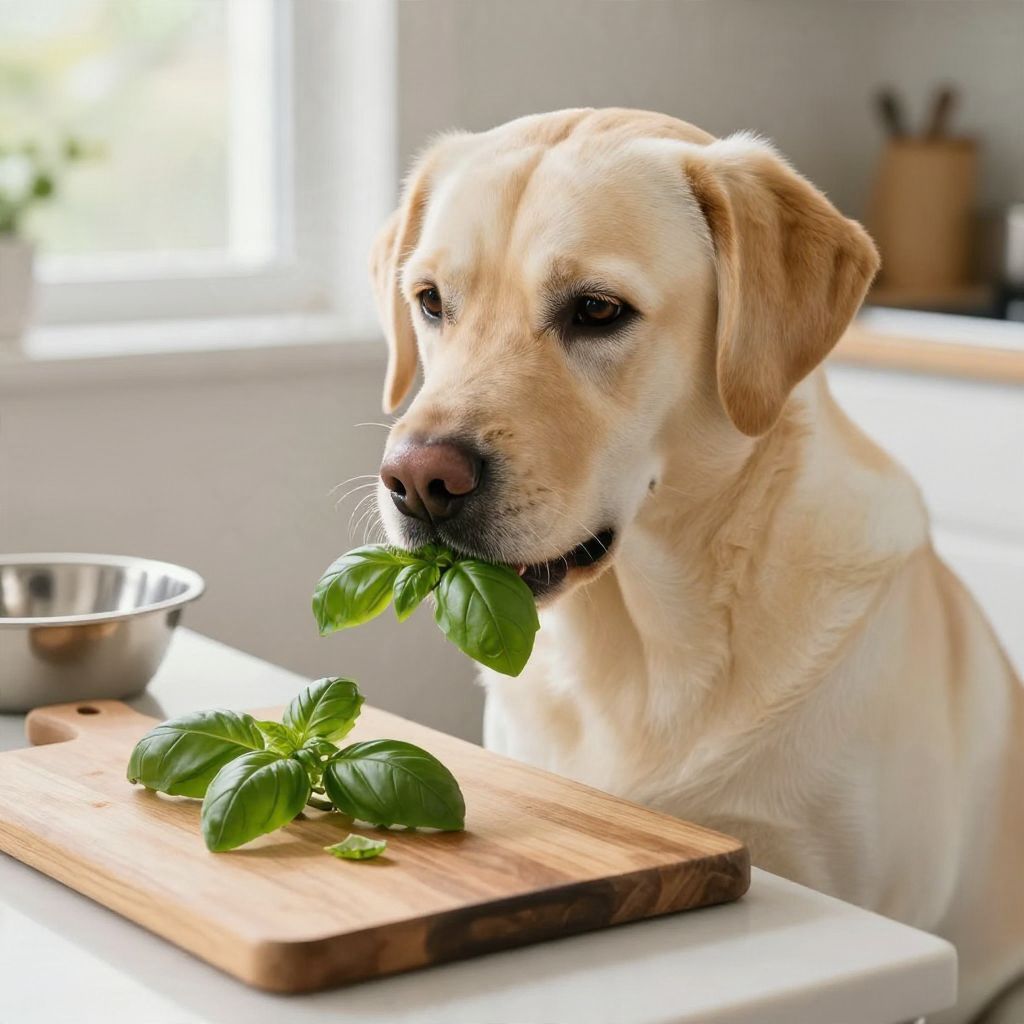
If you’re wondering, “Is basil safe for dogs?” the short answer is usually yes in small amounts. Fresh basil is generally not toxic to dogs and may be used as an occasional garnish or treat, but it should not replace a balanced diet.
The main concerns are portion size, added ingredients, and your dog’s individual health. Basil-flavored foods, pesto, and seasoned dishes can contain garlic, onions, salt, oils, or other ingredients that may be unsafe for dogs.
Is Basil Safe For Dogs?
Yes, plain basil is generally safe for dogs in small amounts. A few fresh leaves or a light sprinkle is usually fine for most healthy dogs, but large amounts can upset the stomach. Avoid basil dishes with garlic, onion, cheese, excess salt, or heavy oils, since those ingredients can be harmful.
What Kind of Basil Is Safe?
Most common culinary basil varieties are the same basic concern for dogs: plain leaves are usually okay, while prepared foods are the bigger risk. The safest option is simple, fresh basil with no seasoning, sauces, or added ingredients.
Safer forms
- Fresh basil leaves, washed well
- A small amount chopped and mixed into food as a topper
- Very limited use as an occasional treat
Forms to avoid
- Pesto
- Basil oil or infused oils
- Restaurant or packaged foods containing basil plus seasoning
- Anything with garlic, onion, chives, or large amounts of salt
Why Basil Can Be a Problem in Some Dishes
Basil itself is not the main danger in many cases. The problem is that basil is often paired with ingredients that are unsafe for dogs, especially garlic and onion, which can damage red blood cells. Rich fats and dairy can also trigger digestive upset or pancreatitis in sensitive dogs.
Common hidden risks
- Garlic and onion: toxic to dogs even in some small amounts, depending on the form and the dog
- Salt: too much can cause vomiting, thirst, and more serious problems
- Oil and butter: can be hard on the stomach and add unnecessary fat
- Cheese: may cause digestive upset in dogs that are lactose sensitive
How Much Basil Can Dogs Have?
There is no universal “perfect” amount because dogs vary in size, age, diet, and sensitivity. In general, basil should be treated as an occasional extra, not a regular food. Start with a very small amount and watch for stomach upset, especially if your dog has a sensitive digestive system.
Factors that affect tolerance
- Body size: smaller dogs may react to smaller amounts
- Age: puppies and senior dogs may have more delicate digestion
- Health conditions: dogs with pancreatitis, food sensitivities, or chronic GI issues may do better without it
- Overall diet: treats and extras should stay within a healthy portion of daily calories
Possible Benefits of Basil for Dogs
Basil contains plant compounds and nutrients, but it should not be viewed as a health treatment. Any potential benefit is minor compared with the importance of a complete, balanced dog food. If you want to add variety, basil is best used sparingly and safely.
What basil may offer
- A small amount of flavor enrichment
- Trace vitamins and plant compounds
- A low-calorie topper when used plain
These possible upsides do not make basil necessary. Your dog does not need basil to be healthy.
When Basil Is Not a Good Idea
Even though basil is usually safe, some dogs should avoid it or only have it after checking with a veterinarian. This is especially important if your dog has a history of stomach sensitivity or a medical condition that affects digestion or appetite.
Use extra caution if your dog:
- Has a sensitive stomach or frequent vomiting
- Has had pancreatitis
- Is on a veterinary diet for allergies or GI disease
- Is a puppy with an immature digestive system
- Is a senior dog with multiple health concerns
Signs Your Dog Did Not Tolerate Basil Well
Most dogs that react to basil will have mild digestive signs, but symptoms can vary. Watch your dog closely after trying any new food, even a small amount.
Possible mild signs
- Vomiting
- Loose stool or diarrhea
- Gas
- Reduced appetite
- Temporary drooling or lip licking
Get veterinary help urgently if you notice
- Repeated vomiting
- Severe lethargy
- Abdominal pain or a bloated belly
- Blood in vomit or stool
- Tremors, collapse, or trouble breathing
If your dog ate pesto, a heavily seasoned dish, or a large amount of basil with other ingredients, contact your veterinarian promptly for guidance. Do not wait if your dog seems unwell.
How to Give Basil to Dogs Safely
If your veterinarian says basil is okay for your dog, keep it simple. Plain basil should be offered only as an occasional extra, and it should never make up a meaningful part of the diet.
- Wash the leaves well to remove dirt and residue.
- Offer a tiny amount of plain basil first.
- Watch your dog for digestive upset over the next day.
- Only continue if your dog tolerates it well.
- Keep portions small and infrequent.
Good ways to use it
- Finely chop a leaf or two and mix it into food
- Use it as a tiny garnish on a dog-safe homemade treat
- Pair it with plain, dog-safe ingredients only
Foods With Basil That Dogs Should Avoid
Many basil-containing human foods are not safe for dogs because of the recipe, not the herb itself. If you are unsure about an ingredient list, it is safest not to share it.
- Pesto: often contains garlic, oil, cheese, and salt
- Pizza or pasta sauce: may include onion, garlic, sugar, and seasoning
- Marinated meats: can contain unsafe spices and high sodium
- Stuffed breads or dips: often too rich or heavily seasoned
What to Do If Your Dog Ate Basil
If your dog ate a few plain basil leaves, there is usually no reason to panic. Just monitor for stomach upset. If the basil was part of a mixed dish, the other ingredients matter more than the herb itself.
Take these steps
- Check whether the basil was plain or part of a recipe
- Look for garlic, onion, xylitol, excess salt, or rich fats
- Note how much your dog ate and when
- Call your veterinarian if the food contained risky ingredients or your dog has symptoms
For serious symptoms like collapse, breathing trouble, or repeated vomiting, seek urgent veterinary care right away.
Frequently Asked Concerns About Basil and Dogs
Can puppies eat basil?
Small amounts of plain basil are usually not a problem for many puppies, but puppies can be more prone to digestive upset. Keep portions tiny and ask your veterinarian if your puppy has a sensitive stomach or a special diet.
Can senior dogs eat basil?
Many senior dogs can have a little plain basil, but older dogs may have medical conditions or medications that make dietary changes less ideal. If your senior dog has chronic illness, check with your veterinarian before offering new foods.
Is dried basil safe for dogs?
Plain dried basil is generally not toxic, but it is more concentrated than fresh basil, so small amounts are best. Avoid seasoning blends, since they often contain onion powder, garlic powder, or salt.
Can dogs have basil essential oil?
No, essential oils are not the same as culinary basil and can be risky for dogs. Do not give basil essential oil by mouth, and use any scented products only with veterinary guidance.
The Bottom Line
So, is basil safe for dogs? In most cases, yes, plain basil in small amounts is generally safe. The biggest risks come from mixed recipes, large portions, or dogs with sensitive health conditions. Keep it simple, watch for stomach upset, and contact your veterinarian if you are unsure.
If you want to compare basil with other herbs, you may also find these dog-safety guides helpful: can dogs eat oregano and is lavender toxic to dogs.