
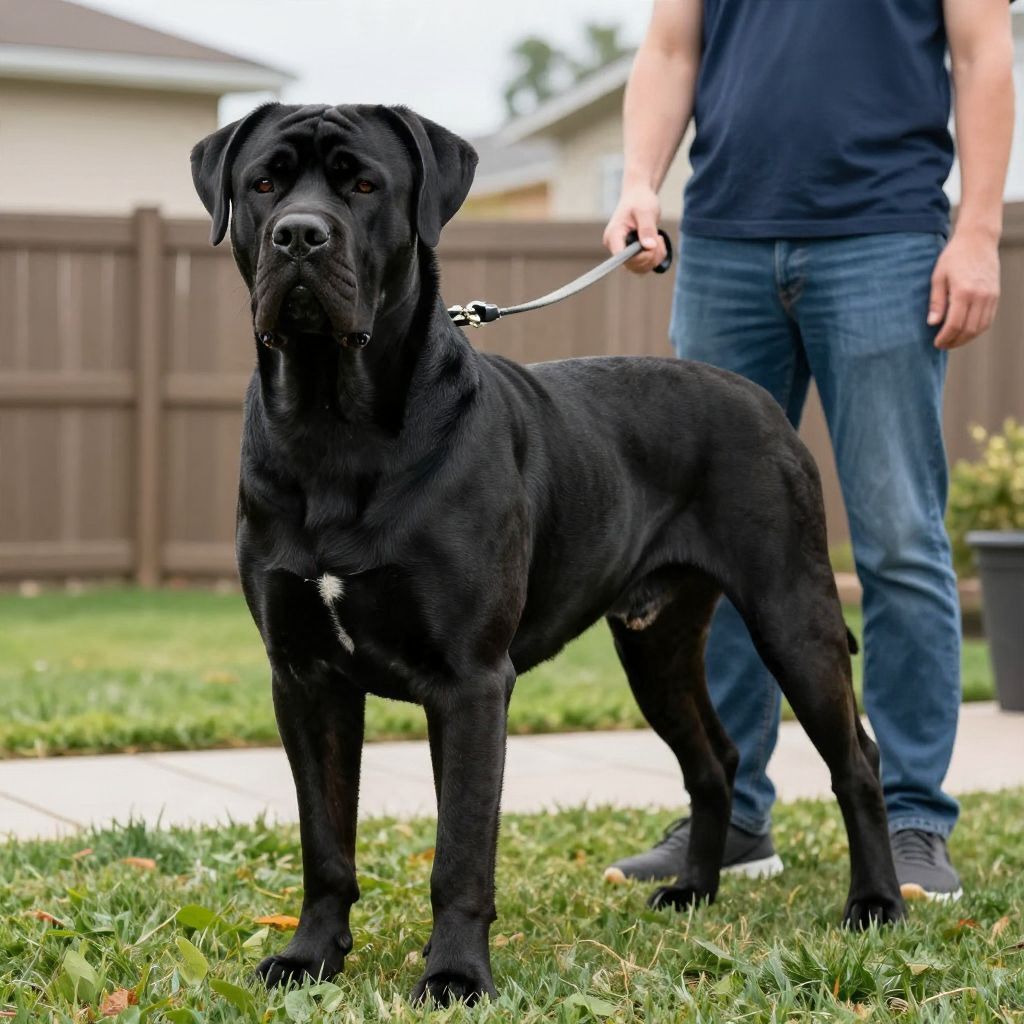
If you’re asking how big Cane Corsos get, the short answer is: they are large, powerful dogs that typically mature into a substantial, muscular build. Exact size varies by sex, genetics, diet, health, and overall body condition.
Knowing their expected adult size helps you plan for feeding, exercise, training, space, and veterinary care. It also helps you tell the difference between a healthy growth pattern and a puppy that may be growing too quickly or too slowly.
How Big Do Cane Corsos Get?
Adult Cane Corsos are usually large, heavy-boned dogs with a muscular frame. Many males are taller and heavier than females, but individual size varies. A healthy adult should look sturdy and athletic, not overly thin or bulky, and their final size depends on genetics, nutrition, and overall health.
Typical Cane Corso Size by Age and Sex
Cane Corsos grow quickly during puppyhood and adolescence, then continue filling out for a longer period. They often reach most of their height before they finish maturing in muscle and body mass.
General adult size range
- Males: commonly larger, with a more massive frame
- Females: usually slightly smaller and lighter
- Body type: muscular, deep-chested, and athletic rather than lanky
Because breed standards and individual lines can differ, you should expect a range rather than one exact number. A veterinarian or reputable breeder can give you a better idea of what is normal for your dog’s lineage.
How growth usually happens
- Early puppy stage: rapid size changes in height and weight
- Adolescent stage: continued growth, often with awkward proportions
- Young adult stage: slower growth as muscle and body condition develop
- Full maturity: the dog may keep filling out after height growth slows
Large breeds can stay physically immature longer than smaller dogs. That means a Cane Corso may look nearly adult-sized before the body is fully developed.
What Affects How Big a Cane Corso Gets?
Several factors influence adult size, and not every Cane Corso will fit the same pattern. Some dogs are naturally more compact, while others are taller or heavier within a healthy range.
Genetics
Parents are one of the strongest clues about adult size. If both parents are large, your puppy is more likely to be large as well, though it is never an exact prediction.
Nutrition
Proper puppy nutrition supports steady growth, but overfeeding does not create a healthier giant dog. In large breeds, too many calories or too much calcium can contribute to unhealthy growth, so it is best to feed a balanced diet made for large-breed puppies when your veterinarian recommends it.
Health and development
Illness, parasites, chronic digestive issues, or orthopedic problems can affect growth. If your puppy seems unusually small, weak, or has a poor appetite, schedule a veterinary exam.
Exercise and body condition
Exercise does not make a Cane Corso “grow bigger,” but it does help build conditioning and muscle tone. Too much high-impact activity in a growing puppy can stress developing joints, so age-appropriate exercise matters.
How to Tell Whether Your Cane Corso Is a Healthy Size
Instead of focusing only on the scale, look at body condition, movement, and energy level. A healthy Cane Corso should have enough muscle to look strong, but you should still be able to feel the ribs without pressing hard.
Signs your dog may be at a healthy size
- You can feel the ribs easily with light pressure
- The waist is visible when viewed from above
- The belly tucks up slightly from the side
- Your dog moves comfortably and does not tire unusually fast
Signs to ask your vet about
- Rapid, uneven growth
- Persistent limping or stiffness
- Very low weight or a prominent spine and ribs
- Excess weight that makes movement harder
- Poor appetite, vomiting, diarrhea, or low energy
Large and giant breeds are more vulnerable to joint strain when body condition is poor, so keeping your Cane Corso lean and fit is important throughout life.
Feeding a Cane Corso Puppy for Healthy Growth
Feeding affects development, but the goal is steady, controlled growth rather than maximum size. A balanced large-breed puppy food is often the safest choice because it is formulated to support growth without excess calories or minerals.
Helpful feeding habits
- Choose a complete and balanced diet appropriate for your puppy’s life stage
- Measure meals instead of free-feeding
- Follow your veterinarian’s advice on portions and growth monitoring
- Limit treats so they do not crowd out balanced nutrition
- Track weight and body condition over time
Avoid assuming that more food will help your puppy become a better adult dog. Overfeeding can increase the risk of obesity and may place extra stress on developing bones and joints.
When to ask about supplements
Do not add calcium, vitamins, or joint supplements unless your veterinarian recommends them. Large-breed puppies can be harmed by inappropriate supplementation, even when the intention is good.
Exercise, Training, and Space Needs for a Large Dog
Because Cane Corsos are big and strong, size affects daily management as much as appearance. A well-trained adult is easier to handle, safer in public, and more comfortable in the home.
Exercise needs
Most Cane Corsos benefit from regular walks, structured play, and mental enrichment. Puppies need shorter, controlled activity to protect growing joints, while adults usually need more consistent exercise and training to stay balanced.
Training priorities
- Loose-leash walking
- Reliable recall in safe settings
- Calm greeting behavior
- Settling on a bed or mat
- Comfort with handling, grooming, and vet visits
Reward-based training works well for most dogs and helps you build cooperation without fear or force. With a large breed, this matters because good habits are much easier to maintain than to fix later.
Home setup considerations
You do not need a huge house to own a Cane Corso, but you do need a safe, organized environment. Make sure your dog has enough room to turn around, lie down comfortably, and move without knocking into fragile items.
- Use sturdy bowls and equipment
- Choose a crate or bed sized for adult growth
- Secure fences and gates
- Keep walkways clear to reduce slipping
Common Mistakes When Raising a Cane Corso
Many size-related problems come from well-meaning but unhelpful choices. Avoiding these mistakes can support healthier growth and better long-term mobility.
1. Overfeeding
Extra weight can hide poor muscle tone and increase stress on joints. A heavy puppy is not necessarily a healthier puppy.
2. Too much high-impact exercise
Long runs, repetitive jumping, and forced stair climbing can be hard on a young, developing body. Keep exercise age-appropriate and ask your vet when it is safe to increase intensity.
3. Ignoring training because the puppy is “still small”
A Cane Corso grows fast, and a behavior that seems manageable at 12 weeks can become difficult at 12 months. Start training early with calm, consistent routines.
4. Skipping veterinary growth checks
Routine wellness visits help catch weight problems, orthopedic concerns, and nutrition issues early. This is especially useful for large breeds.
When Size Becomes a Health Concern
Sometimes the question is not just how big Cane Corsos get, but whether your dog is growing normally. Growth concerns deserve prompt veterinary attention when they involve pain, weakness, or sudden changes.
Call your veterinarian soon if you notice
- Slow or stalled growth compared with littermates or expected patterns
- Rapid weight gain without a proportional increase in muscle
- Difficulty rising, climbing, or walking
- A swollen abdomen, repeated vomiting, or diarrhea
- Ongoing refusal to eat or drink
Seek urgent veterinary care now if your dog has
- A suddenly swollen, painful abdomen
- Repeated unproductive retching
- Collapse, severe weakness, or trouble breathing
- Sudden lameness after injury
- Signs of severe pain or distress
Large, deep-chested dogs can be at risk for life-threatening emergencies such as bloat, so do not wait if your dog shows warning signs.
How Big Do Cane Corsos Get as Seniors?
Adult size does not usually increase much after maturity, but body composition can change with age. Older Cane Corsos may lose muscle, gain fat, or become less active, which can make them look smaller or less athletic.
Senior dogs often need diet and exercise adjustments to support mobility and maintain a healthy weight. If your older Cane Corso seems stiff, slows down noticeably, or loses muscle, your veterinarian can help you sort out normal aging from a treatable medical issue.
What to Expect Before Bringing One Home
If you are considering this breed, plan for a dog that will eventually be large enough to affect your routine, your budget, and your household setup. Their size is only one part of the picture, but it is an important one.
- Budget for more food than a small or medium dog would need
- Choose sturdy gear sized for a powerful adult
- Start socialization early and safely
- Be ready for ongoing training and structure
- Schedule regular veterinary care to monitor growth and joints
For more breed-specific background, you may also find it helpful to read this Cane Corso size guide and this overview of Cane Corso lifespan.
So, how big do Cane Corsos get? They grow into large, muscular dogs that need thoughtful feeding, training, and health monitoring. Focus on steady growth, a lean body condition, and regular veterinary care so your dog develops into a strong, comfortable adult.