
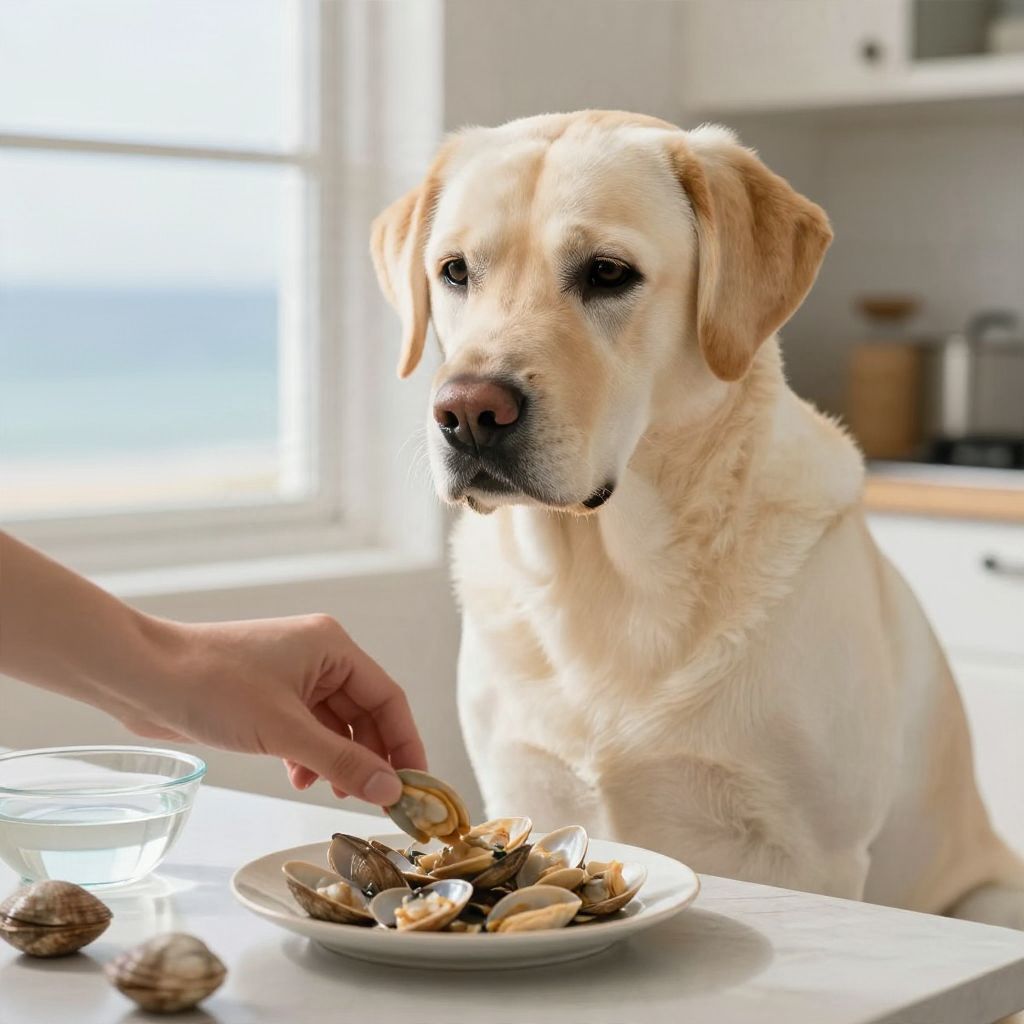
Can dogs eat clams? In many cases, yes—plain, fully cooked clams can be a safe occasional treat for healthy dogs. The key is serving them plain, in small amounts, and only if your dog does not have a history of food sensitivities or stomach upset.
Raw clams, seasoned clams, and clam dishes with butter, garlic, onion, or heavy salt are not safe choices. If your dog has vomiting, diarrhea, swelling, trouble breathing, or a sudden collapse after eating clams, contact a veterinarian right away.
Can dogs eat clams?
Yes, dogs can eat plain, cooked clams in small amounts as an occasional treat. They should never replace a complete and balanced dog food diet. Avoid raw clams, shell pieces, and any clam recipe made with butter, spices, onion, garlic, or excess salt.
Are clams safe for dogs?
Clams are not inherently toxic to dogs, but safety depends on how they are prepared and how your dog tolerates seafood. A healthy adult dog may do fine with a small amount of plain clam meat, while a puppy, senior dog, or dog with a sensitive stomach may react differently.
When clams may be a reasonable treat
- They are fully cooked and served plain.
- The shell has been removed completely.
- The portion is small compared with your dog’s normal food intake.
- Your dog has no known seafood allergy or recurring digestive issues.
When to avoid clams
- Your dog has a history of pancreatitis or a very sensitive stomach.
- The clams are raw, smoked, fried, breaded, or heavily seasoned.
- The dish contains onion, garlic, butter, wine, or lots of salt.
- Your dog tends to gulp food and may swallow shell fragments.
Why raw clams are risky for dogs
Raw shellfish can carry harmful bacteria, parasites, or natural toxins depending on where they were harvested and how they were stored. Dogs can also get sick from spoiled seafood just as people can. Because you cannot tell by sight whether a raw clam is safe, cooked is the safer choice.
Potential problems with raw or spoiled clams
- Vomiting and diarrhea
- Abdominal pain
- Fever or lethargy
- Dehydration
- More serious illness in puppies, seniors, or dogs with chronic disease
What parts of clams are unsafe?
The clam meat itself is the part most likely to be offered to dogs, but the shell is a major hazard. Shell fragments can break teeth, irritate the mouth, or cause choking and intestinal injury if swallowed.
Keep these out of your dog’s bowl
- Whole shells or broken shell pieces
- Clam chowder
- Clam strips or fried clams
- Clams cooked with butter, cream, onion, garlic, or hot spices
- Leftovers with a lot of sodium or rich sauces
How to feed clams to your dog safely
If your veterinarian says clams are okay for your dog, keep the preparation simple. The goal is to offer a tiny treat, not a meal or a seafood feast.
- Use plain clams that are fully cooked.
- Remove every shell fragment before serving.
- Serve a very small amount the first time.
- Watch your dog for digestive upset over the next 24 hours.
- Stop offering clams if they cause itching, vomiting, loose stool, or gas.
How much is too much?
There is no universal serving size that fits every dog, and it is best not to guess. A toy breed, a large breed, a puppy, and a dog with medical issues may all need different limits. In general, treats of any kind should stay a small part of your dog’s daily intake.
Possible health risks to watch for
Even when clams are cooked, some dogs may not tolerate them well. Food sensitivities can show up as skin irritation, ear problems, or stomach upset, and seafood can be a trigger for some individual dogs.
Common warning signs after eating clams
- Vomiting
- Diarrhea
- Excessive drooling
- Itching or hives
- Swelling of the face, lips, or eyelids
- Restlessness or signs of belly pain
Emergency signs that need urgent veterinary care
- Difficulty breathing
- Repeated vomiting or severe diarrhea
- Collapse, weakness, or disorientation
- Bloated abdomen or obvious abdominal pain
- Choking or gagging after eating shell pieces
- Blue or pale gums
Can puppies eat clams?
Puppies can be more vulnerable to stomach upset and dehydration, so clams are usually not the best first treat. If you want to share seafood with a puppy, ask your veterinarian first and keep the portion extremely small, plain, and fully cooked.
Can senior dogs eat clams?
Some senior dogs can eat small amounts of plain cooked clams, but older dogs may have more sensitive digestion or health conditions that make rich foods a poor choice. If your senior dog has kidney disease, pancreatitis, allergies, or a history of digestive problems, check with your vet before offering clams.
What about dogs with allergies or sensitive stomachs?
If your dog already reacts to new foods, clams may be a poor choice. A dog with itchy skin, chronic ear infections, vomiting, or loose stools may need a simpler diet and a careful food trial under veterinary guidance instead of random treat testing.
Signs clams may not agree with your dog
- Loose stool or diarrhea after eating
- Vomiting within a few hours
- Itchy skin, paw chewing, or ear scratching
- Reduced appetite
- Gas or belly discomfort
Are clams nutritious for dogs?
Clams contain protein and some nutrients, but that does not make them necessary for dogs. Your dog’s main nutrition should come from a complete dog food that is formulated for their life stage and health needs. Treats like clams should be considered optional extras, not health supplements.
Why “healthy” human food still needs caution
- Rich foods can upset the stomach.
- Seasonings can be harmful.
- Seafood can trigger individual sensitivities.
- Too many treats can unbalance the diet.
What to do if your dog ate clams by accident
If your dog ate a small amount of plain cooked clam meat, they may be fine. If they ate raw clams, shell pieces, or a seasoned clam dish, monitor closely and contact your veterinarian for advice, especially if your dog is young, old, or medically fragile.
- Remove any remaining clam or shell from reach.
- Check whether the clams were plain, cooked, or mixed with risky ingredients.
- Watch for vomiting, diarrhea, coughing, choking, or lethargy.
- Call your veterinarian if symptoms develop or if shell pieces were swallowed.
- Seek urgent care for breathing trouble, collapse, or repeated vomiting.
Better seafood choices and safer treat habits
If you want to share seafood occasionally, plain cooked fish is often easier to manage than shellfish, but it still needs to be free of bones, seasoning, and sauce. The safest treat habits are simple: keep portions small, introduce new foods slowly, and choose treats that fit your dog’s health profile.
Good treat rules to follow
- Offer only one new food at a time.
- Use plain preparation with no seasoning.
- Keep treats to a small part of the day’s calories.
- Stop if your dog shows any digestive or skin reaction.
- Ask your vet before feeding human foods to a dog with medical conditions.
Bottom line: can dogs eat clams?
Yes, dogs can eat plain, fully cooked clams in small amounts, but raw, seasoned, or shell-filled clam dishes are unsafe. If you choose to share clams, keep them simple, rare, and tiny—and call your veterinarian right away if your dog shows any concerning symptoms.
If you want to compare shellfish options, you may also find these helpful: can dogs eat crab meat and can dogs eat oysters.