
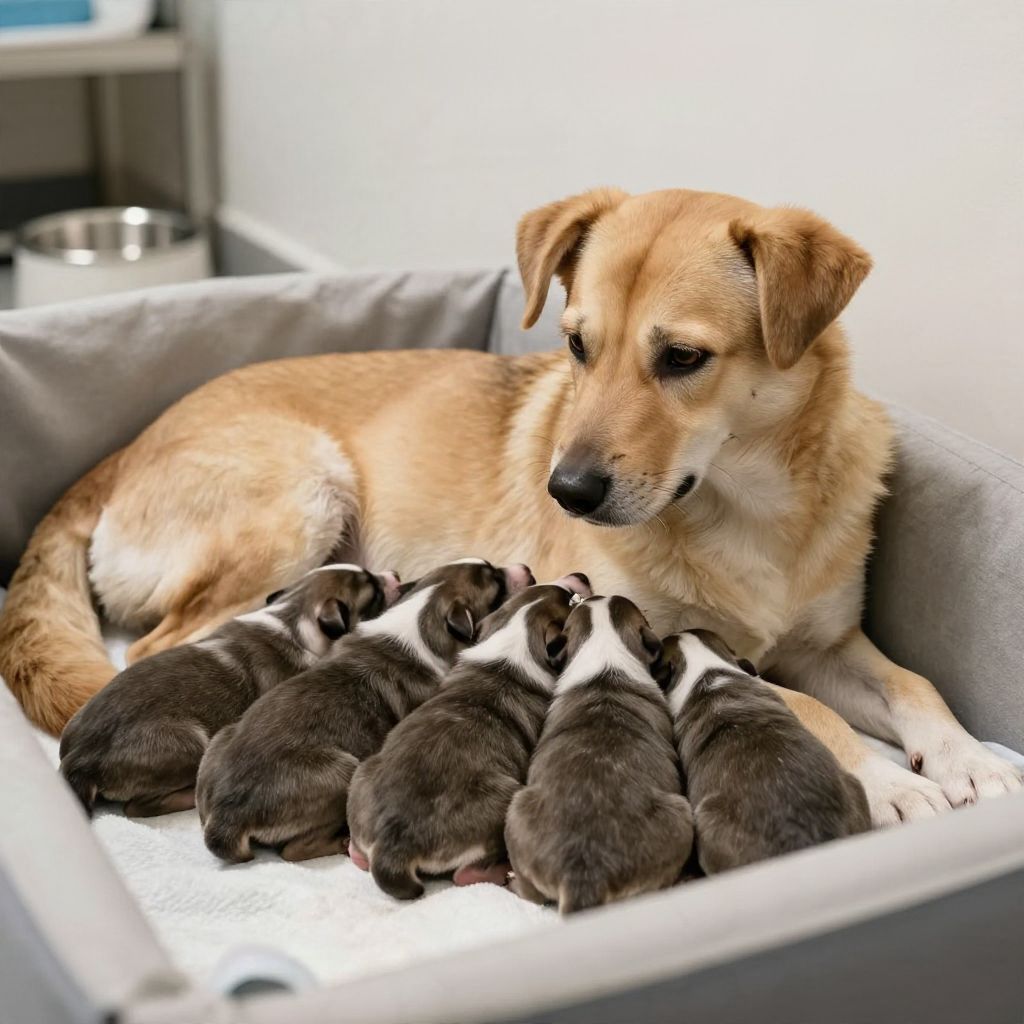
Why do dogs eat their puppies? It is alarming, but it can happen for several reasons, including stress, illness, lack of maternal experience, or a puppy that is already dead or very weak. It is not “normal” behavior, and it needs quick attention.
If a mother dog is at risk of harming her litter, keep the area quiet, warm, and safe, then contact a veterinarian right away. In many cases, the goal is to protect the remaining puppies and find out whether the mother needs urgent medical care.
Why do dogs eat their puppies?
Dogs may eat or kill puppies when they are overwhelmed, sick, in pain, under severe stress, or responding to a puppy that is stillborn, ill, or unlikely to survive. This is a serious maternal behavior problem, not something to ignore. A veterinarian should evaluate the mother and the litter as soon as possible.
Common causes of this behavior
Stress or fear
A mother dog may react defensively if she feels unsafe. Loud noise, frequent handling, unfamiliar animals, bright lights, or constant disturbance around the whelping area can increase stress.
Some dogs become anxious if they do not have a quiet, private nesting space. Stress can lead to poor maternal behavior, including rejecting, injuring, or consuming a puppy.
Illness or pain in the mother
Health problems can change a dog’s behavior quickly. Pain, fever, infection, low calcium, mastitis, or other postpartum complications may make a mother restless, confused, or unable to care for her litter normally.
If the mother seems weak, disoriented, uninterested in the puppies, or unusually aggressive, treat it as a veterinary concern.
Weak, sick, or stillborn puppies
Sometimes the mother targets a puppy that is already dead, dying, or very weak. In the wild, this may be an instinctive response to remove a puppy that has little chance of survival.
Even so, you should not assume that’s the only reason. A puppy that seems weak may still be saved with prompt veterinary help.
Inexperience or poor maternal instinct
First-time mothers are more likely to be uncertain, clumsy, or overly rough with their puppies. Some dogs do not settle into maternal care easily, especially if they are young, frightened, or have had limited socialization.
This does not mean the dog is “bad.” It means she may need close supervision and support.
Painful delivery or postpartum complications
If labor was difficult or prolonged, the mother may be exhausted, painful, or mentally distressed. Retained puppies or placenta, uterine infection, or trauma can also affect behavior after birth.
Any unusual behavior after whelping deserves a veterinary check, especially if the dog is panting heavily, trembling, has discharge with a bad smell, or refuses food or water.
Not enough food or water
A nursing dog has high energy and fluid needs. If she is underfed, dehydrated, or struggling to eat enough, she may become stressed and unable to care for her litter well.
Nutrition problems do not directly “cause” every case, but they can worsen maternal stress and poor behavior.
What you should do right away
- Protect the puppies. If the mother is harming a puppy or seems likely to do so, separate them safely and keep the litter warm.
- Call a veterinarian immediately. The mother may need urgent care, and the puppies may need assessment too.
- Keep the whelping area calm. Reduce noise, visitors, handling, and other stressors.
- Check the puppies for warmth and breathing. Newborns can deteriorate quickly if chilled or injured.
- Watch the mother closely. Note appetite, temperature if advised by your vet, discharge, behavior, and nursing patterns.
If a puppy is injured, cold, not nursing, crying constantly, or not moving normally, that is an emergency. Newborn puppies can decline fast, so do not wait to see if things improve on their own.
Red-flag signs that need urgent veterinary care
- The mother is actively biting, shaking, or eating a puppy
- A puppy is cold, limp, weak, or not nursing
- The mother has fever, collapse, severe lethargy, or trembling
- There is foul-smelling discharge, heavy bleeding, or obvious pain
- The mother seems confused, disoriented, or unusually aggressive
- Any puppy has trouble breathing, bleeding, or obvious injury
These signs can point to a medical emergency for the mother, the puppies, or both. If you are unsure, err on the side of immediate veterinary help.
How to care for the litter safely
Create a secure nesting area
Use a quiet, warm, low-traffic space where the mother can rest without interruption. Keep children, other pets, and visitors away unless you are actively supervising.
The area should be easy for you to monitor, but not so exposed that the mother feels threatened.
Limit handling when the mother is anxious
Some mothers tolerate handling well; others become protective or stressed. Handle puppies only as needed, and move slowly and calmly.
If the mother is showing tension, step back and let her settle. Safety matters more than frequent handling in the first hours after birth.
Support feeding and hydration
Offer the mother a high-quality diet appropriate for a nursing dog, along with constant access to fresh water. If she is not eating or drinking, contact your veterinarian promptly.
Do not try to force feed or give supplements unless your vet tells you to do so.
Keep the puppies warm
Newborn puppies cannot regulate body temperature well. If they are separated from the mother, they need safe external warmth and close monitoring.
Overheating is also dangerous, so use caution and follow veterinary guidance if you are providing heat.
What not to do
- Do not punish the mother dog
- Do not assume the behavior will stop on its own
- Do not leave the litter unsupervised if there is any risk
- Do not give medications without veterinary direction
- Do not try unsafe home remedies
Physical punishment, shouting, or intimidation can increase fear and make the problem worse. The safest approach is calm management plus veterinary evaluation.
Can this be prevented?
Sometimes, yes. Prevention depends on the cause and on the individual dog’s health, temperament, and experience. You cannot guarantee that a mother dog will behave perfectly, but you can reduce risk by preparing well and monitoring closely.
Helpful prevention steps
- Arrange a veterinary check before and after whelping
- Prepare a quiet, private birthing area in advance
- Keep the environment calm and predictable
- Watch for signs of labor difficulty or postpartum illness
- Have a plan for emergency puppy care if the mother cannot nurse safely
Some dogs, especially inexperienced mothers, need more supervision than others. Breed may influence general tendencies in maternal behavior, but it does not determine what any individual dog will do.
When puppies may need hand-rearing
If the mother cannot safely care for the litter, a veterinarian may recommend temporary or full hand-rearing. This is demanding and must be done carefully to avoid dehydration, chilling, aspiration, or poor growth.
Hand-rearing should be guided by a veterinary professional whenever possible, because newborn puppies can become critically ill very quickly.
How a vet may help
A veterinarian can check the mother for pain, infection, retained puppies, low calcium, or other postpartum problems. They can also assess the puppies for dehydration, injury, low body temperature, or weakness.
Depending on the findings, the vet may recommend medical treatment, closer monitoring, separation of the litter, or emergency supportive care.
Common misconceptions
- “It means the dog is evil.” No. It usually points to stress, illness, or a serious maternal problem.
- “It always happens because the owner touched the puppies.” Handling can add stress, but it is not the only cause.
- “If one puppy is weak, the rest are safe.” Not necessarily. The whole litter may be at risk if the mother is distressed or ill.
- “You should just let nature take its course.” Not when puppies are in danger. Immediate intervention can save lives.
Bottom line
Why do dogs eat their puppies? Most often, it happens because the mother is stressed, sick, in pain, inexperienced, or responding to a puppy that is already very weak or dead. This is always a situation that deserves prompt veterinary attention and careful supervision.
If you want to learn more about unusual dog behavior and reproductive safety, you may also find why dogs hump and why dogs get stuck together helpful for related dog-care reading.