
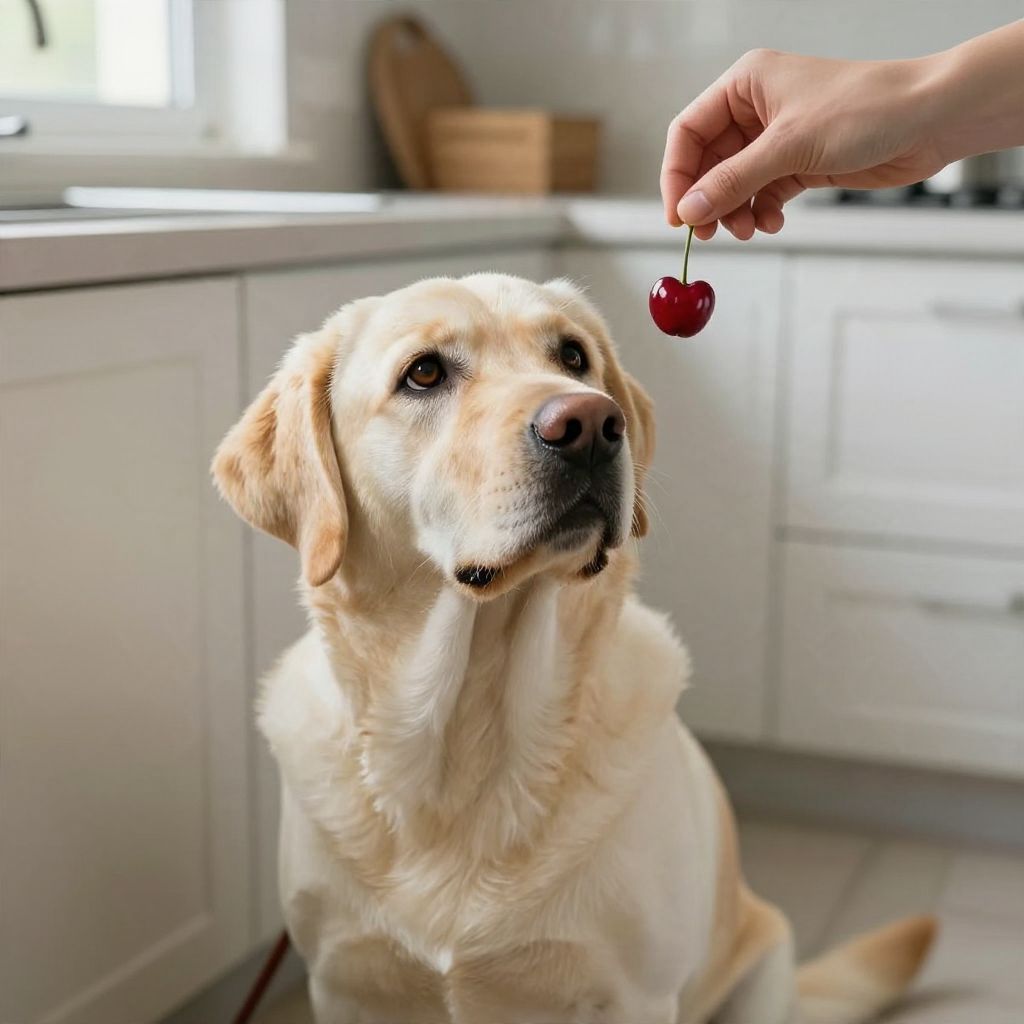
Can dog eat cherry? In small, carefully prepared amounts, the fleshy part of a cherry may be okay for some dogs, but the pit, stem, and leaves are unsafe. The biggest risks are choking, intestinal blockage, and cyanide exposure from the non-flesh parts.
If your dog ate cherries, what matters most is which parts were eaten, how many, and whether your dog is showing symptoms. When in doubt, contact your veterinarian right away, especially if your dog is small, young, elderly, or has a history of digestive problems.
Can Dog Eat Cherry?
Yes, dogs can eat the flesh of fresh cherries in very small amounts, but only if the pit, stem, and leaves are completely removed. Never give cherry pits, and avoid cherry products with added sugar, xylitol, alcohol, or artificial sweeteners. If your dog swallowed a pit or seems unwell, call your vet.
Which Parts of a Cherry Are Safe or Unsafe?
Cherry safety depends on the part of the fruit. The soft flesh is the only part that may be offered occasionally, and even then only as a treat. The rest of the fruit can create serious problems for dogs.
Cherry flesh
The ripe flesh is the part most people think of as the edible fruit. For some dogs, a small piece or two is fine as an occasional treat, but it should never replace a balanced dog food diet.
Cherry pit
The pit is the main danger. It can cause choking, damage teeth, or block the digestive tract if swallowed. It also contains compounds that can release cyanide when chewed or crushed.
Stem and leaves
Cherry stems and leaves are not safe for dogs to chew or eat. They can contribute to gastrointestinal upset and may also expose your dog to harmful compounds if consumed in quantity.
What Are the Risks If a Dog Eats Cherry?
Most concerns come from the pit, but even the fruit flesh can cause stomach upset if your dog eats too much. The risk level depends on your dog’s size, age, health, and exactly what was eaten.
- Choking: A pit can lodge in the throat, especially in small dogs or dogs that gulp food quickly.
- Intestinal blockage: Swallowed pits may get stuck in the stomach or intestines.
- Cyanide exposure: Chewed pits, stems, and leaves can be dangerous.
- Digestive upset: Too much fruit can lead to vomiting, diarrhea, or abdominal discomfort.
- Added-ingredient toxicity: Cherry pie filling, canned cherries, and desserts may contain unsafe sweeteners or other harmful ingredients.
Signs Your Dog May Need a Vet After Eating Cherry
Watch closely after your dog eats any part of a cherry. Some signs are mild and may pass, but others need urgent veterinary attention.
Call your veterinarian if you notice:
- Vomiting
- Diarrhea
- Drooling
- Loss of appetite
- Mild belly discomfort
- Restlessness or unusual behavior
Get urgent veterinary help now if your dog has:
- Difficulty breathing
- Repeated retching or gagging
- A swollen or painful abdomen
- Weakness, collapse, or severe lethargy
- Blue or pale gums
- Signs of choking
- Suspected ingestion of multiple pits
If your dog swallowed a cherry pit and is acting normal, your vet may still want to advise you based on your dog’s size and the number of pits eaten. Do not wait for symptoms if your dog is struggling to breathe or cannot keep food down.
What to Do If Your Dog Ate a Cherry
Stay calm and gather details before you call your vet or an emergency clinic. The exact response depends on whether your dog ate the flesh only or swallowed the pit, stem, or leaves.
- Remove any remaining cherries from reach.
- Check whether the pit, stem, or leaves were eaten.
- Estimate how many cherries were involved.
- Look for choking, vomiting, drooling, or abdominal pain.
- Call your veterinarian for advice, especially if a pit was swallowed.
Do not try to make your dog vomit unless a veterinarian specifically tells you to do so. That can be dangerous in some situations, especially if choking or aspiration is a concern.
Are Cherry-Flavored Foods Safe for Dogs?
Usually not. Many cherry-flavored human foods are more dangerous than the fruit itself because they may contain sugar, chocolate, alcohol, xylitol, or other ingredients that are unsafe for dogs.
- Cherry pie: Often too sugary and may contain unsafe ingredients.
- Cherry yogurt: May include added sugar or artificial sweeteners.
- Maraschino cherries: Often heavily processed and sugary.
- Cherry jam or jelly: Too much sugar and not a good dog treat.
- Cherry juice: Can upset your dog’s stomach and may contain added sweeteners.
If you want to share fruit with your dog, plain fresh fruit is usually safer than processed desserts, but it still needs to be offered in moderation and prepared correctly.
How to Safely Feed Cherry to a Dog
If your veterinarian says cherries are okay for your dog, keep the serving tiny and simple. The goal is a treat, not a snack bowl.
- Use only fresh, ripe cherries.
- Wash them thoroughly.
- Remove the pit, stem, and leaves completely.
- Cut the flesh into small pieces if your dog is small or tends to gulp food.
- Offer only a very small amount at first.
- Stop if your dog develops vomiting, diarrhea, or itching.
Some dogs tolerate fruit better than others. Dogs with sensitive stomachs, diabetes, obesity, pancreatitis history, or food allergies may need stricter limits or should avoid cherries entirely unless your vet approves them.
How Much Cherry Can a Dog Eat?
There is no universal safe amount for every dog, and it is not a food you should feed regularly. Size, health, and how the cherry is prepared all matter. A toy dog and a large adult dog do not face the same risk from the same amount.
As a general rule, treats should stay a small part of your dog’s daily intake. If you are unsure whether a cherry treat fits your dog’s diet, ask your veterinarian for guidance based on your dog’s weight, medical history, and current food plan.
Puppies, Senior Dogs, and Dogs With Health Issues
Some dogs need extra caution. Puppies may be more likely to choke on pits or pieces of fruit, while senior dogs may have dental disease, slower digestion, or other health issues that make complications more likely.
Puppies
Puppies are curious and often chew or swallow things quickly. Avoid giving them cherries with any pit risk, and keep fruit treats minimal while they are still learning safe eating habits.
Senior dogs
Older dogs may have weaker teeth, reduced swallowing control, or chronic medical conditions. Even a small pit can be more troublesome if your dog already has digestive or dental problems.
Dogs with medical conditions
If your dog has diabetes, a sensitive stomach, obesity, or a history of pancreatitis, ask your veterinarian before offering cherries. A fruit treat that seems harmless can still disrupt a carefully managed diet.
Common Mistakes Dog Owners Make With Cherries
Most cherry-related problems happen because the fruit is offered casually without preparation. Avoid these common mistakes.
- Giving whole cherries with pits still inside
- Leaving cherry bowls within reach
- Sharing cherry desserts or pie filling
- Assuming one pit cannot cause a problem
- Ignoring mild vomiting or belly pain after ingestion
- Feeding cherries as a routine snack instead of an occasional treat
Safer Fruit Alternatives for Dogs
If you want a fruit treat with less risk, there are often easier options than cherries. Even then, each fruit should be offered in moderation and prepared properly.
- Apples without seeds or core
- Blueberries
- Banana in small amounts
- Seedless watermelon
- Strawberries in small pieces
Fruit should still be treated as a snack, not a nutritional necessity. Your dog’s main diet should remain a complete and balanced dog food.
When to Contact a Veterinarian
It is wise to call your vet if your dog ate cherry pits, stems, or leaves, even if symptoms are not obvious yet. This is especially important for small dogs, puppies, and dogs with health conditions.
Seek immediate help if your dog is choking, breathing oddly, collapsing, or showing severe abdominal distress. If you are unsure whether the exposure is serious, a quick call can help you decide the safest next step.
Conclusion
Can dog eat cherry? Only the plain flesh in very small amounts, and only when the pit, stem, and leaves are removed. Because the risks can be serious, it is usually safer to skip cherries and choose a dog-friendly treat instead. If your dog swallowed a pit or shows symptoms, contact your veterinarian promptly.
For more dog food safety guidance, you may also find this helpful: can dogs eat cherries.