
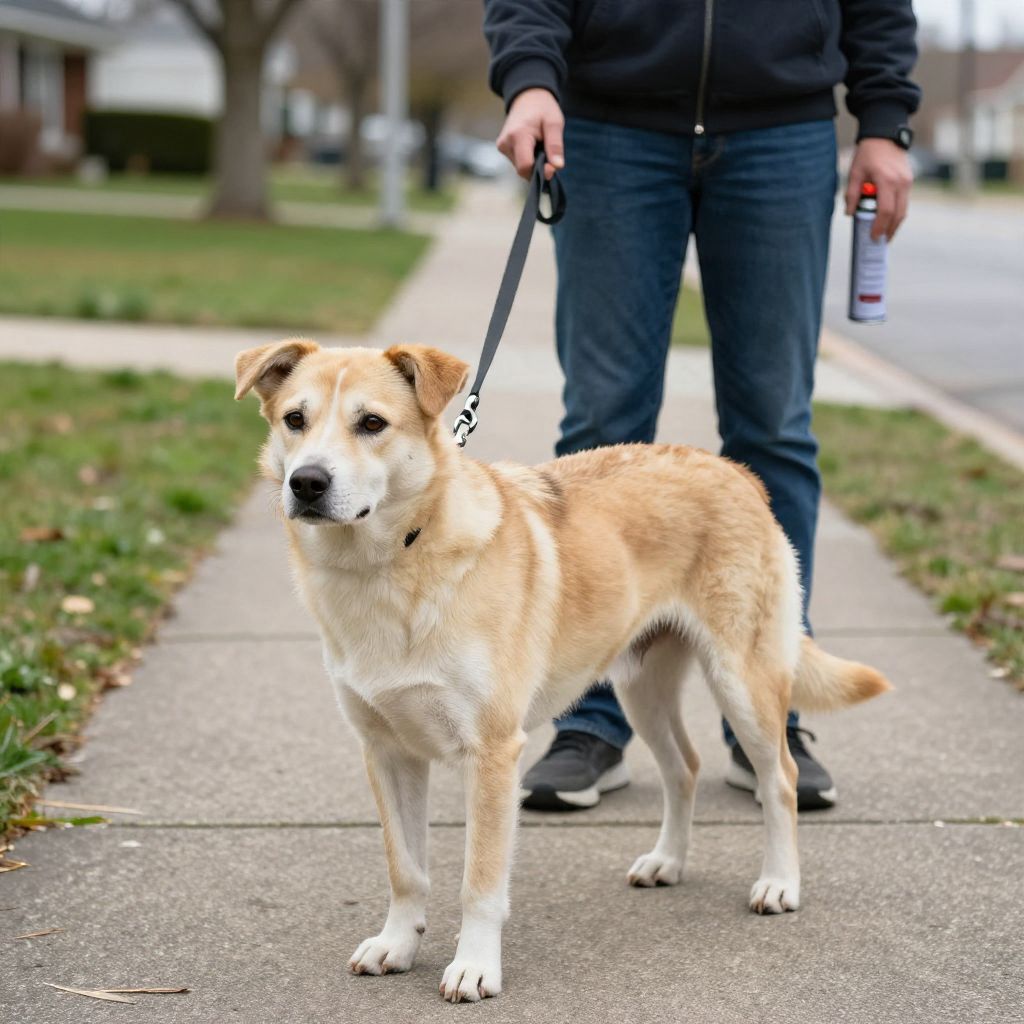
If you’re asking, “Does pepper spray work on dogs?” the short answer is that it can temporarily deter some dogs, but it is not a safe or reliable solution. It may cause intense pain, eye and airway irritation, and unpredictable reactions.
Because dogs vary in size, temperament, training, health, and pain tolerance, the effect is inconsistent. If a dog is threatening you or your pet, focus on creating distance, using barriers, and getting help rather than relying on pepper spray.
Does Pepper Spray Work On Dogs?
Pepper spray may stop or distract some dogs briefly, but it is not guaranteed and can make a situation worse. It can cause severe discomfort, panic, coughing, and disorientation, and some dogs may still continue forward. For safety, treat it as an emergency-only deterrent, not a dependable defense.
What Pepper Spray Can Do to a Dog
Pepper spray usually irritates the eyes, nose, mouth, and airways. A dog may blink hard, paw at the face, sneeze, cough, drool, or retreat, but the response depends on the individual dog and the amount of exposure.
Some dogs are highly reactive when frightened or overstimulated. In those cases, pain or panic can escalate the encounter instead of ending it.
Possible short-term effects
- Eye redness, tearing, and squinting
- Coughing, gagging, or sneezing
- Drooling or foaming at the mouth
- Temporary confusion or retreat
- Increased agitation or defensive behavior
Why the response varies
- Size and body condition: larger dogs may be harder to deter, while smaller dogs may be more visibly affected.
- Temperament: fearful, excited, or highly aroused dogs may react unpredictably.
- Health: dogs with breathing problems, eye disease, or other medical issues may be more vulnerable.
- Environment: wind, distance, and aim affect whether the spray reaches the dog at all.
Why Pepper Spray Is Not a Good First Choice
Even if pepper spray works momentarily, it can create new problems. A dog in pain may become more frantic, and the spray can affect you, your own dog, or bystanders if the wind shifts.
It also does not address the underlying cause of the encounter, such as leash frustration, poor containment, fear, or territorial behavior. A safer plan is to prevent close contact whenever possible.
Common risks
- Escalation of aggression or panic
- Accidental exposure to you or your dog
- Eye injury or airway irritation
- Unpredictable behavior after the initial shock
Safer Ways to Protect Yourself From an Approaching Dog
If a dog is approaching in a concerning way, your goal is to increase distance and reduce stimulation. Avoid running, which can trigger chase behavior in some dogs.
- Stop and stay as calm as you can.
- Put a solid object between you and the dog, such as a car, fence, trash bin, backpack, or bicycle.
- Back away slowly if the dog is not closing in.
- Use a firm, clear voice if needed, but avoid screaming or sudden movements.
- If you have a dog with you, keep them close and move behind a barrier.
- Call for help if the dog is loose, threatening, or blocking your exit.
If you are walking your own dog
Keep your dog on leash in areas where loose dogs are possible, and carry a barrier item such as an umbrella, walking stick, or backpack that can help create space without harming anyone.
If your dog is reactive, work on distance-based training and management rather than trying to “power through” close encounters.
What to Do If a Dog Has Been Sprayed
If pepper spray was used on a dog, the priority is to reduce exposure and watch for serious symptoms. Do not force the dog to keep moving if they are panicking or struggling to breathe.
- Move the dog to fresh air and away from the spray cloud.
- Avoid rubbing the face, which can spread irritation.
- If the dog is stable, contact a veterinarian for guidance.
- Seek urgent care if symptoms are severe or not improving.
Emergency warning signs
Get urgent veterinary help right away if the dog has trouble breathing, collapses, has persistent severe coughing, cannot open the eyes, seems disoriented for more than a short time, or has ongoing pain that does not settle.
Any dog that may have inhaled a large amount of spray, especially one with asthma-like signs or a history of airway disease, should be assessed promptly.
When Pepper Spray May Be Especially Risky
Some dogs are more likely to have a bad reaction because of age, health, or stress level. Puppies, seniors, brachycephalic breeds with short noses, and dogs with eye or respiratory problems may be more vulnerable to complications.
That does not mean every dog in these groups will react the same way, but it does mean you should be extra cautious about any irritant exposure.
Higher-risk situations
- Dogs already struggling to breathe
- Dogs with eye injuries or eye disease
- Very young puppies
- Older dogs with weaker reserve or chronic illness
- Dogs already frightened, injured, or trapped
What to Use Instead of Pepper Spray
For everyday safety, prevention is better than confrontation. A leash, secure fencing, good recall training, and thoughtful route choices are far more reliable than any spray.
If you are worried about an aggressive or roaming dog in your area, report the problem to local animal control or the appropriate authority when needed.
Practical prevention steps
- Choose well-lit walking routes when possible.
- Keep your dog on a sturdy leash and harness.
- Practice calm, reward-based focus skills with your dog.
- Avoid approaching unfamiliar dogs without permission.
- Use gates, doors, and fences to prevent surprise contact at home.
How to Reduce the Chance of Dog Conflict
Many dog confrontations start because a dog feels cornered, overexcited, or unable to escape. Reading body language early can help you avoid a dangerous moment.
Warning signs a dog may be uncomfortable
- Stiff body posture
- Fixed staring
- Raised hackles
- Growling or barking
- Backing away, then lunging forward
- Tail held very high, very low, or rigidly still
If you see these signs, create space immediately. Do not try to pet, grab, or “test” the dog’s reaction.
Training and Behavior Help for Dogs That React Strongly
If your own dog is the one that rushes toward people or other dogs, pepper spray is not a training tool. Humane behavior support is safer and more effective.
Use management first, then work with a qualified trainer or veterinary behaviorist if the behavior is intense, frequent, or worsening.
- Reward calm behavior at a distance where your dog can still think.
- Avoid situations that repeatedly overwhelm your dog.
- Use barriers, distance, and predictable routines.
- Ask a professional for a plan if your dog shows fear or aggression.
When You Should Contact a Veterinarian
Contact a veterinarian if a sprayed dog has persistent eye redness, discharge, coughing, wheezing, vomiting, or unusual behavior after exposure. Even if symptoms seem mild at first, irritation can linger or worsen.
If the dog was already ill, elderly, or breathing hard before the incident, it is especially wise to get medical advice quickly.
Bottom Line
Pepper spray can sometimes deter a dog, but it is not a dependable or low-risk solution. The safest approach is to create distance, use barriers, and avoid escalating the situation. If a dog has been exposed and shows breathing trouble, severe eye pain, or ongoing distress, seek veterinary help promptly.
If you want more dog-care guidance on related health concerns, you may also find why is my dog breathing heavy? helpful for spotting urgent warning signs.