
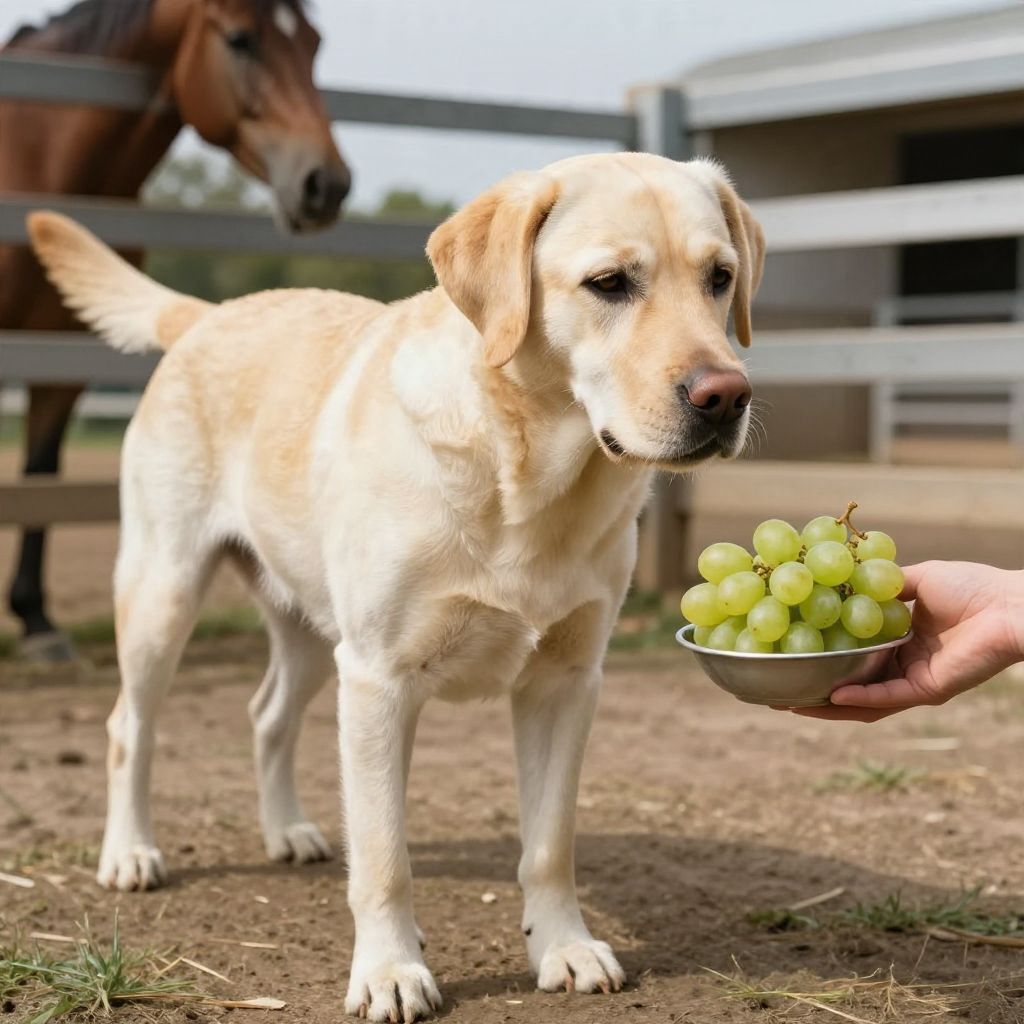
Can horses eat grapes? If you’re asking because a horse got into fruit, the short answer is that grapes are not a normal or recommended horse treat. Even small “people foods” can upset a horse’s digestion, and some foods may pose choking or metabolic concerns depending on the horse.
If your horse ate grapes, the safest next step is to watch closely and call your veterinarian if you notice any unusual behavior, colic signs, or breathing trouble. When in doubt, treat unfamiliar foods as something to avoid rather than experimenting with them.
Can Horses Eat Grapes?
Grapes are not an ideal food for horses, and they should not be offered as a regular treat. Horses need a forage-based diet, and fruits like grapes can add unnecessary sugar and digestive upset. If a horse accidentally eats a few grapes, it may be fine, but you should monitor for signs of stomach discomfort.
Why Grapes Are Not a Good Horse Treat
Horses digest fiber-rich forage best. Grapes are soft, sugary, and not part of a horse’s natural feeding pattern, so they offer little benefit and can create avoidable risk.
Possible concerns with grapes
- Digestive upset: Sudden new foods can contribute to loose manure, gas, or mild colic signs.
- High sugar content: Horses with insulin resistance, equine metabolic syndrome, or a history of laminitis may need extra caution with sweet foods.
- Choking risk: Whole grapes can be awkward for some horses, especially if they bolt food.
- Unnecessary feeding habit: Regular fruit treats can encourage begging and make it harder to keep a balanced diet.
What If Your Horse Already Ate Grapes?
One or a few grapes are unlikely to cause a problem in many healthy horses, but every horse is different. The amount eaten, the horse’s size, and any existing health conditions all matter.
- Remove any remaining grapes so the horse cannot keep eating them.
- Offer normal forage and fresh water.
- Watch the horse closely for several hours.
- Call your veterinarian if you notice any concerning signs.
Red-flag symptoms that need urgent veterinary attention
- Repeated pawing, looking at the flank, rolling, or refusing to eat
- Marked bloating or abdominal distension
- Excessive sweating, agitation, or unusual lethargy
- Difficulty breathing, coughing, or signs of choking
- Diarrhea that is severe, persistent, or paired with weakness
If you suspect colic, choking, or any sudden change in behavior after eating grapes, do not wait it out. Horses can worsen quickly, and prompt veterinary guidance is the safest option.
Do Grapes Have Any Nutritional Benefit for Horses?
Grapes contain water and natural sugars, but that does not make them necessary or especially helpful for horses. A horse’s main nutrition should come from quality forage, with concentrates or supplements used only when appropriate for the individual horse.
If you want to use treats for training or bonding, choose options that fit your horse’s health status and feeding plan. For many horses, small amounts of approved commercial horse treats or tiny pieces of safe produce are better than offering random fruit.
Safer Treating Habits for Horses
Not every horse tolerates treats the same way. Some are easy keepers and need very limited extras, while others may have special dietary needs that make treats inappropriate or require veterinary guidance.
Safer treat guidelines
- Keep treats small and occasional.
- Introduce any new food slowly and in tiny amounts.
- Do not use treats to replace meals or forage.
- Avoid feeding from the hand if your horse becomes pushy or nippy.
- Ask your veterinarian before offering treats to horses with metabolic disease, laminitis history, or dental problems.
Common Mistakes to Avoid
Many feeding problems start with good intentions. A fruit that seems harmless to people may not be a smart choice for a horse.
- Assuming “natural” means safe: Natural foods can still cause digestive trouble.
- Offering large handfuls: Even “just a treat” can become too much if repeated.
- Ignoring individual health needs: Older horses and horses with metabolic issues may need stricter limits.
- Feeding mixed fruit snacks: A fruit salad may include ingredients that are unsuitable for horses.
When to Call the Veterinarian
Contact your veterinarian if you are unsure how many grapes were eaten or if your horse has any medical condition that affects diet. Professional advice is especially important for horses with a history of colic, laminitis, EMS, PPID, or dental problems.
Seek urgent help right away if your horse shows signs of colic, choking, breathing difficulty, severe weakness, or any sudden and dramatic change in behavior after eating grapes.
Bottom Line
Can horses eat grapes? They are not a recommended horse treat, and it is best to avoid feeding them. If a horse accidentally eats a small amount, monitor closely and call your veterinarian if anything seems off. When it comes to horse feeding, simple and forage-based is usually safest.
If you’re also comparing fruit safety for other animals, you may find these guides helpful: can dogs eat grapes and can dogs have green grapes.