
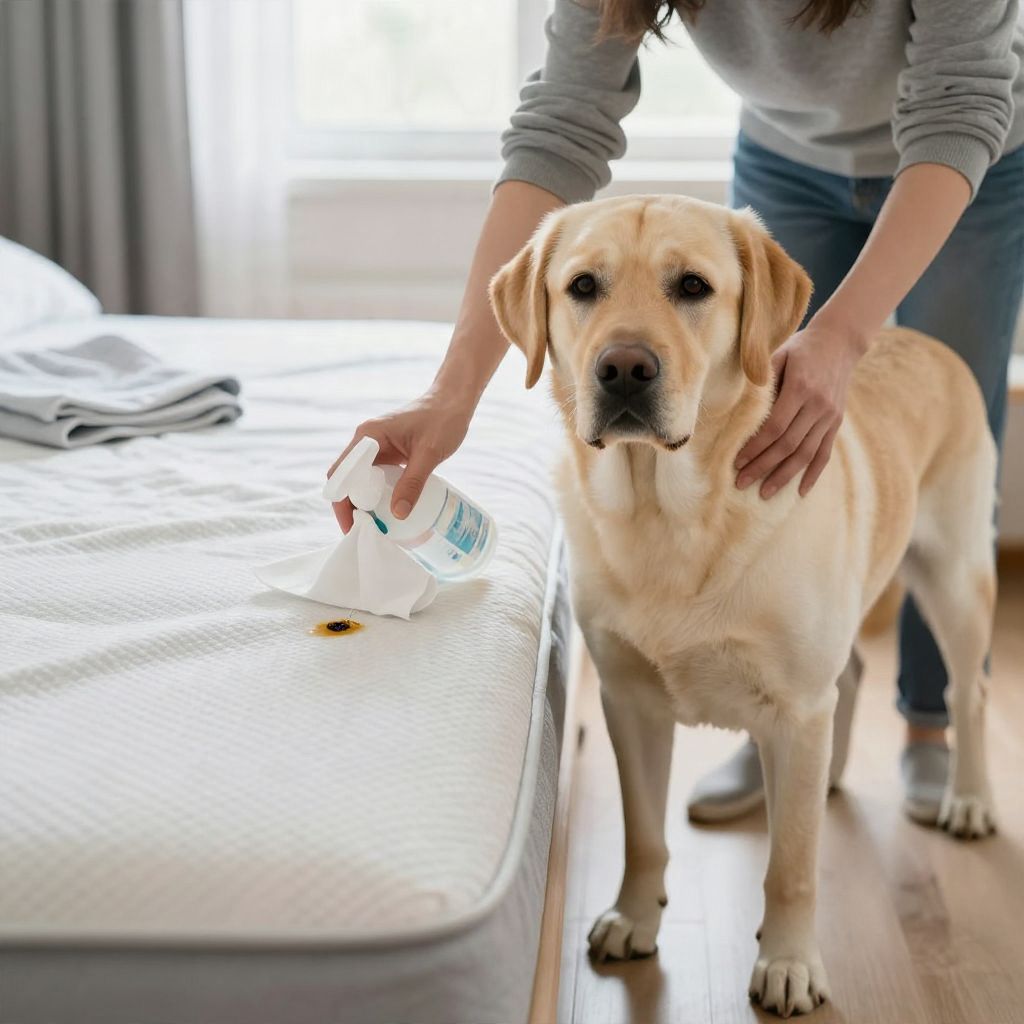
Dog pee on a mattress is frustrating, but you can usually remove the stain and smell if you act quickly. The key is to blot first, use an enzyme cleaner, and let the mattress dry completely so the odor does not linger or attract repeat accidents.
If the accident keeps happening, the cleanup matters less than the cause. Puppies, senior dogs, anxious dogs, and dogs with urinary issues may need training help or a veterinary check, especially if accidents are new or frequent.
How To Get Dog Pee Out Of Mattress?
Blot up as much urine as possible, then apply an enzyme-based pet cleaner to break down the odor-causing compounds. Let it sit as directed, blot again, and dry the mattress thoroughly with airflow. Repeat if needed, and wash bedding separately to prevent the smell from returning.
Step-by-Step: Cleaning Dog Urine From a Mattress
- Strip the bed immediately. Remove sheets, blankets, mattress protectors, and any washable covers.
- Blot, don’t rub. Use paper towels or a clean cloth to press firmly into the wet area. Keep changing towels until they come up mostly dry.
- Protect the mattress edges. If the urine is fresh, avoid spreading it by working from the outside of the stain inward.
- Use an enzyme cleaner made for pet urine. These products are designed to break down urine residues that cause lingering odor. Follow the label directions carefully.
- Let the cleaner work. Many enzyme products need time to soak into the affected area. Do not rush this step.
- Blot again after treatment. Remove excess moisture with clean towels.
- Dry the mattress completely. Use fans, open windows, or a dehumidifier. A mattress that stays damp can develop mildew or keep smelling like urine.
If the stain is still visible
After the mattress is fully dry, you may still see a faint mark even if the odor is gone. That is common. If the smell remains, repeat the enzyme treatment rather than using harsh cleaners that can set the stain or damage the mattress.
What Not To Do When Cleaning Dog Pee
- Do not use steam too early. Heat can set protein-based stains and make odor harder to remove.
- Do not mix cleaning products. Combining chemicals can create unsafe fumes or reduce effectiveness.
- Do not soak the mattress. Too much liquid can spread the urine deeper into the foam or padding.
- Do not use strong fragrances to mask the smell. Covering the odor does not remove it, and some dogs will still detect it.
- Do not punish your dog after the fact. Your dog will not connect delayed punishment with the accident, and it can make house-training worse.
Why Enzyme Cleaners Work Best
Dog urine contains compounds that can linger even after the surface looks clean. Enzyme cleaners are useful because they target the organic material that causes odor, which helps reduce the chance that your dog returns to the same spot.
For best results, choose a product labeled for pet urine and safe for mattresses or upholstery. Always test a small hidden area first if the label recommends it.
How To Dry the Mattress Properly
Drying matters as much as cleaning. A mattress that feels only slightly damp on top may still be wet inside, and trapped moisture can lead to odor or mold.
- Place a fan near the mattress.
- Open windows if weather and air quality allow.
- Use a dehumidifier in humid rooms.
- Stand the mattress on its side if the manufacturer allows it, so air can circulate.
- Wait until the mattress is completely dry before remaking the bed.
How To Handle Old Dog Pee Stains
Old stains are harder because the urine has already dried and odor may have settled deeper into the mattress. Start with an enzyme cleaner and allow a longer dwell time if the label permits. You may need more than one treatment.
If the smell persists after repeated cleaning, the urine may have reached the mattress core. At that point, replacing the mattress or using a high-quality waterproof mattress encasement may be the most practical solution.
When the Accident Keeps Happening
If your dog pees on the mattress more than once, the cleanup is only part of the answer. Repeated accidents can point to a training gap, stress, marking behavior, or a medical issue.
Common non-medical reasons
- Puppy house-training is still in progress. Young dogs often need more frequent potty breaks and supervision.
- Access to the bed is too easy. Some dogs repeat accidents when they are unsupervised in the bedroom.
- Anxiety or excitement. Some dogs urinate when overstimulated, nervous, or left alone too long.
- Incomplete house-training history. Dogs adopted from shelters or multiple homes may need a fresh routine.
Possible health-related causes
New or sudden accidents can also happen with urinary tract problems, bladder inflammation, hormone-related issues, pain, mobility problems, or age-related changes. You should contact a veterinarian if your dog is previously house-trained and starts peeing indoors unexpectedly.
Red Flags That Need a Vet Promptly
Seek veterinary care soon if the accidents come with other warning signs. Do not wait if your dog seems unwell.
- Straining to urinate or producing only small amounts
- Blood in the urine
- Frequent attempts to pee with little output
- Excessive thirst or sudden increase in urination
- Accidents plus lethargy, vomiting, fever, or pain
- Inability to urinate at all, which is an emergency
Male dogs, female dogs, puppies, and seniors can all develop urinary problems, but the risk and likely cause vary by individual. A veterinarian can help determine whether the issue is behavioral, medical, or both.
How To Prevent Future Mattress Accidents
Prevention works best when you combine management, routine, and reward-based training. The right plan depends on your dog’s age, bladder control, sleep habits, and house-training history.
Practical prevention tips
- Take your dog out before bed. A predictable final potty break helps reduce overnight accidents.
- Supervise access to the bedroom. If your dog is not fully reliable, use a crate, baby gate, or closed door.
- Reward outdoor pottying. Praise and treat your dog immediately after they eliminate in the right place.
- Keep a consistent schedule. Dogs usually do better with regular feeding, potty breaks, and bedtime.
- Use a waterproof mattress protector. This can save you time and reduce damage if another accident happens.
- Watch for patterns. Accidents may happen after excitement, visitors, long naps, or changes in routine.
Special Considerations for Puppies, Adult Dogs, and Seniors
Puppies often need more frequent potty breaks because their bladders are still developing. They may also have accidents if they are overtired, distracted, or not yet fully trained. A simple, consistent routine usually helps more than any cleaning product.
Adult dogs that suddenly start peeing on the mattress may need a medical check, especially if the behavior is new. Senior dogs may have reduced bladder control, mobility problems, or cognitive changes that make nighttime accidents more likely.
Common Mistakes That Make the Problem Worse
- Waiting too long before cleaning
- Using the wrong cleaner and leaving odor behind
- Assuming the accident is “just bad behavior” without considering health causes
- Letting your dog keep access to the bed before the habit is under control
- Using punishment, which can increase fear and make house-training harder
When You May Need Professional Help
If the mattress keeps getting peed on despite a solid routine, a certified trainer or veterinary behaviorist can help you identify triggers and build a humane plan. If your dog is older or the accidents are new, your veterinarian should be the first stop.
For puppies, a structured house-training plan can make a big difference. If you want more guidance on that side of the problem, see how to toilet train a puppy in 7 days.
Final Takeaway
To get dog pee out of a mattress, blot quickly, use an enzyme cleaner, and dry the mattress completely. If accidents repeat or your dog shows other symptoms, treat it as a training or health issue and speak with your veterinarian.