
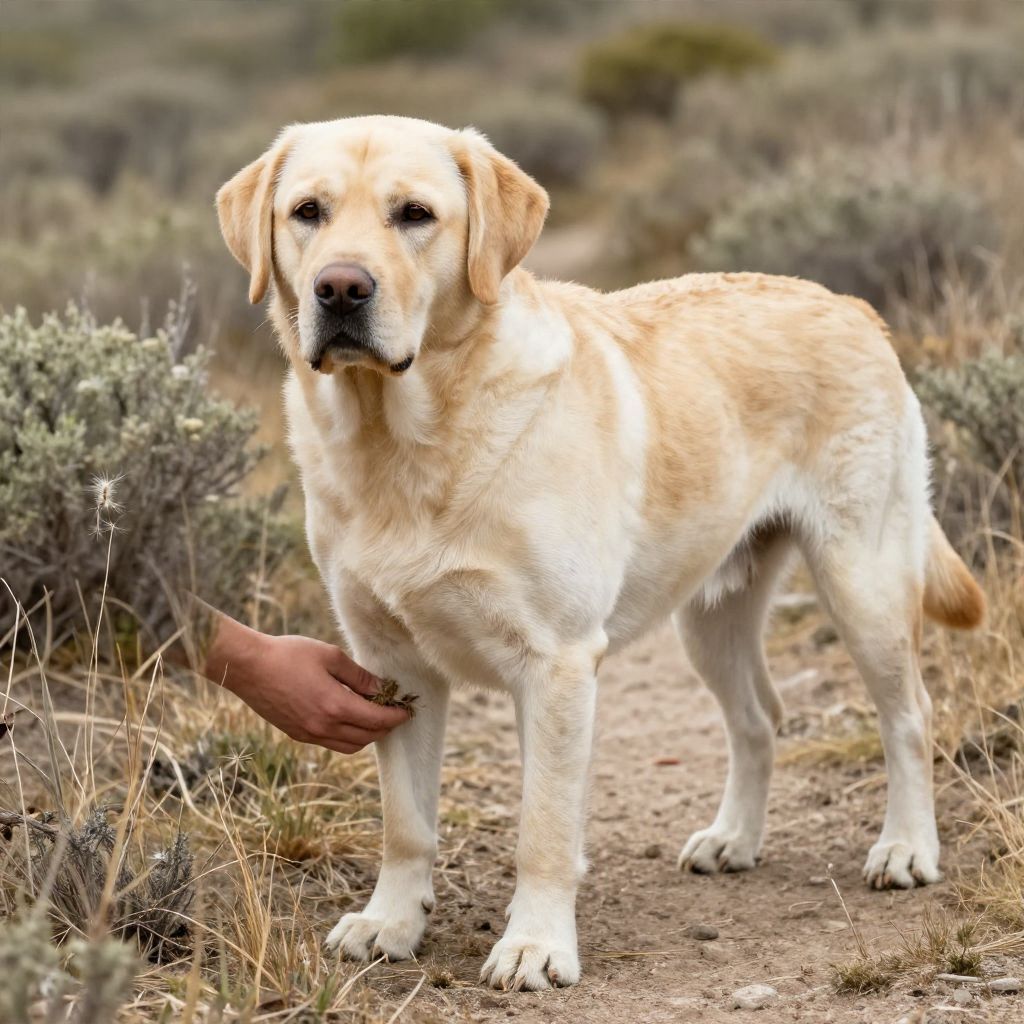
What is a foxtail, and why do dog owners worry about it? In dogs, a foxtail usually means a barbed grass awn that can cling to fur and burrow into skin, ears, nose, eyes, or paws. It is a common warm-weather hazard and can cause pain, infection, and urgent veterinary problems.
If your dog has been in tall grass, check them carefully afterward. Early removal and prompt veterinary care can prevent a small foxtail from becoming a serious injury.
What Is A Foxtail In Dogs?
A foxtail is a sharp, seed-like piece of grass with tiny backward-facing barbs. Those barbs let it hitchhike into a dog’s coat and then keep moving inward, where it can irritate tissue, cause abscesses, or travel into body openings.
Why Foxtails Are Dangerous For Dogs
Foxtails are dangerous because they do not just sit on the surface. Once they attach, they can work deeper into the skin or enter the nose, ears, eyes, mouth, or between the toes, creating inflammation and infection.
Common places foxtails get stuck
- Paws and toes — especially between the pads and in the webbing
- Ears — often after running through dry grass
- Nose — from sniffing or exploring vegetation
- Eyes — from head-height brush or grass
- Underarms, armpits, and groin — where fur can trap seeds
- Muzzle and lips — especially in curious dogs
Signs your dog may have a foxtail problem
- Sudden licking, chewing, or biting at one spot
- Head shaking or ear scratching
- Sneezing, nasal discharge, or pawing at the face
- Redness, swelling, or a draining sore
- Squinting, tearing, or keeping one eye closed
- Limping or reluctance to bear weight
- A painful lump or abscess that appears quickly
What To Do If You Suspect A Foxtail
If you can see a foxtail sitting loosely in the fur, you may be able to remove it carefully. If it is embedded, causing pain, or near a sensitive area, your dog should see a veterinarian promptly.
- Keep your dog calm and prevent more rubbing or licking.
- Inspect the coat, paws, ears, nose, and eyes in good light.
- Remove only fully visible seeds that come away easily with clean tweezers.
- Stop if your dog resists, if the seed breaks, or if it seems embedded.
- Contact your veterinarian for any swelling, discharge, limping, or ongoing irritation.
Do not dig around in the skin or try to flush a suspected embedded foxtail yourself if it is deep, painful, or in the eye, ear, or nose. That can push it farther in or worsen the injury.
When A Foxtail Becomes An Emergency
Some foxtail problems need urgent veterinary attention. Seek prompt care if your dog has severe pain, trouble breathing, repeated sneezing with blood, a swollen eye, sudden blindness, marked facial swelling, or a rapidly worsening wound.
Red-flag symptoms that should not wait
- Difficulty breathing or persistent coughing after grass exposure
- One eye held shut, cloudiness, or obvious eye trauma
- Facial swelling or swelling around the muzzle
- Fever, lethargy, or loss of appetite with a suspected embedded seed
- Pus, bad odor, or a draining tract from skin or paw
- Sudden head tilt, severe ear pain, or loss of balance
How Veterinarians Remove Foxtails
Your vet may use sedation, local anesthesia, or specialized tools to find and remove the foxtail safely. If the seed has migrated, imaging or surgery may be needed. Treatment may also include cleaning the wound and addressing infection or inflammation.
Because foxtails can break apart or move deeper, a “quick look” is not always enough. If symptoms continue after you remove a visible seed, your dog may still have a retained fragment.
How To Prevent Foxtail Injuries
Prevention matters most during dry, grassy seasons and in areas where foxtails are common. Dogs with longer coats, floppy ears, or a lot of outdoor access may need extra checking, but any dog can be affected.
Practical prevention steps
- Walk in mowed or cleared areas when possible.
- Avoid tall, dry grass and weedy trails during foxtail season.
- Inspect your dog after every outing, especially paws, ears, and face.
- Brush out the coat and remove any plant debris right away.
- Trim long hair around the feet and between the toes if your groomer or vet recommends it.
- Consider protective gear for high-risk outings, such as booties or an ear cover, if appropriate for your dog.
After-walk checking routine
- Run your hands over the coat from nose to tail.
- Check between the toes and around the paw pads.
- Look inside and around the ears.
- Inspect the eyes, lips, armpits, belly, and groin.
- Watch for licking, head shaking, or sudden discomfort later that day.
Foxtails And Different Dogs: What Changes?
Risk varies with coat type, ear shape, activity level, and environment. A short-coated dog can still pick up foxtails, but longer coats may hide them more easily, and dogs that run through brush or spend time off-trail are exposed more often.
Factors that can increase risk
- Outdoor time in dry grass or weedy areas
- Dense or long coat that traps debris
- Floppy ears that can hold plant material
- Curious, energetic, or scent-driven behavior outdoors
- History of previous foxtail injuries
Age can matter too. Puppies may be less careful about where they sniff and chew, while older dogs may be slower to shake off debris or may already have sensitive skin or ear problems that make irritation worse.
Common Mistakes Dog Owners Make
Foxtail injuries are often made worse by delay or by trying to handle a deeper problem at home. A small seed can look harmless while still causing significant pain or infection.
- Assuming the problem will pass on its own
- Pulling hard on a seed that seems stuck
- Ignoring repeated sneezing, head shaking, or paw licking
- Waiting for a lump or abscess to “come to a head”
- Using unapproved home treatments in the eye or ear
When To Call Your Veterinarian
Call your veterinarian if your dog has any persistent symptom after grass exposure, even if you do not see a foxtail. A retained seed can hide under the skin or in a body opening and still cause trouble.
Make an appointment soon if you notice
- Ongoing paw licking or limping
- Ear scratching or head shaking that keeps returning
- Localized swelling or a small draining wound
- Repeated sneezing or nasal discharge
- Eye redness, squinting, or tearing
Bottom Line
A foxtail is a sharp grass awn that can injure dogs by burrowing into skin or entering the ears, nose, eyes, or paws. Check your dog after outdoor time, remove only easy surface seeds, and get veterinary help quickly if symptoms persist or the area is painful, swollen, or near the eyes or nose.
If you want to understand other canine terms and risks, you may also find is a fox a dog? and can you have a fox as a pet? helpful for related reading.