
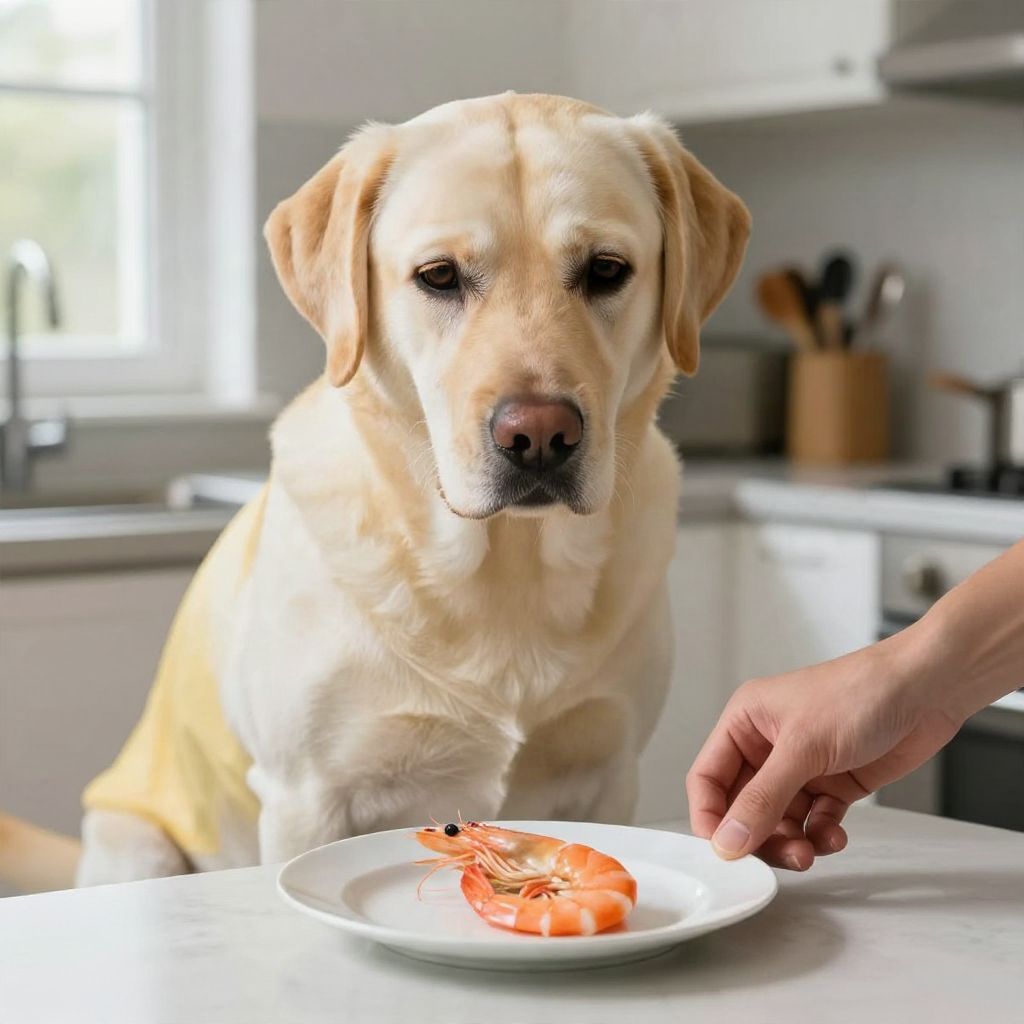
Can dogs have cooked shrimp? In many cases, yes—plain, fully cooked shrimp can be a safe occasional treat for healthy dogs. The key is preparation: no seasoning, no butter or oil-heavy sauces, and no shells, tails, or skewers.
Even when shrimp is safe, it should stay a small extra, not a regular part of your dog’s diet. Some dogs have food sensitivities, digestive upset, or medical conditions that make shrimp a poor choice, so it helps to know the risks before sharing.
Can Dogs Have Cooked Shrimp?
Yes, most dogs can eat a small amount of plain cooked shrimp as an occasional treat. Serve it fully cooked, peeled, and deveined, with no salt, garlic, onion, butter, spices, or sauce. If your dog has pancreatitis, a sensitive stomach, or a seafood allergy, ask your veterinarian first.
Why Plain Cooked Shrimp Can Be Okay
Shrimp is a lean source of protein and contains nutrients such as selenium, vitamin B12, and omega-3 fats. That does not make it a necessary food for dogs, but it can be an acceptable treat when prepared safely and given in moderation.
The biggest advantage is that plain shrimp is usually low in fat compared with many other human foods. That said, “low fat” does not mean “free to feed,” especially for dogs that need a strict diet or have a history of digestive trouble.
When shrimp is more likely to be a reasonable treat
- Your dog is healthy and eats a balanced commercial or veterinary diet.
- The shrimp is plain, cooked, peeled, and deveined.
- You offer only a small amount.
- Your dog has no known seafood allergy or sensitivity.
How to Safely Feed Cooked Shrimp to Dogs
If you want to share shrimp, keep the preparation simple. The safest version is plain shrimp cooked thoroughly in water or by another method without added seasoning or fats.
- Choose plain shrimp with no sauces or marinades.
- Cook it fully until opaque and firm.
- Remove the shell, tail, and any vein.
- Cut it into small pieces if your dog is small or tends to gulp food.
- Offer a tiny portion first and watch for digestive upset.
For many dogs, a few small pieces are enough. Treats should stay a small part of daily intake, especially for smaller dogs, overweight dogs, or dogs on a calorie-controlled plan.
Good serving habits
- Use shrimp as a reward, not a meal replacement.
- Keep portions smaller for toy breeds and puppies.
- Introduce it slowly if your dog has never had seafood before.
- Stop if you notice vomiting, diarrhea, itching, or unusual behavior.
Risks of Feeding Cooked Shrimp to Dogs
Cooked shrimp is not automatically safe just because it is cooked. The main risks come from preparation, portion size, and your dog’s individual health status.
1. Seasonings and rich ingredients
Garlic, onion, chives, heavy butter, oils, hot spices, and salty marinades can upset your dog’s stomach or be harmful. Restaurant shrimp and flavored frozen shrimp are especially risky because ingredients are often hard to verify.
2. Shells, tails, and hard pieces
Shrimp shells and tails can be a choking hazard and may irritate or obstruct the digestive tract. Even when a dog seems eager to chew them, do not offer shell-on shrimp.
3. Food allergies or sensitivities
Some dogs react poorly to seafood. Signs may include itching, ear problems, vomiting, diarrhea, or recurrent skin irritation. A single exposure may not cause a dramatic reaction, but repeated exposure can still be a problem for sensitive dogs.
4. Pancreatitis or fat-sensitive conditions
While plain shrimp is relatively lean, dogs with pancreatitis, certain gastrointestinal disorders, or a vet-recommended low-fat diet may still need to avoid it. Even small changes in diet can trigger symptoms in some dogs.
5. Raw or undercooked shrimp
Raw or undercooked shellfish is not a good idea for dogs. It can carry bacteria or parasites that may cause illness, and it is harder to digest safely.
Signs Your Dog May Not Tolerate Shrimp
After eating shrimp, watch your dog closely for any changes. Mild stomach upset can happen even if the shrimp was plain and cooked properly.
- Vomiting
- Diarrhea
- Gas or abdominal discomfort
- Itching or hives
- Ear redness or head shaking
- Swelling of the face, lips, or eyelids
- Coughing, gagging, or trouble breathing
Seek urgent veterinary care immediately if your dog has facial swelling, breathing trouble, repeated vomiting, collapse, severe lethargy, or a suspected choking episode. Those can be emergency signs, not simple food intolerance.
Can Puppies Eat Cooked Shrimp?
Puppies can sometimes eat a tiny amount of plain cooked shrimp, but it is usually better to keep their diet simple while they are growing. Puppies have more delicate digestive systems, and sudden new foods can cause loose stools or vomiting more easily than in adult dogs.
If you do offer shrimp to a puppy, make it very small, fully cooked, and plain. Avoid making seafood a frequent treat unless your veterinarian says it fits your puppy’s diet and health needs.
What About Small Dogs, Large Dogs, and Senior Dogs?
Size and life stage matter because tolerance and calorie needs vary. A few bites may be trivial for a large dog but too much for a small dog. Senior dogs may also have dental issues, digestive sensitivity, or medical conditions that make rich or unfamiliar foods harder to handle.
- Small dogs: use tiny pieces to reduce choking risk and overfeeding.
- Large dogs: they may handle a bit more, but treats should still stay modest.
- Senior dogs: check for kidney, heart, gastrointestinal, or pancreatitis concerns before offering shrimp.
Common Mistakes to Avoid
Most shrimp-related problems happen because the shrimp was prepared for people, not dogs. A safe food can become unsafe if it includes extras or is offered carelessly.
- Feeding shrimp cooked in butter, garlic, or onion
- Giving fried shrimp, breaded shrimp, or shrimp in creamy sauces
- Leaving shells, tails, or toothpicks attached
- Offering too much at once
- Using shrimp as a substitute for a complete dog food
- Ignoring signs of allergy or stomach upset
When You Should Ask Your Veterinarian First
It is smart to check with your veterinarian before feeding shrimp if your dog has any ongoing health issue or dietary restriction. This is especially important if your dog has a history of food allergies, pancreatitis, chronic vomiting, inflammatory bowel disease, or a prescription diet.
You should also ask first if your dog is very young, very old, pregnant, nursing, or recovering from illness. In those situations, even “safe” treats can be a poor fit depending on the dog’s overall needs.
What to Do If Your Dog Ate a Bad Shrimp Dish
If your dog stole shrimp that was heavily seasoned, fried, sauced, or mixed with garlic or onion, monitor closely and contact your veterinarian for guidance. The exact concern depends on what was in the dish, how much your dog ate, and your dog’s size and health.
Do not try to force vomiting unless a veterinarian or poison professional specifically instructs you to do so. If your dog is choking, struggling to breathe, or collapsing, treat it as an emergency and seek immediate veterinary care.
Safer Treat Alternatives If Shrimp Is Not a Good Fit
If shrimp does not agree with your dog, there are many other treat options that may be easier to manage. The best choice depends on your dog’s diet, allergies, and calorie needs.
- Small pieces of plain cooked chicken or turkey
- Commercial dog treats made for your dog’s size and health needs
- Dog-safe vegetables such as plain green beans or carrots, if tolerated
- Vet-approved training treats for frequent rewards
Remember that treats should support your dog’s health, not compete with a balanced diet. If you are using shrimp or any other human food often, it may be worth reviewing your dog’s total calorie intake with your veterinarian.
Bottom Line: Can Dogs Have Cooked Shrimp?
Yes, dogs can have cooked shrimp when it is plain, fully cooked, peeled, and given in small amounts. The main concerns are seasoning, shells, overfeeding, and your dog’s individual health. If your dog has a medical condition or shows any reaction, stop feeding shrimp and contact your veterinarian.
If you want to compare shrimp safety in more detail, you may also find these guides helpful: is shrimp good for dogs and is shrimp bad for dogs.