
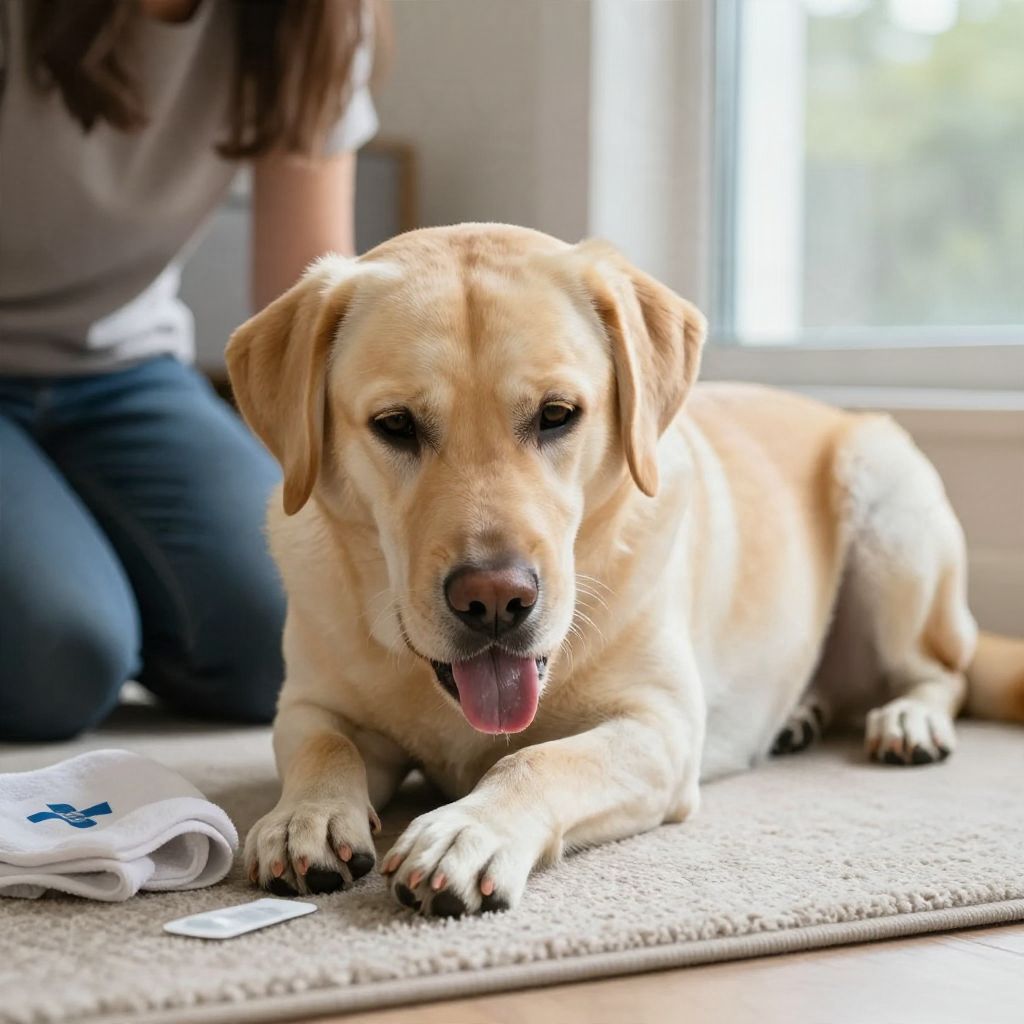
Why do dogs chew their paws? It usually means something is irritating, painful, or itchy, but the cause can range from allergies to an injury, infection, or stress. Occasional licking is normal; repeated chewing, redness, swelling, or hair loss is not.
The right response depends on what else you notice. Some causes need simple grooming or allergy management, while others require prompt veterinary care to prevent pain and infection.
Why do dogs chew their paws?
Dogs chew their paws most often because something is making the feet uncomfortable, itchy, or painful. Common causes include allergies, parasites, cuts, foreign objects, infections, dry skin, nail problems, and anxiety. If the chewing is frequent or the skin looks irritated, your veterinarian should help identify the cause.
Common causes of paw chewing
Allergies
Allergies are one of the most common reasons dogs chew their paws. A dog may react to environmental triggers like pollen, grass, dust mites, or mold, or to food ingredients.
Allergy-related paw chewing often comes with red skin, licking between the toes, ear problems, or seasonal flare-ups. Some dogs are more sensitive than others, and symptoms can change with age or environment.
Skin infections
Bacteria and yeast can overgrow on irritated skin, especially if a dog has already been licking or chewing the area. Once the skin is damaged, infection can make the itch cycle worse.
Signs may include odor, greasy skin, discharge, crusting, or darkened skin between the toes. These problems usually need veterinary treatment.
Parasites
Fleas, mites, and other parasites can trigger intense itching that leads to paw chewing. Even if you do not see parasites, they can still be present.
If your dog is scratching other body areas too, or if the itching seems sudden and severe, ask your veterinarian about parasite control and skin testing.
Injury or something stuck in the paw
A thorn, foxtail, burr, splinter, cut, cracked pad, or broken nail can make a dog chew at one paw repeatedly. This is especially likely if the chewing is focused on just one foot.
Look for limping, swelling, bleeding, a visible object, or sensitivity when you touch the paw. Do not dig deeply into the skin if you cannot easily remove the object.
Dry skin or irritation
Dry weather, frequent bathing, harsh shampoos, salted sidewalks, or rough surfaces can irritate the paws. Some dogs simply have more delicate skin than others.
Dry, flaky pads and mild licking may improve with better grooming and environmental changes, but persistent chewing still deserves a veterinary check.
Nail and paw structure problems
Overgrown nails, torn nails, ingrown nails, or pressure on the toes can make walking uncomfortable. Dogs with certain foot shapes or gait issues may be more prone to repeated irritation.
If nail trimming is difficult or the dog resists having the feet touched, pain may already be present.
Behavioral causes
Some dogs chew their paws because of stress, boredom, frustration, or habit. This is more likely when medical causes have been ruled out or the chewing happens during predictable situations like being left alone.
Behavioral chewing can still damage the skin, so it should not be dismissed as “just a bad habit.”
What signs mean the paw chewing is a problem?
Watch for changes that suggest more than normal grooming. Repeated chewing, limping, swelling, redness, odor, hair loss, bleeding, or a sudden change in behavior are all reasons to take the issue seriously.
- Redness or inflammation between the toes or on the pads
- Hair loss from constant licking or chewing
- Odor, discharge, or crusting that may suggest infection
- Limping or yelping when the paw is touched
- Chewing that is one-sided or focused on a single paw
- Sudden, intense itching or swelling
If the skin is broken, the dog is in obvious pain, or the paw is bleeding, contact your veterinarian promptly.
When is it an emergency?
Seek urgent veterinary care if your dog has severe swelling, a deep wound, heavy bleeding, a stuck object you cannot safely remove, a broken nail with significant pain, or signs of a serious allergic reaction such as facial swelling, vomiting, collapse, or trouble breathing.
Do not wait if your dog cannot bear weight, the paw is rapidly worsening, or the chewing is so intense that the skin is being damaged quickly.
What you can do at home first
While you arrange veterinary care, focus on safe, simple steps that reduce irritation and prevent more damage. Keep the area clean and stop the dog from chewing further if possible.
- Inspect the paw carefully. Look between the toes, around the nails, and on the pads for debris, cuts, swelling, or discharge.
- Rinse gently. If the paw is dirty, use lukewarm water to remove mud, pollen, or salt, then dry it well.
- Prevent more licking. Use an e-collar or another vet-approved barrier if your dog will not leave the paw alone.
- Limit irritants. Wipe paws after walks if grass, dust, or road salt seems to trigger the problem.
- Monitor closely. Note when the chewing happens, which paw is affected, and whether it follows walks, meals, grooming, or stressful events.
Do not apply human creams, essential oils, or homemade remedies unless your veterinarian specifically tells you to. Some products can be harmful if licked.
How veterinarians find the cause
Your veterinarian will usually start with a physical exam and a history of when the chewing began. They may look for parasites, infection, foreign material, nail problems, or signs of allergy.
Depending on the findings, the next step may include skin cytology, parasite testing, a culture, allergy workup, or a discussion of diet trials if food allergy is suspected. Sometimes the cause is more than one issue at the same time.
How treatment usually differs by cause
For allergies
Treatment may involve reducing exposure to triggers, improving skin health, and addressing itch under veterinary guidance. Some dogs also need long-term management because allergies often come back.
For infection
Bacterial or yeast infections usually need prescription treatment. If the skin is inflamed, your veterinarian may also address the underlying trigger so the problem does not keep returning.
For injury
Foreign objects, torn nails, or wounds may need professional cleaning, removal, bandaging, or pain relief. A small injury can become a bigger problem if a dog keeps chewing it.
For behavioral chewing
If medical causes are ruled out, your veterinarian or a qualified behavior professional can help you reduce stress and redirect the habit. Reward-based training, enrichment, and better routines are the safest tools.
How to help prevent paw chewing
You cannot prevent every case, but good foot care and early attention to irritation can reduce the risk. Prevention is especially important for dogs with a history of allergies or sensitive skin.
- Check paws regularly, especially after walks or outdoor play.
- Keep nails trimmed to a comfortable length.
- Dry paws after rain, snow, or baths.
- Rinse off salt, mud, or pollen when needed.
- Use a gentle, dog-safe shampoo if your veterinarian recommends bathing.
- Provide daily exercise and mental enrichment to reduce stress-related licking.
Some dogs, especially active or outdoor dogs, may need more frequent paw checks than others. Puppies may chew paws while exploring or during teething, but persistent chewing still deserves attention.
Common mistakes to avoid
It is easy to assume paw chewing is minor, but a few common mistakes can make things worse.
- Ignoring repeated licking until the skin is infected
- Using harsh disinfectants or human ointments without veterinary advice
- Assuming the problem is “just anxiety” without checking for pain or allergies
- Waiting too long when only one paw is affected
- Punishing the dog for licking, which does not fix the cause and may increase stress
When should you call the vet?
Call your veterinarian if the chewing lasts more than a day or two, keeps coming back, or is paired with redness, odor, swelling, limping, or hair loss. You should also call sooner if your dog has a history of allergies, skin infections, or repeated paw problems.
If your dog is chewing one paw only, seems painful, or the skin is broken, do not assume it will resolve on its own.
Bottom line
Why do dogs chew their paws? Most often, it is a sign of itch, pain, or irritation that needs attention. Check the paw, prevent more chewing, and contact your veterinarian if the behavior is persistent, severe, or paired with skin changes.
If you want to learn more about related causes, you may also find why dogs lick their paws and why dogs chew on their feet helpful for comparing symptoms and next steps.