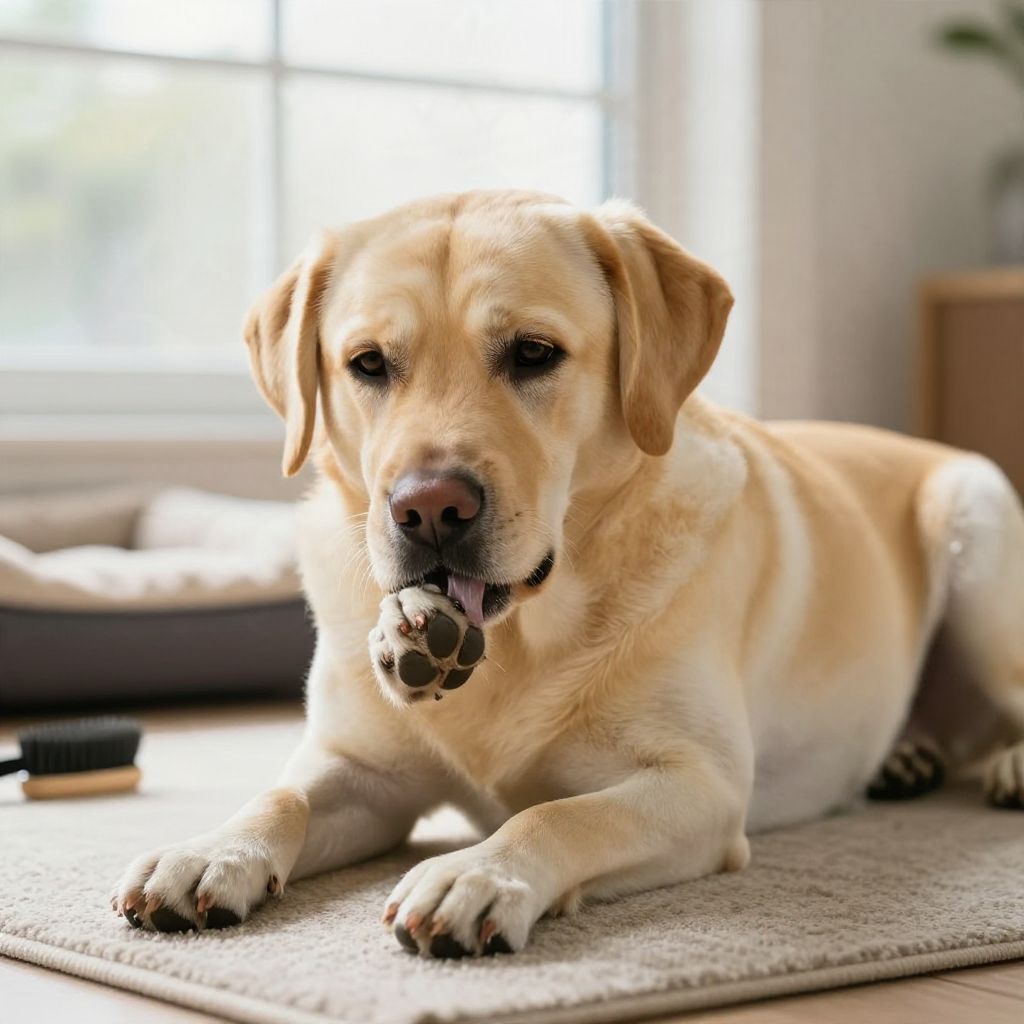
Why do dogs chew on their feet? Most often, it happens because something is irritating the skin, nails, or paws. Allergies, parasites, infections, injury, dryness, anxiety, and even a foreign object between the toes can all trigger chewing.
Occasional licking is normal, but repeated chewing, redness, odor, swelling, or limping means your dog needs attention. The right next step depends on the cause, so it helps to check the paws carefully and know when to call your veterinarian.
Why do dogs chew on their feet?
Dogs chew on their feet when something makes the area itchy, painful, or uncomfortable. Common causes include allergies, fleas, skin or yeast infections, cuts, torn nails, foreign objects, dry skin, and stress-related habits. If the chewing is frequent or the skin looks irritated, your vet should examine your dog.
Common causes of paw chewing
1. Allergies
Allergies are one of the most common reasons dogs chew their feet. Dogs may react to environmental triggers like pollen, dust mites, or mold, and some have food-related sensitivities that show up as itchy paws.
Signs often include:
- Chewing or licking both front or back paws
- Red or inflamed skin between the toes
- Face rubbing, ear scratching, or recurrent ear infections
- Seasonal flare-ups or year-round itchiness
Allergies usually need veterinary guidance because the treatment depends on the trigger and the severity of the itch.
2. Fleas and other parasites
Flea bites can make a dog intensely itchy, and some dogs chew their paws as part of a broader itch pattern. Mites and other parasites can also irritate the skin, especially if the dog has been exposed to other animals or has not been on consistent parasite prevention.
Even if you do not see fleas, they can still be present. Your vet can help confirm whether parasites are involved and recommend appropriate prevention.
3. Skin or yeast infection
Warm, moist paws can develop bacterial or yeast overgrowth, especially if the dog has allergies, licks a lot, or spends time in damp conditions. Infections often make the feet smell unpleasant and look red, greasy, or swollen.
Common clues include:
- Odor from the paws
- Brown staining from repeated licking
- Thickened or irritated skin
- Discharge, scabs, or sensitivity to touch
Infections usually need veterinary diagnosis and treatment. Home care alone is often not enough if the skin is already inflamed.
4. Injury or something stuck in the paw
A thorn, foxtail, splinter, small stone, or cracked nail can make a dog chew one specific foot. This is especially likely if the chewing starts suddenly or your dog is limping.
Check carefully between the toes, around the pads, and under the nails. If you see a deep puncture, bleeding, marked swelling, or a foreign object you cannot safely remove, contact your vet promptly.
5. Dry, cracked, or irritated skin
Cold weather, rough surfaces, frequent walking on hot pavement, or repeated exposure to irritants can dry out the paw pads. Some dogs then lick or chew to relieve the discomfort.
Dry skin may also be part of a larger skin issue, so do not assume it is just weather-related if the problem keeps returning.
6. Nail problems
Overgrown, broken, or ingrown nails can change how a dog stands and walks, leading to paw chewing. A torn nail can be painful and may bleed or catch on surfaces.
Regular nail care matters, especially for dogs that do not naturally wear their nails down through activity. If your dog avoids walking or reacts when you touch a nail, have the paw checked.
7. Anxiety, boredom, or habit
Some dogs chew their feet because the behavior has become a coping habit. Stress, separation anxiety, lack of enrichment, or too little exercise can contribute, especially if medical causes have been ruled out.
Behavior-related chewing is still real discomfort for the dog, and it can quickly turn into a skin problem. Address both the behavior and any underlying stressor.
What to look for when your dog keeps chewing
Try to notice whether the chewing is occasional or constant, and whether it affects one paw or several. The pattern can help you and your veterinarian narrow down the cause.
- One paw only: more suggestive of injury, a foreign object, nail pain, or a localized infection
- Multiple paws: often seen with allergies, parasites, or generalized skin irritation
- Seasonal pattern: may point to environmental allergies
- Odor, redness, or discharge: may suggest infection
- Limping or sudden pain: may indicate injury or a lodged object
What you can do at home right away
Before you try to solve the problem, take a calm, careful look at the paws. A quick check can reveal obvious causes and help you decide whether the issue is urgent.
- Inspect the paw for cuts, swelling, debris, broken nails, or redness between the toes.
- Rinse dirty paws with lukewarm water after walks if the skin looks irritated by mud, salt, or pollen.
- Dry the feet well after bathing or wet weather, especially between the toes.
- Prevent more chewing with an e-collar or a vet-approved protective option if your dog is damaging the skin.
- Keep a brief log of when the chewing happens, what your dog walked on, and whether it is seasonal or constant.
Do not apply human creams, essential oils, or random home remedies without veterinary advice. Some products can irritate the skin further or be harmful if your dog licks them.
When paw chewing is an emergency
Some signs mean your dog needs urgent veterinary care, not watchful waiting. Seek help right away if you notice:
- Heavy bleeding or a deep wound
- Severe swelling, heat, or sudden pain
- A foreign object stuck in the paw that you cannot safely remove
- Refusal to bear weight or a sudden limp
- Pus, foul odor, or rapidly spreading redness
- Chewing so intensely that the skin is raw or open
- Swelling of the face, hives, vomiting, or trouble breathing
Breathing trouble or facial swelling can be an emergency. If those signs appear, go to an emergency veterinarian immediately.
How veterinarians figure out the cause
Your vet will usually start with a physical exam and a close look at the paws, skin, nails, and ears. Depending on the findings, they may recommend skin tests, parasite checks, cytology, or other diagnostics.
If allergies are suspected, the process may take time because several conditions can look similar. That is why it helps to bring details about timing, diet, environment, and any changes in grooming products, flooring, or routine.
How treatment depends on the cause
There is no single fix for every dog that chews on its feet. Treatment is based on the underlying problem, and the plan may include medical care, parasite prevention, skin treatment, or behavior support.
- Allergies: may need prescription treatment, environmental management, or diet evaluation
- Parasites: require proper parasite control for your dog and sometimes the home environment
- Infections: often need veterinary-prescribed medication and follow-up
- Injuries: may need cleaning, bandaging, nail care, or removal of a foreign object
- Behavioral chewing: may improve with enrichment, routine changes, and guidance from a trainer or behavior professional
How to help prevent future paw chewing
Prevention works best when you match it to the cause. A dog with allergies needs different support than a dog chewing because of a torn nail or boredom.
- Keep up with parasite prevention recommended by your vet
- Check paws after walks, hikes, or play in tall grass
- Trim nails regularly and safely
- Dry feet after rain, baths, or swimming
- Use reward-based training and enrichment to reduce stress and boredom
- Ask your vet about allergy management if the problem keeps returning
If your dog is prone to licking or chewing, early intervention matters. The longer the behavior continues, the more likely the skin becomes inflamed and infected.
Common mistakes to avoid
It is easy to focus only on stopping the chewing, but that can hide the real problem. Avoid these common missteps:
- Ignoring repeated paw licking because it seems minor
- Using harsh punishment, which can increase stress and does not treat the cause
- Applying human products without veterinary guidance
- Waiting too long when the skin is red, smelly, or painful
- Assuming it is “just allergies” without checking for injury or infection
When to call your veterinarian
Call your veterinarian if the chewing lasts more than a day or two, keeps coming back, or is causing visible skin damage. You should also book an appointment if your dog has ear problems, seasonal itchiness, or a history of skin allergies.
For chronic cases, your vet may help you build a long-term plan so the chewing does not keep cycling between flare-up and temporary relief.
Conclusion
Why do dogs chew on their feet? Most often, it is a sign of itch, pain, or irritation that deserves attention. Check the paws, watch for red flags, and involve your veterinarian early if the chewing is persistent, painful, or causing skin damage.
If you want to understand related licking behavior, you may also find why dogs lick their paws helpful, along with practical tips for stopping paw licking at home.