
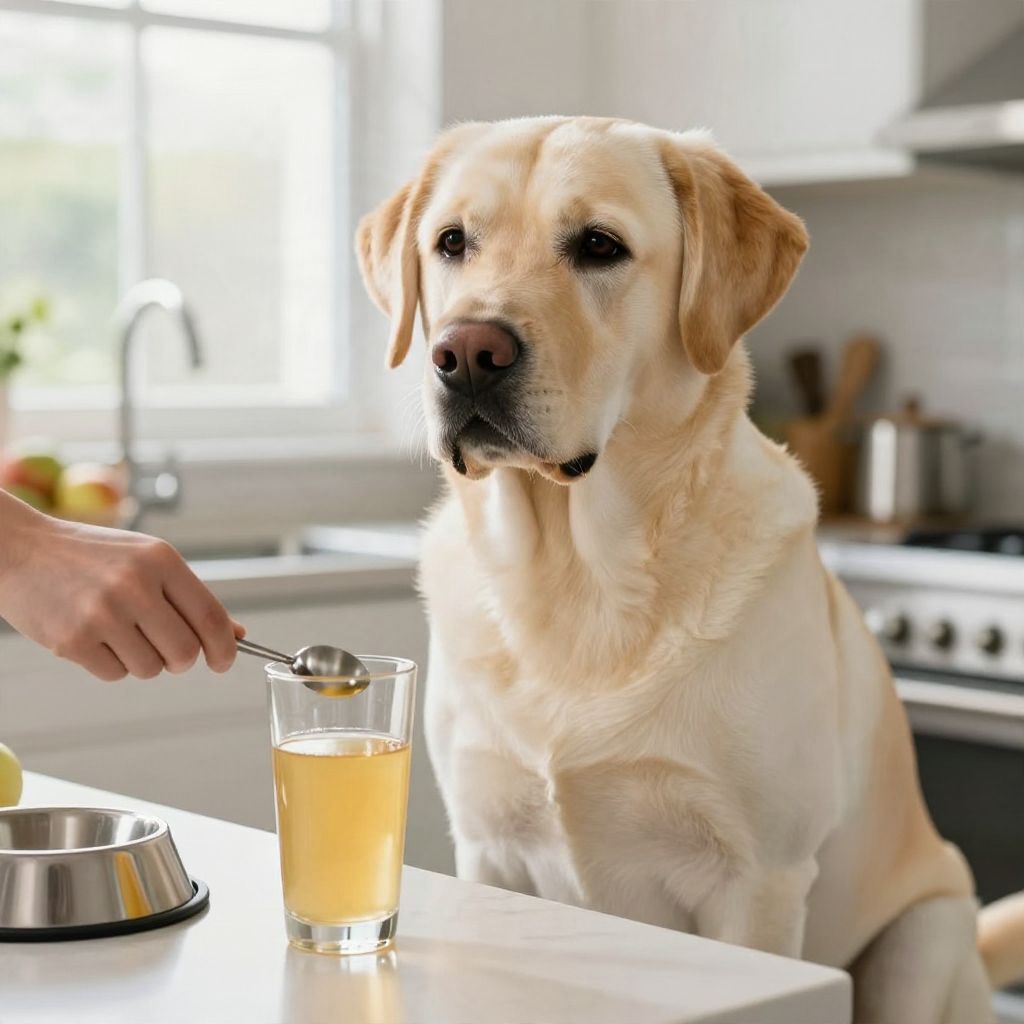
Can dogs drink apple juice? In small amounts, plain apple juice is usually not toxic to dogs, but it is not a good regular treat. The sugar content can upset digestion, add unnecessary calories, and worsen some health problems.
If your dog accidentally licks a little, they will often be fine. But juice with added sweeteners, xylitol, or other ingredients can be dangerous, so it is important to check the label and know when to call your vet.
Can dogs drink apple juice?
Plain, unsweetened apple juice is generally not poisonous to dogs, but it should only be given rarely and in very small amounts. Many apple juices contain a lot of sugar, and some flavored or “diet” versions may include ingredients that are unsafe for dogs. Water is the best drink for everyday hydration.
Why apple juice is not a great choice for dogs
Even when apple juice is made from real apples, it is still a concentrated liquid with less fiber and more sugar than whole apple slices. That means it is easier for a dog to consume too much sugar quickly, especially if they are small, overweight, or prone to stomach upset.
Common concerns with apple juice
- High sugar content: Can contribute to weight gain and may be a problem for dogs with diabetes or insulin resistance.
- Digestive upset: Some dogs get loose stool, gas, or vomiting after sugary drinks.
- Dental issues: Sugary liquids can stick to teeth and support plaque buildup.
- Hidden ingredients: Some juices contain xylitol, added sweeteners, preservatives, or juice blends that are not dog-friendly.
When apple juice may be especially risky
Risk depends on your dog’s size, age, and health. A tiny amount may bother one dog and not another, so it is best to be cautious rather than assume it is safe for every pet.
Dogs that need extra caution
- Puppies: Their digestive systems are more sensitive, and sugary foods can trigger diarrhea more easily.
- Dogs with diabetes: Juice can affect blood sugar and should only be discussed with your veterinarian.
- Overweight dogs: Extra calories from drinks can add up quickly.
- Dogs with pancreatitis history: Rich or sugary foods may be a poor choice.
- Dogs with chronic stomach sensitivity: Even small amounts may cause vomiting or loose stool.
What kinds of apple juice are unsafe?
Not all apple juice products are the same. Before offering any to your dog, read the label carefully and avoid anything with added ingredients that could be harmful.
Do not give your dog apple juice if it contains:
- Xylitol or any sugar substitute that may be toxic to dogs
- Grape juice or other mixed fruit juices
- Artificial sweeteners
- Alcohol or fermented ingredients
- Large amounts of added sugar or syrups
If you are unsure about an ingredient, do not offer the juice until you have checked with your veterinarian or poison control guidance for pets.
How much apple juice can a dog have?
There is no ideal serving size for apple juice because it is not a necessary part of a dog’s diet. If you choose to offer it at all, keep it to a very small taste of plain, unsweetened juice and only occasionally. It should never replace water or a balanced dog food diet.
Safer way to offer it, if your vet says it is okay
- Choose plain, unsweetened apple juice with no added ingredients.
- Offer only a tiny amount, not a full bowl.
- Watch for vomiting, diarrhea, itching, restlessness, or unusual behavior afterward.
- Stop giving it if your dog seems sensitive.
For many dogs, even a small amount is unnecessary. If you want an apple-flavored treat, a few pieces of plain apple are usually a better option than juice because they contain fiber and less concentrated sugar.
Can puppies drink apple juice?
Puppies are more likely than adult dogs to get an upset stomach from sugary drinks. Their food and treats should support growth, not add extra sugar. If a puppy accidentally drinks a little plain apple juice, monitor them closely and contact your vet if they develop vomiting, diarrhea, or seem unwell.
Signs your dog may not tolerate apple juice
Some dogs react quickly to sugary or unfamiliar foods. Mild digestive upset may pass on its own, but you should still pay attention to how your dog responds.
Watch for these symptoms
- Vomiting
- Loose stool or diarrhea
- Gas or bloating
- Restlessness
- Reduced appetite
- Unusual thirst
Seek urgent veterinary help if your dog has repeated vomiting, severe diarrhea, weakness, collapse, tremors, trouble breathing, or you suspect the juice contained xylitol or another toxic ingredient.
What to do if your dog drank apple juice
If your dog drank a small amount of plain apple juice, the safest first step is usually to monitor them and provide fresh water. If the juice had sweeteners or other questionable ingredients, treat it as a possible poisoning concern and contact a veterinarian right away.
Practical next steps
- Check the ingredient list immediately.
- Remove access to the juice.
- Offer fresh water.
- Observe your dog for stomach upset or behavior changes.
- Call your veterinarian if your dog is a puppy, has a medical condition, or consumed more than a taste.
Do not try home remedies or force vomiting unless a veterinarian specifically instructs you to do so. That can make some situations worse.
Healthier alternatives to apple juice
If you want a special treat, choose options that are safer and more useful for dogs. The goal is to reward your dog without adding unnecessary sugar or upsetting their stomach.
Better choices than apple juice
- Fresh water
- Ice cubes or ice chips
- Small pieces of plain apple with seeds and core removed
- Dog-safe frozen treats made for pets
- Low-sodium broth only if it is confirmed dog-safe and free of onion, garlic, and excess salt
If you want to use fruit as a treat, keep portions small and make sure the fruit is safe for dogs. Apples are usually easier to manage than juice because you can control the amount more precisely.
How to avoid common mistakes
Most problems happen when people assume that “natural” means automatically safe. Juice can still be too sugary, and some products marketed as healthy for humans are not appropriate for dogs.
Common mistakes to avoid
- Giving apple juice every day
- Using juice to encourage drinking instead of addressing the real reason for low water intake
- Offering juice to a dog with diabetes without veterinary guidance
- Assuming all fruit drinks are safe because they contain apples
- Ignoring ingredient labels
When to ask your veterinarian
Check with your vet if your dog has a medical condition, is on a special diet, or has a history of stomach sensitivity. This is especially important for senior dogs, puppies, and dogs with diabetes, pancreatitis, or kidney disease, since their dietary needs can vary a lot.
You should also call your vet if your dog drank a significant amount, shows digestive signs that do not settle, or may have consumed a product with xylitol or another harmful ingredient. Fast action matters when toxic ingredients are possible.
Bottom line
Can dogs drink apple juice? A tiny amount of plain, unsweetened juice is usually not dangerous for many dogs, but it is not a recommended treat. Water is the best choice, and whole apple slices are generally a better option than juice. If the label includes sweeteners or other additives, do not give it to your dog.
For more fruit-safety guidance, you may also find these helpful: can dogs have apples? and can dogs eat citrus?