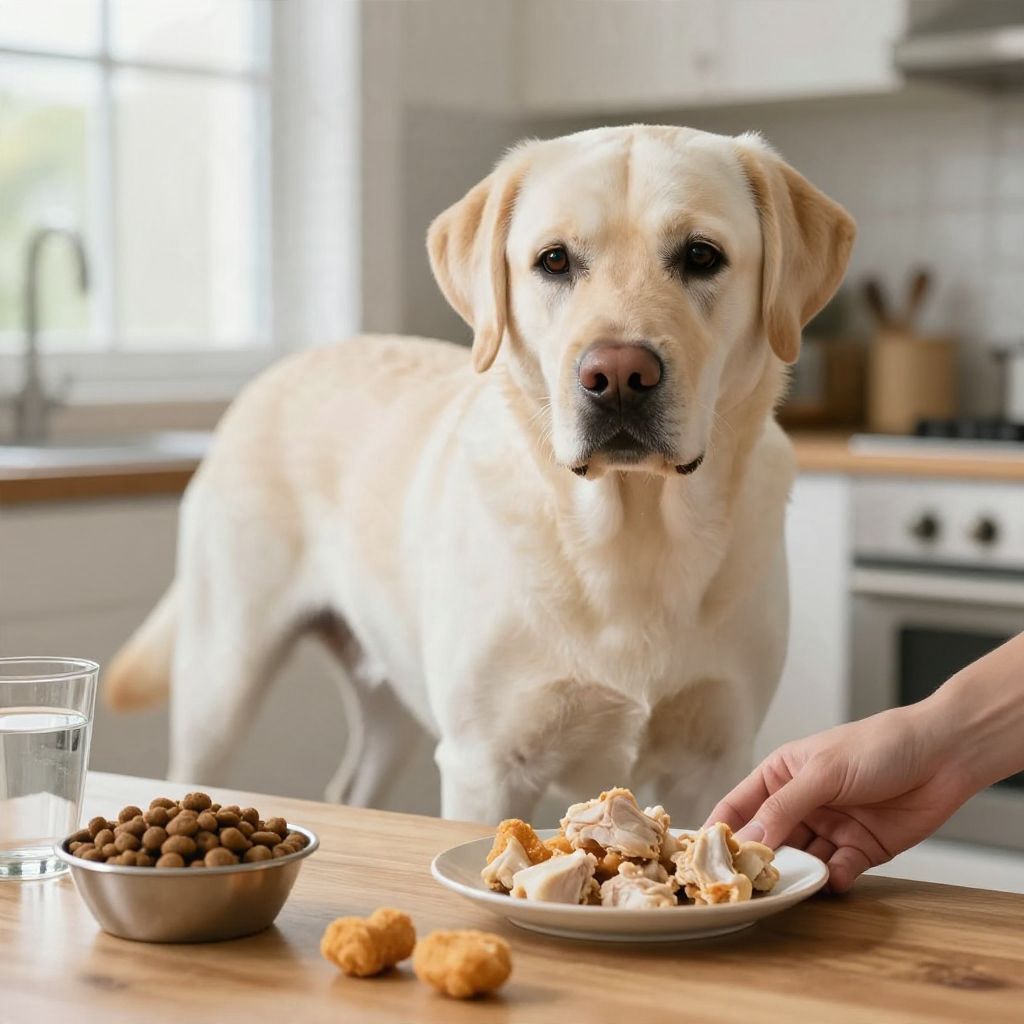
Can dogs eat chicken nuggets? In general, chicken nuggets are not a good snack for dogs. They’re usually fried, heavily salted, and may contain seasonings or ingredients that can upset your dog’s stomach or be unsafe in larger amounts.
If your dog ate one plain nugget by accident, they’ll often be fine, but repeated feeding is a bad idea. The safest choice is plain, fully cooked chicken without breading, oil, or seasoning.
Can Dogs Eat Chicken Nuggets?
Dogs should not regularly eat chicken nuggets. While a small accidental bite is often not an emergency, most nuggets are too fatty, salty, and processed for dogs. Breading, oils, spices, and sauces can cause stomach upset, and some ingredients may be risky depending on what’s inside the nugget.
Why Chicken Nuggets Are a Poor Choice for Dogs
Chicken itself is not the problem. The issue is how nuggets are made and seasoned.
Common concerns with chicken nuggets
- High fat content: Fried foods can trigger vomiting, diarrhea, or pancreatitis in some dogs.
- Too much salt: Excess sodium is not healthy for dogs and can be especially concerning for dogs with heart or kidney issues.
- Seasonings and additives: Onion, garlic, spicy coatings, and flavor blends can be problematic.
- Breading and fillers: Nuggets are often more batter than meat, making them less nutritious and harder to digest.
- Sauces: Dipping sauces may contain extra salt, sugar, onion, garlic, or artificial sweeteners.
Some dogs tolerate a tiny amount without obvious trouble, while others may develop digestive upset after just one nugget. Age, size, health status, and sensitivity all matter.
What Happens If a Dog Eats a Chicken Nugget?
If your dog ate one plain chicken nugget, monitor them closely for stomach upset. Many dogs will have no serious problem, but some may vomit, have diarrhea, or seem uncomfortable. Larger dogs may handle a small amount better than tiny dogs, but no dog should be fed nuggets as a routine treat.
Watch for these signs
- Vomiting
- Loose stool or diarrhea
- Reduced appetite
- Restlessness or abdominal discomfort
- Excessive thirst after salty food
If your dog seems normal after a small accidental bite, you can usually keep an eye on them at home. Offer fresh water and skip other rich treats for the rest of the day.
When Chicken Nuggets Become a Bigger Concern
Some situations are more concerning than a simple accidental snack. The risk depends on the ingredients, the amount eaten, and your dog’s health history.
Call a veterinarian promptly if the nugget contained:
- Onion or garlic powder
- Hot, spicy, or heavily seasoned coating
- Large amounts of salt
- Unknown sauces or dips
- Xylitol or another artificial sweetener in a sauce or glaze
Seek urgent veterinary care if your dog has:
- Repeated vomiting
- Bloated or painful abdomen
- Severe lethargy or collapse
- Tremors or weakness
- Trouble breathing
- Signs of dehydration
- Diarrhea with blood
These symptoms can signal more than simple indigestion, especially in puppies, toy breeds, seniors, or dogs with medical conditions.
Are Homemade Chicken Nuggets Safe for Dogs?
Homemade nuggets can be safer than fast-food versions if they are made for dogs specifically and kept very simple. Even then, they should be an occasional treat, not a meal replacement.
Safer preparation ideas
- Use plain cooked chicken breast or thigh meat
- Avoid onion, garlic, salt, pepper blends, and spicy seasoning
- Skip deep frying
- Do not use butter or greasy coatings
- Keep portions small
If you want to offer chicken as a treat, plain boiled, baked, or air-cooked chicken without seasoning is usually a better option than nuggets. Always keep treats to a small part of your dog’s daily intake.
How Much Is Too Much?
There is no universal safe number of chicken nuggets for all dogs. A dog’s size, breed tendencies, age, activity level, and health status all affect how well they tolerate rich foods. A small dog may react to one nugget, while a larger dog may seem fine after a small piece.
Use this practical rule: if the food is greasy, salty, or heavily seasoned, treat it as an occasional accidental exposure rather than a planned snack.
Extra caution for dogs who may be more sensitive
- Puppies
- Senior dogs
- Dogs with a history of pancreatitis
- Dogs with sensitive stomachs
- Dogs with kidney, heart, or liver disease
- Overweight dogs
For these dogs, even small amounts of fatty or salty human food can be a bigger problem.
What to Do If Your Dog Ate Chicken Nuggets
If your dog got into chicken nuggets, stay calm and assess what was eaten. The ingredients matter as much as the amount.
- Remove any remaining nuggets and packaging.
- Check whether sauces, onion, garlic, or sweeteners were involved.
- Offer fresh water.
- Monitor for vomiting, diarrhea, abdominal pain, or unusual tiredness.
- Contact your veterinarian if the nugget had risky ingredients or your dog has symptoms.
Do not try to make your dog vomit unless a veterinarian specifically tells you to do so. That can be unsafe in some situations.
Healthier Treat Alternatives
If you want to reward your dog, choose treats that are simpler and easier to digest than chicken nuggets. The best options are usually plain, single-ingredient, and sized appropriately for your dog.
- Small pieces of plain cooked chicken
- Commercial dog treats made for training
- Plain cooked turkey
- Small pieces of dog-safe vegetables, if your dog tolerates them
Even healthy treats should be given in moderation. Too many treats can lead to weight gain or digestive upset, especially in less active dogs.
Common Mistakes Dog Owners Make
Chicken nuggets are often treated as harmless because they contain chicken, but the preparation changes the risk. Avoid these common mistakes:
- Feeding nuggets as a regular treat
- Giving sauce-covered nuggets
- Assuming “just one” is always safe for every dog
- Sharing nuggets with dogs that have sensitive digestion
- Using human fast food as a substitute for balanced dog food
It’s also easy to overlook hidden ingredients. Onion and garlic powders are common in seasoned foods and can be a bigger issue than the chicken itself.
When to Ask Your Veterinarian
Contact your vet if your dog ate a large amount of nuggets, has a medical condition, or develops symptoms after eating them. Your veterinarian can help you judge whether the food exposure is likely to cause trouble and whether your dog needs an exam.
For dogs with recurring stomach upset after rich foods, your vet may suggest a diet review or a more suitable treat plan. If your dog has a chronic health issue, ask before offering any human food.
Bottom Line
Can dogs eat chicken nuggets? Not as a regular treat. A small accidental bite is often not serious, but nuggets are usually too fatty, salty, and seasoned to be a safe or healthy dog snack. When in doubt, choose plain cooked chicken or a dog-specific treat instead.
If you want to compare other chicken-related food safety questions, you may also find can dogs eat raw fish and this chicken nuggets guide helpful for more feeding safety context.