
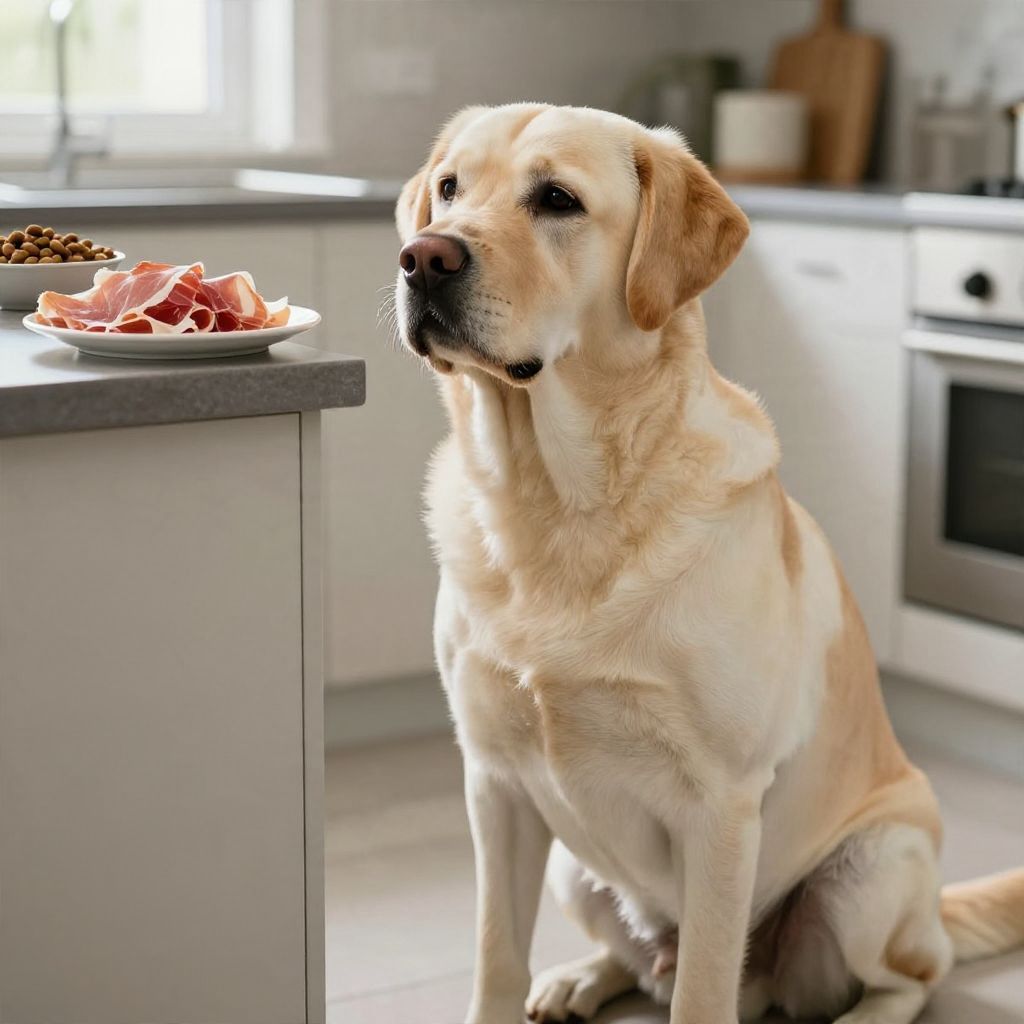
Can dogs eat prosciutto? In most cases, it’s best not to offer it. Prosciutto is cured, salty, and often fatty, which can upset your dog’s stomach and add unnecessary sodium and calories.
If your dog stole a small piece, they’ll often be fine, but bigger amounts or repeated feeding can be a problem. The risk is higher for puppies, small dogs, seniors, and dogs with heart, kidney, or pancreatitis concerns.
Can Dogs Eat Prosciutto?
Dogs should not regularly eat prosciutto. A tiny accidental bite is usually not an emergency for a healthy dog, but prosciutto is too salty and fatty to be a safe treat. It can cause digestive upset, and in some dogs it may contribute to more serious health issues.
Why Prosciutto Is Risky for Dogs
Prosciutto is a cured pork product, which means it is preserved with a lot of salt and often contains enough fat to be hard on a dog’s digestive system. Some versions may also include seasonings or flavorings that are not ideal for dogs.
1. High sodium content
Too much salt can make your dog very thirsty and may lead to vomiting, diarrhea, or restlessness. In more serious cases, excess sodium can become a medical concern, especially for small dogs or dogs with existing health problems.
2. Fatty and rich
Fatty foods can trigger stomach upset in some dogs. In sensitive dogs, rich meats may also raise concern for pancreatitis, a painful condition that needs veterinary attention.
3. Processed meat concerns
Processed meats are not a balanced or healthy snack for dogs. Even when a dog tolerates a small piece, prosciutto offers little nutritional benefit compared with safer treat options.
What Happens If a Dog Eats Prosciutto?
If your dog ate a small amount, watch for mild stomach upset such as soft stool, vomiting, or extra thirst. Many healthy dogs handle a tiny accidental taste without lasting problems, but the amount eaten and your dog’s size matter.
Call your veterinarian promptly if you notice:
- Repeated vomiting or diarrhea
- Marked lethargy or weakness
- Refusing food or water
- Abdominal pain, hunching, or restlessness
- Excessive thirst or urination
Seek urgent veterinary care now if your dog has:
- Tremors, seizures, or severe disorientation
- Collapse or extreme weakness
- Bloated abdomen or severe pain
- Trouble breathing
- Repeated vomiting with inability to keep water down
Does It Matter How Much Prosciutto a Dog Ate?
Yes. A small crumb is very different from several slices. Your dog’s body size, age, and health status all affect how likely prosciutto is to cause a problem. A large dog may tolerate a tiny piece better than a toy breed, but no dog should be fed prosciutto as a routine treat.
Factors that change the risk
- Body size: Smaller dogs can be affected by a smaller amount of salt and fat.
- Age: Puppies and senior dogs may be more sensitive to dietary changes.
- Health conditions: Dogs with heart disease, kidney disease, pancreatitis, or a history of digestive upset may need extra caution.
- Overall diet: Dogs already eating rich treats or table scraps may be more likely to have stomach trouble.
Can Puppies Eat Prosciutto?
Puppies should not be given prosciutto as a treat. Their digestive systems are still developing, and they are more likely to have diarrhea or vomiting from rich, salty foods. Puppies also need a balanced growth diet, not human deli meats.
What About Dogs With Special Health Needs?
Some dogs should avoid prosciutto entirely, even in tiny amounts. This is especially true if your dog has been told to follow a low-sodium diet or has a condition that makes salty or fatty foods risky.
Be especially cautious if your dog has:
- Heart disease
- Kidney disease
- Pancreatitis or a history of pancreatitis
- Chronic digestive sensitivity
- Obesity or weight-management needs
If your dog has a medical condition, ask your veterinarian before offering any human food, including cured meats.
What If My Dog Only Ate a Small Piece?
If your dog grabbed one small piece of prosciutto and seems normal, you can usually monitor at home. Offer fresh water and keep an eye out for vomiting, diarrhea, unusual thirst, or behavior changes over the next several hours.
- Remove any remaining prosciutto so your dog cannot eat more.
- Check whether the meat had garlic, onion, pepper, or other seasonings.
- Watch your dog closely for stomach upset or unusual behavior.
- Contact your veterinarian if your dog is very small, has a health condition, or ate more than a bite.
What If the Prosciutto Had Seasonings or Was Wrapped Around Something?
Some prosciutto is flavored or served with ingredients that may be more concerning than the meat itself. If it was wrapped around garlic, onion, cheese, bread dough, or a bone, the situation may be more serious.
Extra concerns to watch for
- Garlic or onion: These can be harmful to dogs.
- Cooked bones: They can splinter and cause choking or injury.
- Large fatty portions: These may be harder on the pancreas and stomach.
- Skewers or toothpicks: These can cause mouth or internal injuries.
If your dog ate prosciutto with any of these items, call your veterinarian right away for guidance.
Safer Treat Alternatives to Prosciutto
If you want to reward your dog with something tasty, choose options that are lower in salt and fat. Treats should still make up only a small part of your dog’s daily calories.
- Plain cooked chicken or turkey without seasoning
- Small pieces of plain cooked lean meat
- Dog-safe commercial treats made for your dog’s size and health needs
- Fresh vegetables your veterinarian says are safe for your dog
Keep treats simple and consistent, especially if your dog has a sensitive stomach or needs weight control.
How to Prevent Accidental Prosciutto Snacking
Many dogs are quick to steal food from counters, plates, or trash. Prevention matters because even a small amount of prosciutto can become a repeated habit if your dog learns it’s available.
- Keep deli meats out of reach on counters and tables.
- Store leftovers in sealed containers.
- Use a trash can with a secure lid.
- Teach a reliable “leave it” cue with reward-based training.
- Give your dog an appropriate chew or treat during mealtimes if they beg.
When to Call the Vet After Prosciutto Exposure
Contact your veterinarian if you are unsure how much your dog ate, if your dog has a medical condition, or if symptoms develop. You do not need to wait for severe signs before asking for advice.
For dogs with repeated vomiting, marked lethargy, severe diarrhea, tremors, collapse, or breathing trouble, seek urgent care immediately.
The Bottom Line
Can dogs eat prosciutto? It is not a good choice for dogs, and it’s safest to avoid it. A tiny accidental bite may only cause mild upset in a healthy dog, but larger amounts, repeated feeding, or exposure in dogs with health issues can be risky. When in doubt, call your veterinarian.
If you want to compare prosciutto with other deli meats, you may also find this guide on ham for dogs helpful.