
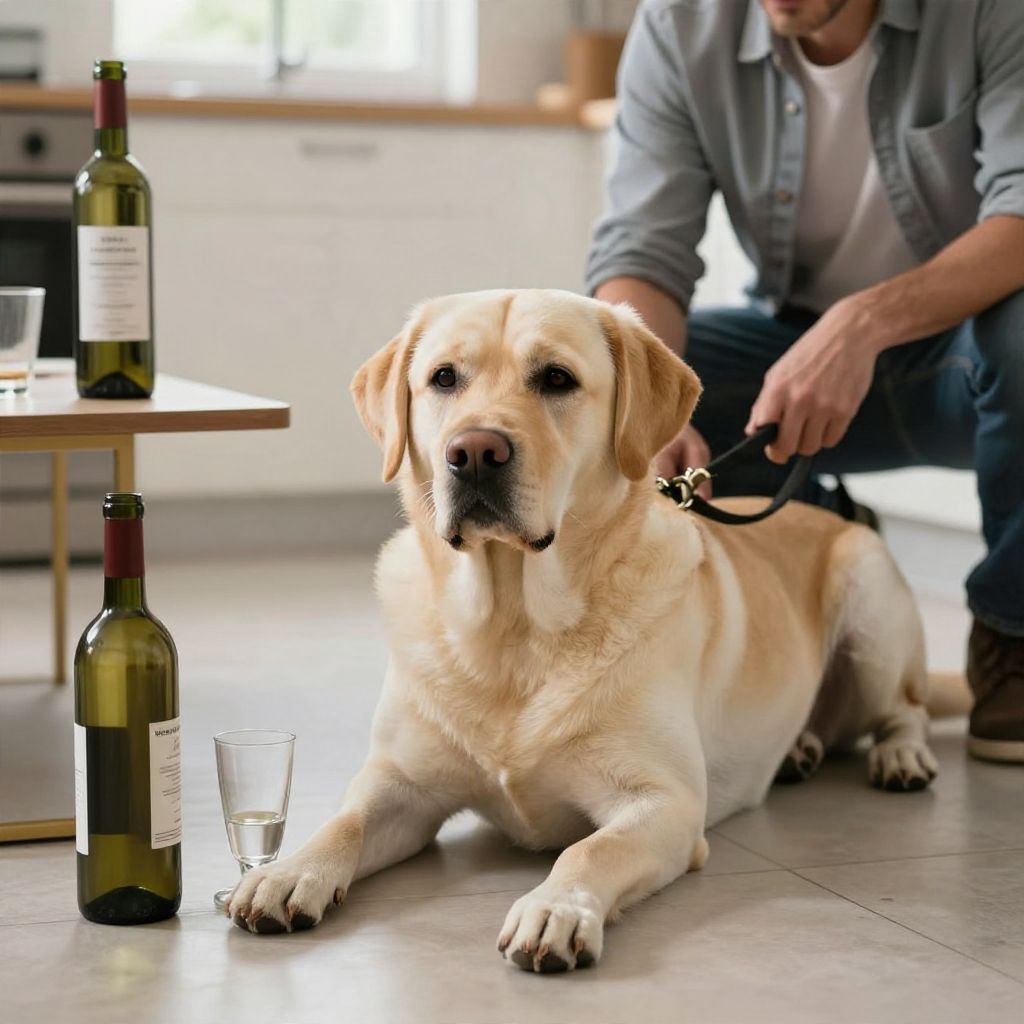
If your dog licked beer, wine, or another alcoholic drink, treat it seriously. Dogs can get drunk, and even small amounts may cause vomiting, wobbliness, or worse depending on the dog and the drink.
Alcohol is not safe for dogs in any intentional amount. If you suspect your dog drank alcohol, contact your veterinarian or an emergency clinic right away, especially if your dog seems sleepy, unsteady, or unwell.
Can dogs get drunk?
Yes. Dogs can get drunk because alcohol affects their nervous system much like it affects people, but dogs are usually more sensitive. Signs can appear quickly and may include poor coordination, vomiting, confusion, slowed breathing, or collapse. Any suspected alcohol exposure deserves prompt veterinary advice.
Why alcohol is dangerous for dogs
Alcohol can depress the brain and body, which makes it risky even when a dog only drinks a small spill or licks a glass. The danger depends on the type of alcohol, how much was swallowed, your dog’s size, age, and overall health.
Dogs may be exposed to alcohol in more than one way:
- Beer, wine, liquor, cocktails, or mixed drinks
- Alcohol-containing desserts or sauces
- Fermenting dough or fruit
- Spills on the floor, furniture, or outdoors
- Drinks left unattended at parties or gatherings
Some dogs are naturally more curious, food-motivated, or quick to counter-surf, but any dog can get into alcohol if it is accessible. Smaller dogs and puppies may be affected by a much smaller amount than larger adult dogs.
What signs of drunkenness look like in dogs
Early signs can be subtle. A dog may seem “off,” clumsy, or unusually sleepy. As alcohol affects the body more strongly, the signs can become urgent.
Common symptoms
- Wobbliness or stumbling
- Vomiting
- Unusual sleepiness or weakness
- Confusion or acting “drunk”
- Drooling
- Staring, disorientation, or poor responsiveness
Emergency warning signs
- Severe lethargy or hard to wake
- Slow, shallow, or irregular breathing
- Collapse or inability to stand
- Seizures
- Pale or blue-tinged gums
- Low body temperature, shivering, or extreme weakness
If your dog has any emergency warning sign, go to an emergency veterinarian immediately. Do not wait to see if the symptoms pass.
What to do if your dog drank alcohol
Act quickly and keep things calm. The safest next step is to call your veterinarian, an emergency clinic, or a pet poison helpline for guidance based on what your dog drank and how much.
- Remove the alcohol and prevent further access.
- Check what was consumed, including the type of drink and any added ingredients.
- Estimate how much may have been swallowed.
- Note the time of exposure.
- Watch for vomiting, wobbliness, sleepiness, or behavior changes.
- Follow veterinary instructions exactly.
Bring the container, label, or a photo of the drink if you go to the clinic. That information can help the veterinary team assess the risk more accurately.
Do not try to make your dog vomit unless a veterinarian specifically tells you to do so. Do not give food, milk, coffee, or other home remedies to “sober them up.”
Does the type of alcohol matter?
Yes. Different drinks can pose different risks, and some contain extra ingredients that may be harmful on their own. The alcohol itself is the main concern, but mixers, sweeteners, and additives can make the situation worse.
Beer, wine, and liquor
These can all be dangerous. Stronger drinks usually contain more alcohol per sip, but even beer or wine can cause intoxication if enough is consumed or if the dog is small.
Mixed drinks and flavored beverages
Cocktails, hard seltzers, and flavored drinks may include sugar, caffeine, citrus oils, xylitol, or other ingredients that can add risk. Never assume a “light” drink is safe.
Fermented foods and dough
Unbaked yeast dough can be dangerous because it may expand in the stomach and also produce alcohol as it ferments. This can create a veterinary emergency even before obvious drunkenness appears.
How much alcohol is too much?
There is no safe amount you should intentionally give a dog. Risk varies widely with body size, age, breed, health status, and the specific product involved, so it is not safe to guess at home.
For example, a small dog may show signs after a much smaller exposure than a large dog. Puppies, senior dogs, and dogs with liver disease, diabetes, or other medical problems may be at higher risk and may worsen faster.
Because you cannot reliably tell by appearance alone how much has been absorbed, veterinary guidance matters even when the exposure seems minor.
What the veterinarian may do
Your veterinarian will decide the safest next step based on the exposure history and your dog’s condition. Treatment depends on timing, symptoms, and the amount involved.
Possible care may include:
- Monitoring heart rate, breathing, temperature, and blood sugar
- IV fluids to support circulation and hydration
- Anti-vomiting medication if appropriate
- Temperature support if your dog is too cold
- Hospitalization for close observation in more serious cases
Never give over-the-counter human medications unless a veterinarian specifically directs you to do so. Many are unsafe for dogs and can make the situation worse.
Common mistakes to avoid
When a dog may be intoxicated, well-meaning mistakes can delay proper treatment. Avoid these common errors:
- Waiting to see if the dog “sleeps it off”
- Assuming beer is harmless because it is low in alcohol
- Giving food, salt, or milk as a remedy
- Forcing exercise or a walk to “burn it off”
- Trying to induce vomiting without veterinary instruction
- Leaving drinks where your dog can reach them again
How to prevent alcohol exposure
Prevention is mostly about management. Dogs are often opportunistic around food and drinks, especially during parties, barbecues, or relaxed evenings at home.
- Keep drinks on high, stable surfaces.
- Use lidded cups or covered containers when possible.
- Clean spills immediately.
- Keep trash secured so cans and bottles cannot be scavenged.
- Supervise your dog around guests, picnics, and celebrations.
- Teach a reliable “leave it” and reward calm, non-scavenging behavior.
Training helps, but it should not replace supervision. A well-trained dog can still make a bad choice if a drink is left within reach.
Are some dogs more at risk?
Any dog can be harmed by alcohol, but some dogs may be more vulnerable because of size, age, or medical history. Individual temperament also matters because a dog that scavenges quickly may be more likely to get into a drink before you notice.
Higher-risk situations often include:
- Puppies and very small dogs
- Senior dogs
- Dogs with liver, kidney, or metabolic disease
- Dogs recovering from illness or surgery
- Dogs with limited mobility or poor balance already
If your dog already has a medical condition, even a mild exposure can be more concerning. When in doubt, call your veterinarian.
When to seek urgent help right away
Get immediate veterinary care if your dog has consumed alcohol and is showing any concerning signs, even if they seem mild at first. Alcohol effects can progress.
Go now if your dog has:
- Repeated vomiting
- Marked wobbliness or collapse
- Seizures
- Slow or difficult breathing
- Extreme sleepiness or unresponsiveness
- Any suspected ingestion of a large amount
If you are unsure whether the exposure is serious, it is safer to call. A quick conversation with a veterinary professional can help you decide whether your dog needs emergency care.
Bottom line
Yes, dogs can get drunk, and alcohol can be dangerous even in small amounts. If your dog may have swallowed beer, wine, liquor, or another alcoholic product, contact a veterinarian right away and watch closely for vomiting, wobbliness, sleepiness, or breathing changes.
If you want to learn more about related risks, you may also find these guides helpful: Can dogs drink beer? and Can dogs get drunk?