
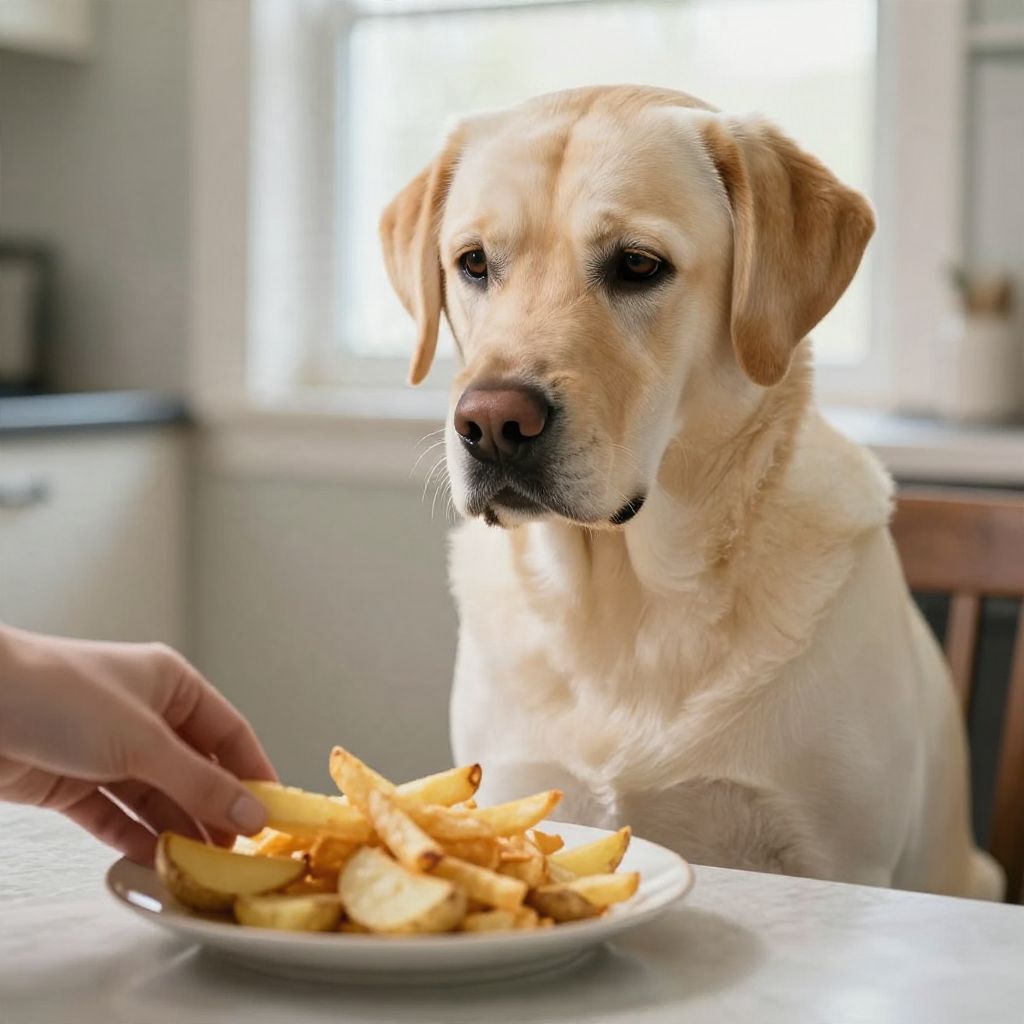
Can dogs have fries? In small amounts, plain fries are not usually toxic, but they are not a healthy dog food. The salt, oil, and seasonings can upset your dog’s stomach, and frequent feeding can contribute to weight gain and other health problems.
If your dog ate a few fries, they will often be fine. If the fries were heavily salted, seasoned, cheesy, or covered in onion or garlic powder, watch closely and call your vet if you notice symptoms.
Can dogs have fries?
Dogs can eat a plain fry or two without immediate harm, but fries are not recommended as a treat. They are high in fat and sodium, and many fast-food fries contain seasonings or toppings that can be unsafe for dogs, especially if eaten in larger amounts.
Why fries are risky for dogs
Fries may look harmless, but several parts of the preparation make them a poor choice for dogs.
High salt
Too much sodium can cause thirst, stomach upset, and in severe cases more serious illness. Small dogs, puppies, and dogs with heart or kidney concerns may be more sensitive.
High fat and oil
Fried foods can be hard for dogs to digest. Rich foods may trigger vomiting, diarrhea, or, in some dogs, pancreatitis, which is a painful and potentially serious inflammation of the pancreas.
Seasonings and toppings
Plain potato is one thing, but many fries are coated with flavorings. Onion powder, garlic powder, cheese sauce, chili seasoning, and other toppings can be a problem for dogs.
Choking or stomach upset
A single fry is unlikely to choke most dogs, but greasy, crispy pieces can still irritate the stomach. Dogs that gulp food quickly or have a history of digestive sensitivity may react more easily.
What kind of fries are most concerning?
Not all fries carry the same risk. The preparation matters a lot.
- Plain, unsalted fries: lower risk, but still not a healthy snack.
- Salted fries: more likely to cause excessive thirst or stomach upset.
- Seasoned fries: may contain unsafe ingredients such as onion or garlic powder.
- Cheese fries or loaded fries: higher fat and salt content, which can be harder on dogs.
- Fries cooked in old or heavily used oil: may be especially irritating to the stomach.
What to do if your dog ate fries
If your dog stole a few plain fries, stay calm. Most healthy dogs will only need observation, but you should pay attention to what was on the fries and how many were eaten.
- Check the ingredients if you can.
- Remove any remaining fries so your dog cannot keep eating them.
- Offer fresh water.
- Monitor for vomiting, diarrhea, lethargy, or abdominal discomfort.
- Contact your veterinarian if the fries were seasoned, very salty, or topped with unsafe ingredients.
Watch for these red flags
Seek urgent veterinary help if your dog has any of the following after eating fries:
- Repeated vomiting
- Severe diarrhea or blood in vomit or stool
- Marked lethargy or weakness
- Abdominal pain, a tense belly, or a hunched posture
- Excessive drooling
- Tremors, collapse, or trouble walking
- Signs of dehydration or not being able to keep water down
Ingredients in fries that can be unsafe
The potato itself is not the main concern. The problem is often what comes with it.
Onion and garlic
Many fries are seasoned with onion or garlic powder. These ingredients can be harmful to dogs and should be treated seriously, especially if your dog ate a meaningful amount.
Cheese, bacon, and rich toppings
These add extra fat and salt. For some dogs, rich foods can trigger digestive upset, and for others they may increase the risk of pancreatitis.
Hot sauce and spicy seasonings
Spicy foods can irritate your dog’s stomach and may cause drooling, vomiting, or diarrhea.
Artificial flavorings
Some flavor blends are not well suited to dogs, and ingredient labels can be difficult to interpret. When in doubt, avoid sharing.
Are fries ever okay as a treat?
If you want to share a tiny bite of plain, unseasoned fry occasionally, it is usually less risky than many other human foods. That said, fries should not become a routine treat because they offer little nutritional value and can encourage begging.
For most dogs, it is better to choose a treat designed for canine nutrition or a small piece of dog-safe food such as plain cooked potato that has no salt, butter, oil, or seasoning.
How much is too much?
There is no universal safe amount for every dog. Tolerance depends on your dog’s size, age, health, and what else was on the fries.
- Small dogs and puppies: may be more sensitive to salt and rich foods.
- Dogs with pancreatitis history: should avoid fried, fatty foods.
- Dogs with kidney, heart, or digestive disease: may need stricter limits on sodium and fat.
- Healthy adult dogs: may tolerate a tiny plain piece, but that does not make fries a good snack choice.
Safer alternatives to fries
If your dog loves the smell or taste of fries, you can offer healthier options that are easier on the stomach.
- Plain cooked potato in a very small amount, with no salt or seasoning
- Small pieces of cooked sweet potato, plain and soft
- Dog treats made for training and portion control
- Crunchy vegetables your dog already tolerates, such as carrot pieces
Even safe treats should only make up a small part of your dog’s daily intake. Too many extras can still lead to weight gain or digestive upset.
Common mistakes dog owners make
When dogs beg for fries, it is easy to assume a small share is harmless. These are the most common mistakes to avoid.
- Giving fries regularly because “it’s just a little bit”
- Ignoring seasoning ingredients
- Sharing from a fast-food meal without checking for onion or garlic
- Offering fries to a dog with a sensitive stomach
- Using human food as a reward instead of a balanced dog treat
When to call your veterinarian
Contact your veterinarian if your dog ate a large number of fries, ate fries with questionable ingredients, or has a medical condition that makes salty or fatty foods risky. It is especially important to call if your dog is very small, elderly, or already prone to digestive problems.
If your dog shows any emergency signs such as repeated vomiting, collapse, severe abdominal pain, or tremors, do not wait for symptoms to pass. Get urgent veterinary care right away.
How to prevent fries from becoming a habit
Preventing counter-surfing and begging is easier than dealing with an upset stomach later. Consistent management helps a lot.
- Keep fries and other human foods out of reach.
- Do not feed from the table or hand over food during meals.
- Teach a reliable “leave it” cue using rewards.
- Give your dog a safe chew or toy during your meal.
- Ask guests not to share fries or other leftovers.
Reward-based training is the most practical way to reduce food stealing without stress or punishment. If your dog repeatedly steals food, a certified trainer can help you build better habits safely.
The bottom line
Can dogs have fries? A plain fry or two is usually not an emergency, but fries are not a good regular treat. Because of the salt, oil, and possible seasonings, it is safer to skip them and offer a dog-friendly alternative instead.
If you want to compare fries with other human foods, you may also find it helpful to read about whether dogs can eat potato chips or whether dogs can eat fried chicken.