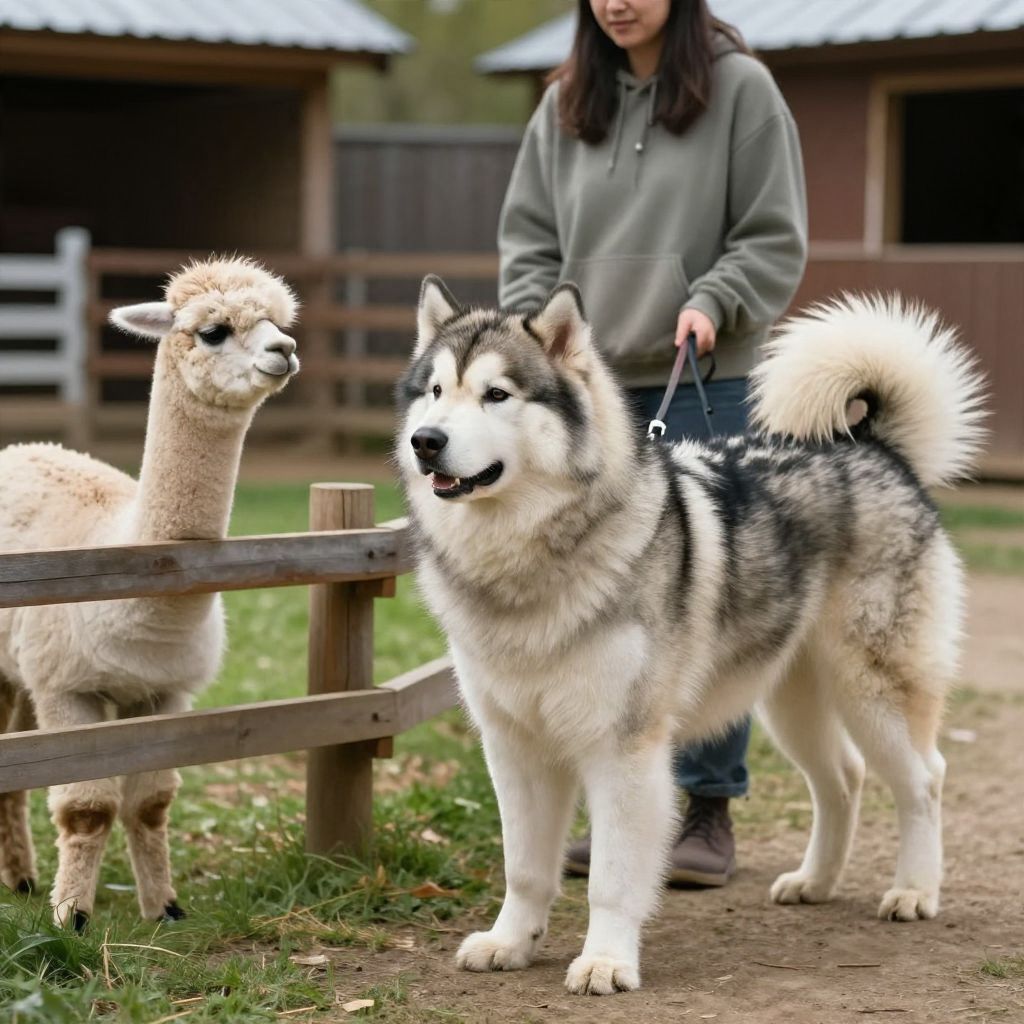
If you’re asking, “Do alpacas spit?” the short answer is yes. Alpacas can spit, but they usually do it as a warning, to set boundaries, or during conflict with other alpacas rather than as random aggression toward people or dogs.
For dog owners, the important part is understanding how to keep your dog safe and calm around alpacas. Most problems come from a curious dog getting too close, chasing, or ignoring the alpaca’s signals.
Do alpacas spit?
Yes. Alpacas do spit, but it is usually a communication behavior, not a constant attack. They may spit at other alpacas over food, space, or social tension, and they may spit at dogs or people if they feel threatened, crowded, or irritated.
Why alpacas spit at dogs
Alpacas are prey animals with strong personal space needs. A dog that rushes toward them, barks, stares, or tries to chase can trigger a defensive response.
Common reasons for spitting
- Fear or discomfort: The alpaca wants distance.
- Protecting resources: Food, shelter, or a preferred resting spot.
- Social conflict: Tension with another alpaca, sometimes redirected toward a nearby dog.
- Overstimulation: Too much noise, movement, or crowding.
Spitting is often preceded by warning body language. If you can read those signals early, you can prevent a bad interaction before it escalates.
What warning signs should you watch for?
Before an alpaca spits, it may try to tell you it wants space. Dogs that ignore these signs are more likely to be met with a spit, a lunge, or a chase response from the alpaca.
- Ears pinned back or head held stiffly
- Turning away or backing off
- Staring directly at the dog
- Raised posture or tense body
- Open mouth, lip curling, or a warning grunt
- Sudden movement toward the dog
If you see these signs, increase distance immediately. Do not let your dog keep approaching “just to see what happens.”
How to keep your dog safe around alpacas
The safest approach is management first, training second. Even a friendly, well-trained dog can trigger an alpaca if the dog is excited, off-leash, or simply too close.
Practical safety steps
- Keep your dog on a leash unless you are in a secure, approved area.
- Give alpacas a wide berth and avoid direct approaches.
- Use calm, low-energy handling around the animals.
- Teach your dog a reliable “leave it” and “let’s go” cue.
- Reward your dog for looking away and moving with you.
- Do not let children run, yell, or chase near alpacas with a dog present.
If you live near a farm or visit one regularly, ask the owner about their rules. Some alpacas are used to dogs at a distance; others are highly reactive and need much more space.
What should you do if an alpaca spits at your dog?
If an alpaca spits at your dog, the first step is to calmly create distance. Most spit is messy and startling rather than dangerous, but the bigger concern is what happens next if your dog reacts by lunging, barking, or chasing.
Immediate response
- Move your dog away without yelling or jerking the leash.
- Keep your own body between the dog and the alpaca if possible.
- Check your dog’s eyes, nose, and mouth for irritation.
- Offer water if your dog seems stressed or has gotten spit in the face.
Seek veterinary advice if your dog has ongoing eye redness, squinting, coughing, trouble breathing, or seems injured after the encounter. If the alpaca kicked or your dog was bitten, treat it as a possible emergency.
Can alpaca spit hurt dogs?
Alpaca spit itself is usually more of a nuisance than a serious injury, but it can still cause problems. The spit may be unpleasant, may irritate the eyes or nose, and the encounter can lead to fear, stress, or a dangerous chase if your dog reacts strongly.
The larger risk is often the behavior around the spit, not the spit alone. A frightened dog may bolt into traffic, pull free, or provoke further defensive behavior from the alpaca.
How to train your dog to behave calmly around farm animals
You do not need a perfect dog, but you do need a dog that can respond to you when animals are nearby. Reward-based training works best because it teaches your dog what to do instead of punishing natural curiosity.
Helpful training skills
- Focus on you: Your dog looks at you when animals appear.
- Loose-leash walking: Less pulling means less pressure and fewer surprises.
- Leave it: Your dog disengages from the alpaca.
- Recall: Your dog comes when called in low-distraction settings first.
- Settle on a mat: Useful if you need your dog to stay calm at a distance.
Start training away from alpacas and other livestock. Gradually increase difficulty only if your dog can stay relaxed and responsive.
Do some dogs react more strongly than others?
Yes, individual dogs vary a lot. Age, breed tendencies, past exposure, prey drive, confidence, and training history all affect how a dog responds to alpacas.
For example, a young herding dog may be more likely to stare, stalk, or chase. A nervous dog may bark from a distance. A calm, well-socialized dog may ignore the alpaca, but that is never guaranteed.
Dogs that may need extra management
- Dogs with a strong chase instinct
- High-energy adolescent dogs
- Dogs with limited exposure to livestock
- Reactive or fearful dogs
- Dogs that have previously chased farm animals
Knowing your dog’s tendencies helps you prevent trouble before it starts.
What not to do around alpacas
Some common mistakes make spitting more likely and can put your dog at risk. Avoiding these mistakes is one of the easiest ways to keep the interaction safe.
- Do not let your dog run up to the alpaca enclosure.
- Do not allow off-leash greetings unless the property owner specifically approves and the situation is controlled.
- Do not encourage your dog to “say hi” if the alpaca is showing stress signals.
- Do not punish your dog after the fact; it will not teach better behavior around livestock.
- Do not assume a quiet alpaca is comfortable with close contact.
Respecting distance is not overprotective. It is good dog care and good farm-animal care.
When should you get professional help?
If your dog repeatedly lunges, cannot disengage from livestock, or becomes highly anxious around farm animals, a qualified force-free trainer or veterinary behaviorist can help. This is especially important if your dog has already had a frightening encounter.
Contact your veterinarian sooner if your dog has eye irritation, facial swelling, coughing, sneezing, limping, or any sign of injury after contact with an alpaca or farm fence.
Red flags that need urgent veterinary care
- Difficulty breathing
- Persistent bleeding
- Eye pain, squinting, or inability to open the eye
- Collapse, extreme weakness, or severe distress
- Deep wounds or suspected bite injuries
Do not wait if your dog is struggling to breathe or seems seriously hurt.
Bottom line for dog owners
Yes, alpacas spit, and they usually do it to communicate discomfort or defend their space. The safest response is to keep your dog leashed, give alpacas plenty of room, and train calm, reliable avoidance behaviors before you ever need them.
If you want more practical dog-care reading, you may also find it helpful to learn why dogs sniff butts and how to read normal canine social behavior.