
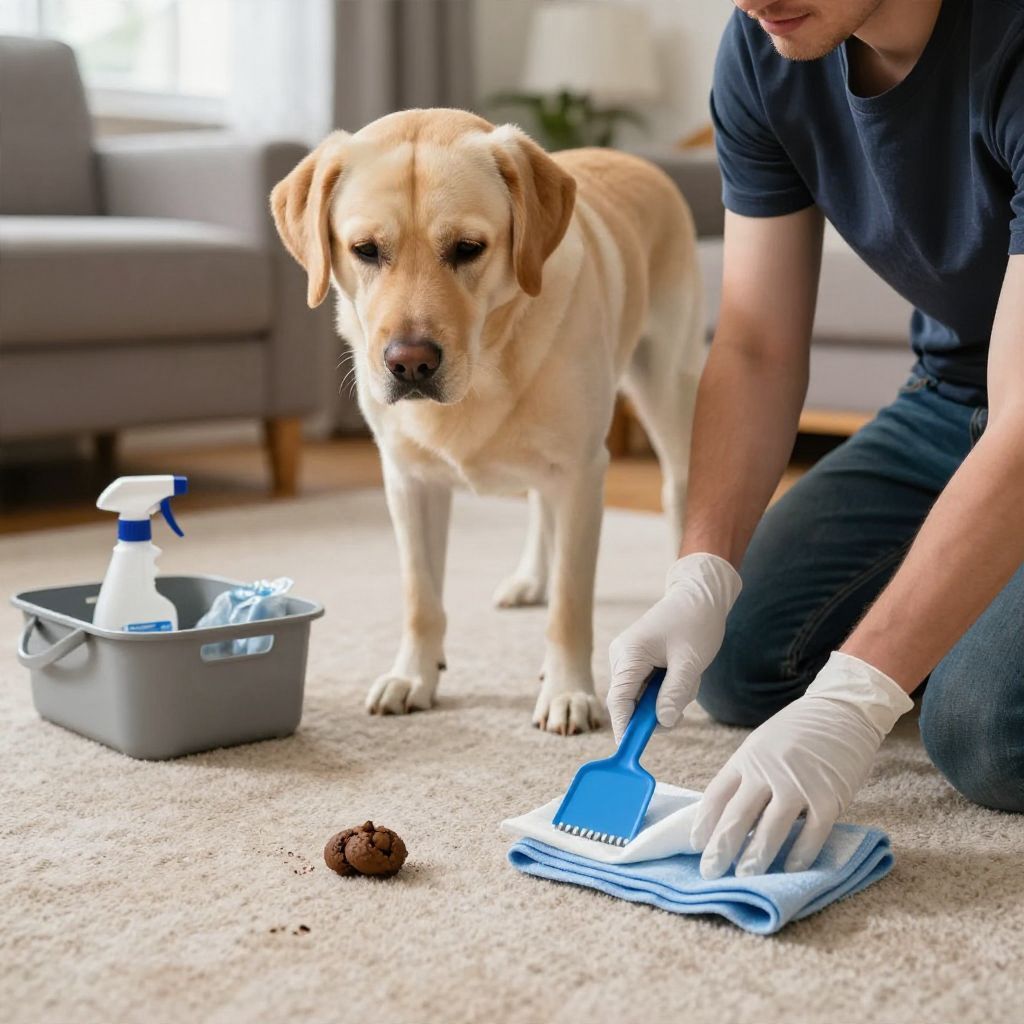
Dog poop on carpet is unpleasant, but you can clean it up safely if you act quickly and use the right steps. The goal is to remove the solid mess, lift the stain, and neutralize odor without spreading bacteria or damaging the fibers.
If the mess is fresh, work gently and keep the area contained. If your dog has sudden diarrhea, repeated accidents, blood in the stool, vomiting, or seems unwell, contact your veterinarian because the cleanup issue may point to a health problem.
How do you clean dog poop out of carpet?
First, remove the solids with gloves and paper towels without rubbing them deeper into the carpet. Then blot the area, clean with a pet-safe carpet cleaner or mild soap solution, rinse lightly, and dry thoroughly. For lingering odor or stains, repeat the process or use an enzyme cleaner made for pet messes.
Step-by-step: How to clean dog poop out of carpet
- Put on disposable gloves. This helps protect you from germs and keeps the mess from spreading.
- Pick up the solid waste. Use paper towels, a plastic bag, or a disposable scraper. Lift, don’t press.
- Blot, don’t scrub. Press clean paper towels into the area to absorb moisture. Scrubbing can push the stain deeper into the carpet fibers and backing.
- Apply a cleaning solution. Use an enzyme cleaner designed for pet accidents, or a small amount of mild dish soap mixed with water if the carpet manufacturer allows it.
- Work from the outside in. Dab the edges first to keep the stain from spreading.
- Blot again. Use clean towels until the area is mostly dry and the stain is fading.
- Rinse lightly. Use a damp cloth with plain water to remove cleaner residue, then blot dry again.
- Dry completely. Use airflow from a fan or open window. A damp carpet can hold odor and encourage mold.
What supplies work best?
The best supplies are simple and safe: gloves, paper towels, a plastic bag, clean cloths, an enzyme cleaner, and a fan for drying. A carpet-safe wet vacuum can help if the mess is large, but avoid over-wetting the area.
- Disposable gloves for hygiene
- Paper towels or absorbent cloths for blotting
- Enzyme cleaner for odor and organic residue
- Plain water for light rinsing
- Fan or airflow to speed drying
Why not just scrub harder?
Scrubbing is one of the most common mistakes. It can push fecal matter deeper into the carpet, spread the stain, and damage the fibers. Gentle blotting and repeated cleaning usually work better than force.
Another mistake is using too much liquid. Excess water can soak into the carpet pad, where odor may remain even after the surface looks clean.
Should you use vinegar, bleach, or steam?
Some home products can help with odors, but not all are good choices for carpet. Vinegar may reduce smell for some people, but it does not reliably remove all organic residue. Bleach can damage carpet and is unsafe to mix with other cleaners. Steam can set some stains if used too soon.
- Avoid bleach unless a carpet manufacturer specifically says it is safe.
- Be careful with steam on fresh poop stains; heat can make cleanup harder.
- Use enzyme cleaners first when possible, because they are designed for pet messes.
How do you remove the smell after the stain is gone?
Odor usually means some residue remains in the carpet fibers or underlayer. Reapply an enzyme cleaner according to the label, let it sit for the recommended time, and blot dry. If the smell lingers after the carpet dries, the padding may have been affected.
For stubborn odor, you may need to repeat the treatment more than once. If the carpet is expensive or the smell is widespread, professional cleaning can be worth it.
What if the poop is dried or smeared in?
Dried poop is harder to remove, but the same basic approach still applies. Let the area soften slightly with a damp cloth and cleaner, then lift the residue gradually instead of scraping aggressively.
- Loosen the dried material with a damp cloth.
- Pick up softened pieces carefully.
- Use an enzyme cleaner on the remaining stain.
- Blot and repeat as needed.
If the stain is old, it may take several rounds to fully fade. Patience usually works better than harsh chemicals.
How do you clean carpet if the poop is runny?
Loose stool spreads quickly, so work from the outside of the mess inward. Use more paper towels at first, but keep blotting gently. If the stool is very watery, protect the surrounding carpet by controlling the edges before applying any liquid cleaner.
Runny stool can also signal diet upset, stress, parasites, or illness. If your dog has repeated diarrhea, lethargy, vomiting, or blood in the stool, contact your veterinarian promptly.
When should you call a veterinarian?
A carpet accident alone is not usually an emergency, but the reason behind it may be. Call your veterinarian if your dog suddenly has frequent accidents, diarrhea lasting more than a day, straining, black or bloody stool, vomiting, loss of appetite, belly pain, or unusual tiredness.
Seek urgent veterinary care if your dog seems weak, collapses, has repeated vomiting, cannot keep water down, has a swollen abdomen, or passes a large amount of blood. These signs can indicate a serious illness that needs prompt attention.
How can you prevent future carpet accidents?
Prevention depends on your dog’s age, health, routine, and training history. Puppies, seniors, and dogs with medical issues often need more frequent bathroom breaks than healthy adult dogs.
Practical prevention tips
- Take your dog out on a consistent schedule.
- Reward outdoor potty success with praise or a treat.
- Supervise closely after meals, naps, and playtime.
- Clean accidents thoroughly so the smell does not invite repeat soiling.
- Watch for changes in stool quality, appetite, or behavior.
If your dog is house-training, accidents are common during learning. If an adult dog suddenly starts pooping indoors after being reliable, that change deserves attention from a veterinarian.
Does age or breed matter?
Age matters more than breed in many cases. Puppies have limited bladder and bowel control, while older dogs may have mobility problems, cognitive changes, or digestive issues that make accidents more likely.
Breed can influence tendencies such as energy level, sensitivity, or digestive quirks, but it does not determine behavior on its own. Individual temperament, routine, training, and health are more important than breed labels when it comes to indoor accidents.
How do you protect your carpet in the future?
If accidents happen more than once, make cleanup easier by preparing ahead. Keep a small pet-cleanup kit in a closet or laundry area so you can respond quickly.
- Store gloves, paper towels, and enzyme cleaner together.
- Keep a washable rug or mat in high-risk areas.
- Use baby gates or closed doors when you cannot supervise.
- Consider crate training or a confined safe area if your dog is still learning house manners.
When is professional carpet cleaning a good idea?
Professional cleaning can help if the mess soaked into the padding, the odor keeps returning, or the carpet is delicate. It may also be useful if you are dealing with multiple accidents, a large area, or a stain that has been present for a while.
Choose a cleaner who understands pet stains and ask whether their process is safe for your carpet type.
Bottom line
To clean dog poop out of carpet, remove the solids first, blot instead of scrubbing, use an enzyme cleaner if possible, and dry the area completely. If the accident is unusual or your dog has digestive symptoms, contact your veterinarian to rule out a health problem.
For more pet mess cleanup help, you may also find this guide useful: how to get dog pee out of a mattress. If a cleanup accident happened because your dog was injured, see how to clean a dog wound for general care guidance.