
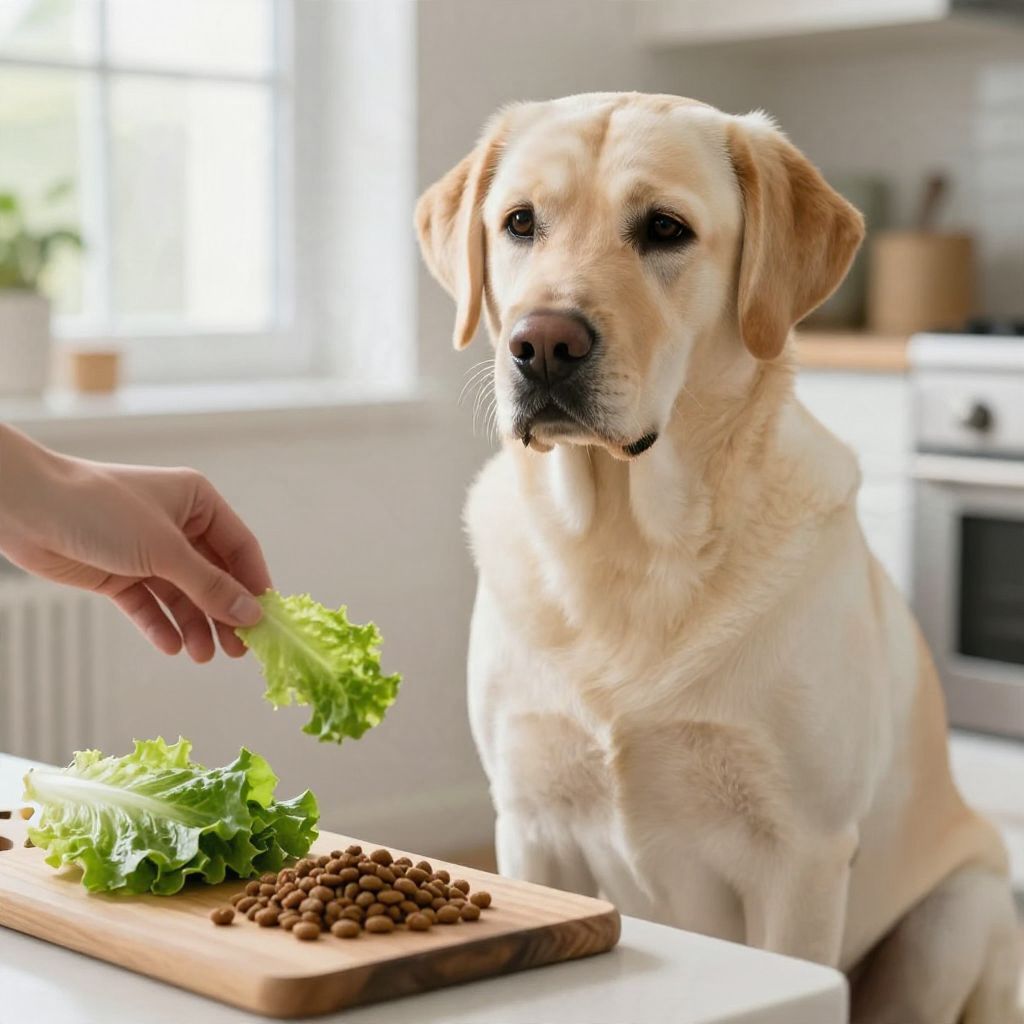
Is lettuce bad for dogs? Usually, no—plain lettuce is generally safe for most dogs in small amounts. It can be a low-calorie crunchy treat, but it should never replace a balanced dog diet.
The main concerns are choking, digestive upset, and added ingredients like dressing, onions, garlic, bacon, or croutons. How well your dog tolerates lettuce can also depend on size, age, and any stomach sensitivity.
Is Lettuce Bad For Dogs?
Plain lettuce is not usually bad for dogs when served in small, simple pieces. Most dogs can eat a little lettuce as an occasional snack, but too much may cause gas, loose stool, or vomiting. Avoid seasoned, dressed, or mixed salads, and contact your veterinarian if your dog shows persistent digestive signs.
When Lettuce Is Safe for Dogs
Lettuce can be a reasonable treat if you keep it plain and offer only a small amount. It is mostly water and fiber, so it is not a nutrient-dense food, but it can work as a crunchy reward for dogs that enjoy low-calorie snacks.
Good ways to offer lettuce
- Wash it thoroughly to remove dirt and residue.
- Serve it plain, with no dressing, salt, spices, or toppings.
- Cut it into small pieces to reduce choking risk.
- Offer only a few bites at first to see how your dog reacts.
Some dogs tolerate lettuce well, while others may have sensitive stomachs and do better with only tiny amounts or no lettuce at all. Puppies, seniors, and dogs with digestive issues may be more likely to get loose stool from new foods.
What Kind of Lettuce Can Dogs Eat?
Most common lettuce types are not inherently dangerous when plain. The bigger issue is how the lettuce is prepared and how much your dog eats.
Common types
- Romaine lettuce: Often fine in small amounts and a popular choice because it is crisp.
- Iceberg lettuce: Not toxic, but it is mostly water and offers little nutritional value.
- Leaf lettuce, butter lettuce, and similar greens: Usually safe if plain and washed.
If you want a deeper look at a specific type, you may find this guide on romaine lettuce for dogs helpful.
Why Lettuce Can Cause Problems
Even safe foods can upset a dog’s stomach when given in the wrong form or amount. Lettuce is no exception.
Possible issues to watch for
- Choking: Large, stiff pieces can be hard to swallow, especially for small dogs or dogs that gulp food.
- Digestive upset: Too much fiber or a sudden change in diet can lead to gas, soft stool, or diarrhea.
- Contamination: Unwashed lettuce may carry dirt, pesticides, or bacteria.
- Added ingredients: Salad toppings and dressings can be much more dangerous than the lettuce itself.
Dogs that already have sensitive digestion, inflammatory bowel disease, or a history of food intolerance may react more strongly to even small amounts of new foods. In those cases, ask your veterinarian before offering lettuce.
What Makes Salad Dangerous for Dogs?
Plain lettuce is only part of the story. Many salads contain ingredients that are unsafe or irritating for dogs, even if the lettuce itself is fine.
Common salad ingredients to avoid
- Onions and garlic: These can be harmful to dogs.
- Raisins or grapes: These are unsafe foods for dogs.
- Avocado: Can cause stomach upset and may be risky depending on the amount and preparation.
- Cheese-heavy dressings or creamy sauces: May trigger diarrhea or pancreatitis in some dogs.
- Croutons, bacon bits, and salty toppings: Often too rich or too salty for dogs.
- Spicy seasonings: Can irritate the digestive tract.
If your dog stole salad from the counter or trash, the ingredients matter more than the lettuce. A plain leaf is usually less concerning than a salad with onion, dressing, or other risky add-ins.
How Much Lettuce Can Dogs Eat?
There is no universal amount that fits every dog. A tiny dog may only handle a small bite or two, while a larger dog may tolerate a bit more. The safest approach is to keep lettuce as an occasional treat, not a regular part of the diet.
Use these practical guidelines
- Start with a very small amount.
- Watch for vomiting, gas, soft stool, or refusal to eat.
- If your dog does well, keep portions modest.
- Reduce other treats that day so you do not overfeed.
Treats of any kind should stay a small part of your dog’s daily intake. If you are using lettuce for training, break it into tiny pieces and pair it with praise or another reward your dog enjoys.
When You Should Not Give Lettuce
Some dogs should avoid lettuce or only have it after your veterinarian says it is okay. Individual health matters more than whether a food is generally safe.
Be extra cautious if your dog has:
- A history of vomiting or diarrhea after new foods
- Pancreatitis or a sensitive digestive system
- Difficulty chewing or swallowing
- A tendency to gulp food without chewing
- Special dietary needs from a veterinarian
Very young puppies may also be more likely to get an upset stomach from unfamiliar foods. For puppies, it is usually best to focus on a complete puppy diet and use treats only with care.
Signs Lettuce Did Not Agree With Your Dog
Most mild stomach upset after eating lettuce will pass, but you should keep an eye on your dog. Some signs mean the food did not sit well, while others need prompt veterinary attention.
Common mild signs
- Soft stool
- Extra gas
- Mild nausea
- Temporary decreased appetite
Get urgent veterinary help if you see
- Repeated vomiting
- Bloating or a swollen abdomen
- Difficulty breathing
- Weakness or collapse
- Blood in vomit or stool
- Signs of choking, such as gagging or distress
If your dog ate a salad with onions, garlic, raisins, grapes, or another unsafe ingredient, call your veterinarian or an emergency clinic right away. Do not wait for symptoms if you know a dangerous ingredient was eaten.
Helpful Tips for Feeding Lettuce Safely
If you want to share a little lettuce with your dog, keep it simple and predictable. Safe preparation matters as much as the food itself.
- Rinse the lettuce well.
- Remove wilted, slimy, or spoiled leaves.
- Cut or tear it into small, manageable pieces.
- Do not serve it with dressing, oil, salt, or seasoning.
- Offer it only as an occasional treat.
It is also smart to introduce any new food when your dog is otherwise healthy. That makes it easier to tell whether a new snack caused a problem.
Better Treat Choices If Lettuce Upsets Your Dog
Some dogs simply do not enjoy lettuce, and others get digestive upset from it. If that happens, there is no need to force it.
You can use your dog’s regular kibble, a vet-approved training treat, or another safe snack that works better for your dog’s stomach. The best treat is one your dog tolerates well and that fits your overall feeding plan.
Bottom Line: Is Lettuce Bad For Dogs?
For most dogs, plain lettuce is not bad in small amounts. The real risks come from large portions, choking hazards, spoiled leaves, or salad ingredients that are unsafe for dogs.
Keep it plain, keep it small, and stop if your dog shows stomach upset. If you are unsure because your dog has a medical condition or ate a mixed salad, ask your veterinarian for advice.
If you want to compare lettuce with other salad foods, you may also find this article about dogs and salad useful.