
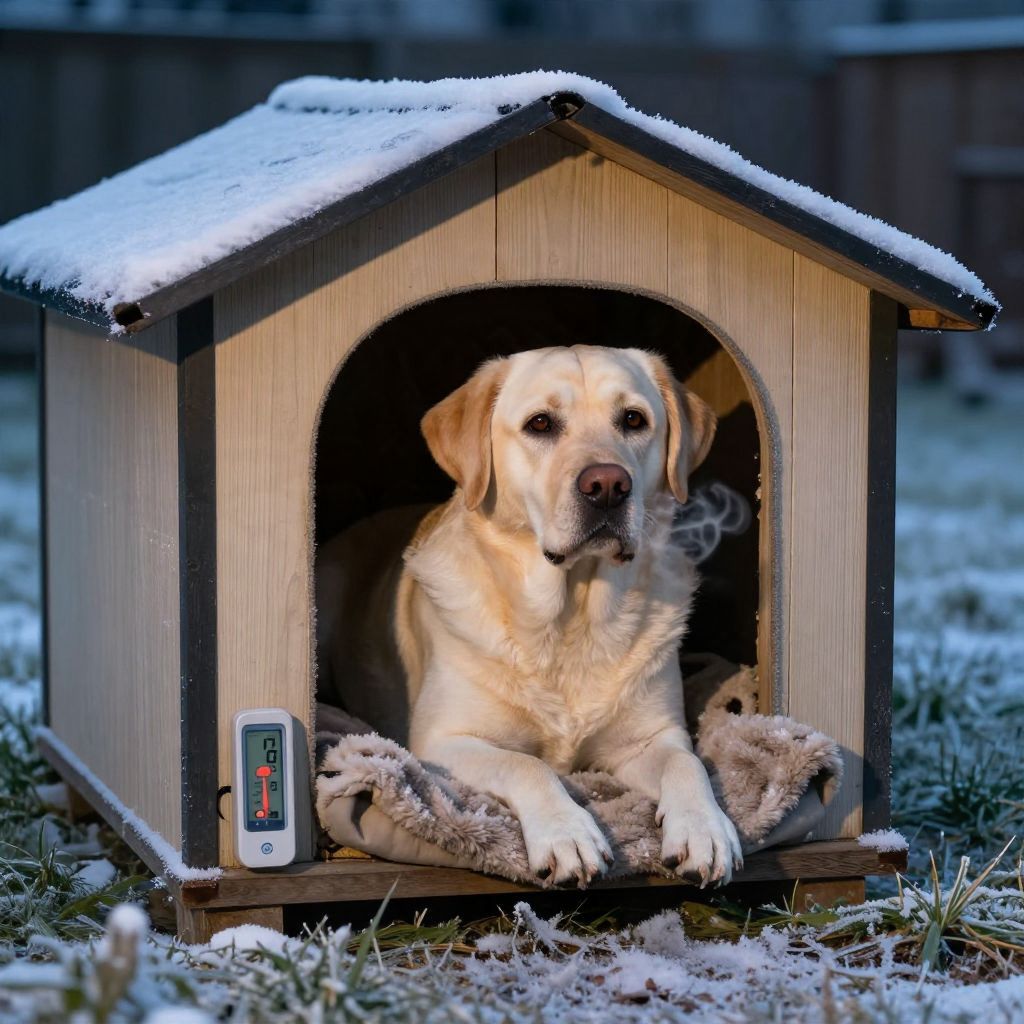
If you’re wondering what temperature is too cold for dogs to sleep outside, the safest answer is: it depends on the dog, but many dogs should not be left outdoors overnight once temperatures drop below about 45°F (7°C), and smaller, short-haired, young, old, or sick dogs may need indoor sleeping well above that.
Wind, dampness, body condition, coat type, and access to dry shelter matter as much as the thermometer. When in doubt, bring your dog inside and watch for signs of discomfort or hypothermia.
What temperature is too cold for dogs to sleep outside?
There is no single safe outdoor sleeping temperature for every dog. As a general guide, many healthy medium- to large-bodied dogs with thick coats may tolerate cool nights better than toy breeds, puppies, seniors, and thin-coated dogs, but once temperatures fall below about 45°F (7°C), outdoor sleeping becomes risky for many dogs.
Why the same temperature affects dogs differently
Your dog’s ability to stay warm depends on more than breed alone. A dog’s size, coat, body fat, age, health, and acclimation to cold all change how well they handle chilly weather.
Factors that make cold weather more dangerous
- Small body size: Smaller dogs lose heat faster.
- Short or thin coats: Less natural insulation means less protection.
- Puppies and seniors: They regulate body temperature less effectively.
- Low body weight or illness: Dogs with little fat, endocrine disease, heart disease, or arthritis may struggle more.
- Wet fur or damp bedding: Moisture pulls heat away quickly.
- Wind exposure: Wind chill can make a mild night much more dangerous.
- Not being acclimated: A dog used to indoor living may not handle cold as well as a dog gradually conditioned to outdoor temperatures.
Signs your dog is too cold outside
If your dog is sleeping outside, watch for early signs of discomfort. Shivering is one of the first warnings, but some dogs become quiet and stiff instead of shaking.
Cold stress warning signs
- Shivering or trembling
- Whining, restlessness, or trying to get inside
- Curled-up posture with tucked tail and limbs
- Cold ears, paws, or body
- Slowed movement or reluctance to walk
- Lifting paws off the ground
- Appearing anxious, withdrawn, or unusually sleepy
Emergency signs of hypothermia
Get urgent veterinary help if your dog is weak, disoriented, difficult to wake, collapses, has pale or blue gums, or stops responding normally. Severe hypothermia is an emergency and can become life-threatening.
Which dogs should not sleep outside in cold weather?
Some dogs are much less suited to outdoor sleeping, even at temperatures that seem moderate to people. If your dog fits any of these groups, indoor sleeping is usually the safer choice.
- Puppies: They lose heat quickly and may not have the body reserves to stay warm.
- Senior dogs: Older dogs often have less efficient temperature regulation and may have arthritis or other health issues.
- Very small dogs: Toy and small breeds can chill rapidly.
- Short-coated or hairless dogs: They usually need more protection from cold, especially at night.
- Underweight dogs: Less body fat means less insulation.
- Dogs with medical problems: Heart, respiratory, endocrine, or mobility issues can make cold exposure riskier.
- Dogs with anxiety or poor shelter use: If a dog won’t reliably use a shelter, outdoor sleeping is unsafe.
How to judge whether your dog can sleep outside safely
Use the temperature as only one part of the decision. A dog may handle a cool, dry night better than a warmer night with rain and wind.
- Check the actual forecast: Look at overnight low, wind, humidity, rain, snow, and frost.
- Assess your dog’s condition: Consider age, coat, size, health, and whether your dog is used to cold weather.
- Inspect the shelter: It should be dry, draft-protected, and large enough for your dog to turn around but small enough to hold body heat.
- Provide dry bedding: Straw or other dry insulating bedding is better than blankets that can get damp and lose warmth.
- Check water access: Fresh water must not freeze, and the bowl should stay clean and reachable.
- Reassess frequently: A dog who was comfortable last week may not be comfortable after illness, weight loss, or a weather change.
What kind of outdoor shelter helps in cold weather?
If a dog must spend time outside, the shelter matters as much as the air temperature. A proper shelter should reduce wind, keep out moisture, and provide insulation from the ground.
Helpful shelter features
- Raised floor or insulated base
- Dry, draft-resistant construction
- Entrance positioned away from prevailing wind
- Enough room for the dog to lie down and turn around, but not so much extra space that body heat escapes too quickly
- Clean, dry bedding that is replaced when wet or soiled
Even with a good shelter, some dogs should still sleep indoors when temperatures drop. Shelter is not a substitute for supervision.
Breed tendencies: helpful, but not a guarantee
Some breeds and coat types are often better suited to colder weather than others, but individual dogs vary. A thick-coated dog may still be cold if it is small, sick, elderly, or wet.
Dogs that may tolerate cold better
Dogs with dense double coats or larger bodies often handle cool weather better than short-coated toy breeds. Still, tolerance varies from dog to dog, and even cold-tolerant dogs need protection from wind, wet conditions, and prolonged exposure.
Dogs that often need extra protection
Small breeds, short-coated breeds, and dogs with thin body condition usually need more help staying warm. Many of these dogs should not be expected to sleep outside in cold weather without significant protection, and some should not sleep outside at all.
Common mistakes people make
Cold-weather mistakes can happen quickly, especially if the night starts out mild and then drops unexpectedly.
- Assuming a thick coat means a dog is fully protected
- Leaving a dog outside without checking wind, rain, or wet snow
- Using a blanket that becomes damp and cold
- Forgetting that puppies and older dogs need more warmth
- Not providing enough dry bedding
- Leaving water frozen or inaccessible
- Ignoring early shivering or restlessness
How to keep your dog warm if outdoor time is unavoidable
If your dog must be outside briefly in cold weather, focus on short exposure, dry conditions, and close monitoring. This is not a substitute for safe indoor sleeping when the weather is too cold.
- Limit outdoor time during the coldest part of the night
- Dry your dog thoroughly if the coat gets wet
- Use a well-fitted coat or sweater for dogs that tolerate clothing comfortably
- Keep walks and potty breaks short during extreme cold
- Check paws for ice buildup, cracking, or irritation
- Bring your dog inside if shivering starts or if your dog seems reluctant to move
When to call a veterinarian
Contact your veterinarian if your dog seems unusually sensitive to cold, has repeated shivering, or acts weak after being outside. Cold intolerance can sometimes point to an underlying medical issue such as pain, poor circulation, hormonal disease, or low body condition.
Seek urgent veterinary care right away if your dog has severe lethargy, confusion, collapse, pale gums, trouble breathing, or you suspect hypothermia or frostbite.
Bottom line
For many dogs, temperatures below about 45°F (7°C) are too cold for safe outdoor sleeping, and some dogs need indoor shelter at much warmer temperatures. The safest choice depends on your dog’s age, size, coat, health, and the weather conditions, especially wind and moisture. If you’re unsure, bring your dog inside.
If you want more weather-related dog safety guidance, you may also find how hot is too hot for dogs and what is a normal temperature for a dog helpful.