
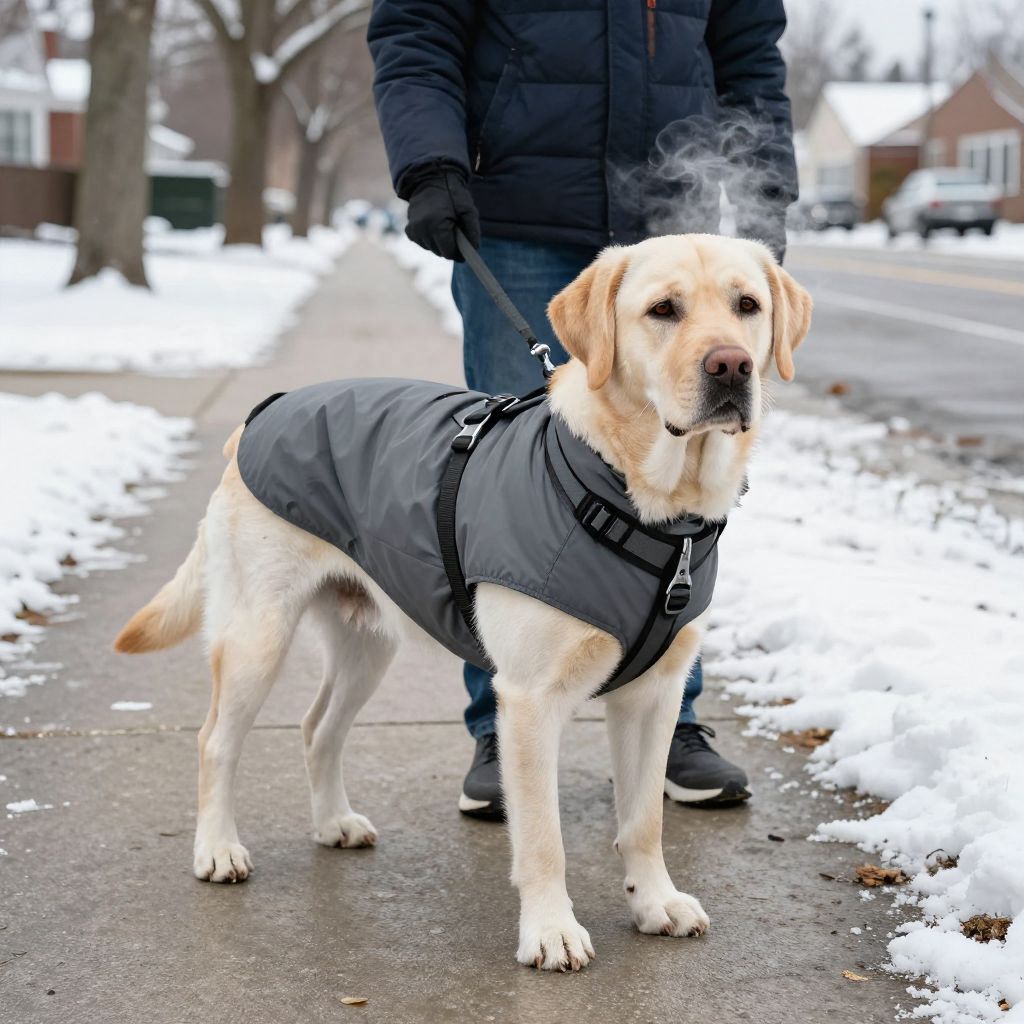
If you’re wondering what temperature is too cold for dogs, the honest answer is that it depends on the dog. Some healthy, thick-coated dogs tolerate near-freezing weather well, while small, short-haired, young, old, or ill dogs can get uncomfortable much sooner.
Watch your dog’s behavior, body condition, and how long they’re outside. Shivering, lifting paws, slowing down, or seeming anxious are signs the cold is becoming unsafe, even before the thermometer reaches an extreme.
What temperature is too cold for dogs?
For many dogs, temperatures below about 45°F (7°C) can start to feel uncomfortable, and below 32°F (0°C) can become risky with prolonged exposure. Small, thin-coated, very young, senior, sick, or underweight dogs may need protection at higher temperatures, while some hardy dogs tolerate colder weather better.
Why the same temperature affects dogs differently
There is no single safe temperature for every dog. Cold tolerance varies based on coat type, body size, body fat, age, health, activity level, and how long the dog stays outside.
Factors that matter most
- Coat type: Thick double coats usually insulate better than short, single coats.
- Body size: Small dogs lose heat faster than larger dogs.
- Body condition: Very lean dogs have less natural insulation.
- Age: Puppies and senior dogs often regulate temperature less effectively.
- Health: Arthritis, heart disease, endocrine problems, and other illnesses can make cold weather harder to tolerate.
- Wetness and wind: Damp fur and wind chill can make a mild day feel much colder.
Signs your dog is too cold
Pay attention to your dog’s body language and movement. Cold stress can show up before a dog seems truly distressed.
- Shivering or trembling
- Lifting or favoring paws
- Whining, pacing, or seeming restless
- Moving slowly or refusing to keep walking
- Trying to turn back home
- Curling up tightly or seeking shelter
- Cold ears, paws, or tail
Emergency warning signs include weakness, confusion, lethargy, pale or gray gums, shallow breathing, collapse, or a dog that seems unable to warm up. These can signal hypothermia or another urgent problem and need immediate veterinary care.
How cold is too cold for different dogs?
Use temperature as a guide, but always combine it with your dog’s individual needs and what you observe outside.
Rough general guide
- Above 45°F (7°C): Many dogs are comfortable, though sensitive dogs may still need a coat.
- 32–45°F (0–7°C): Some dogs do fine for short periods; others need extra protection.
- 20–32°F (-6–0°C): Risk increases, especially for small, short-haired, young, senior, or medically fragile dogs.
- Below 20°F (-6°C): Limit outdoor time for most dogs unless they are active, closely supervised, and well suited to cold weather.
These are only broad guidelines. A healthy, athletic northern breed may handle cold better than a toy breed, but even cold-tolerant dogs can get too cold if they are wet, tired, injured, or left outside too long.
Breeds, coat types, and cold tolerance
Breed can influence cold tolerance, but it does not guarantee it. Individual dogs vary, and mixed-breed dogs may inherit a wide range of coat and body traits.
Dogs that may handle cold better
Dogs with dense coats, more body mass, and a history of being active in cold weather often tolerate lower temperatures better than others. Still, they need supervision and a safe way to come inside.
Dogs that often need extra help
- Short-haired breeds
- Small dogs
- Hairless or lightly coated dogs
- Puppies
- Senior dogs
- Dogs with arthritis or chronic illness
- Underweight dogs
If your dog has a thin coat, a sweater or coat can help during walks, but it is not a substitute for limiting exposure time.
How long can dogs stay outside in cold weather?
Time matters as much as temperature. A dog may tolerate a brief potty break in cold weather but become unsafe during a long walk, play session, or wait outside without movement.
Use these practical rules
- Keep outdoor time short when temperatures drop.
- Supervise your dog closely instead of leaving them outside alone.
- Bring your dog in at the first sign of shivering or reluctance to move.
- Dry your dog promptly if the coat gets wet.
- Provide shelter, but remember that shelter alone may not be enough in severe cold.
Wind, rain, snow, and ice can make a day much harsher than the thermometer suggests. A calm, dry 35°F day is very different from a wet, windy 35°F day.
Cold-weather safety tips for dog owners
Simple preparation can make winter safer and more comfortable for your dog.
- Check paws: Ice, snow, and de-icing salts can irritate paw pads.
- Dry thoroughly: Pay attention to the belly, legs, and between the toes after walks.
- Use protective gear: Boots may help on icy or salted surfaces if your dog will tolerate them.
- Choose shorter outings: Several short trips may be better than one long one.
- Keep your dog moving: Light activity helps generate body heat, but don’t overexert a dog in dangerous weather.
- Provide warm indoor rest: Make sure your dog can return to a dry, draft-free space.
Watch for paw problems
Snow and ice can pack between the toes, and road salt can sting or irritate. If your dog limps, licks paws constantly, or resists walking on a route that was fine before, check the feet carefully.
Puppies, seniors, and dogs with health problems
Puppies and older dogs often need extra caution because they may lose body heat faster or have less ability to adapt. Dogs with medical conditions may also struggle to stay warm or may be less active, which makes cold more dangerous.
Be especially careful if your dog has
- Arthritis or joint pain
- Heart or lung disease
- Endocrine disease such as hypothyroidism
- Recent surgery or injury
- Low body weight or poor appetite
- Any condition that limits mobility or circulation
If your dog seems unusually tired, stiff, or reluctant to go outside in cold weather, ask your veterinarian whether the weather could be worsening an underlying issue.
What to do if your dog gets too cold
If you think your dog is chilled, act quickly but calmly. The goal is to warm your dog gradually and safely.
- Bring your dog indoors right away.
- Dry wet fur with a towel.
- Offer a warm, draft-free place to rest.
- Use blankets if your dog accepts them.
- Monitor for improvement in energy, posture, and comfort.
Do not use direct high heat, hot water, heating pads without supervision, or other rapid warming methods that could cause burns or stress. If your dog remains weak, confused, or shivering heavily, contact a veterinarian immediately.
When to call the vet
Cold exposure can become a medical issue, not just a comfort problem. Call your veterinarian if your dog has repeated cold intolerance, seems painful in the cold, or has a health condition that may make winter weather risky.
Seek urgent veterinary care if your dog shows collapse, severe lethargy, trouble breathing, pale gums, disorientation, or cannot stand normally after being outside in the cold. These are not symptoms to watch and wait on.
Common mistakes to avoid
- Assuming a breed name alone tells you whether your dog is safe in the cold
- Leaving a dog outside because “they have fur”
- Ignoring wet fur or strong wind chill
- Expecting a coat to make unlimited outdoor time safe
- Missing subtle signs like slowing down or lifting paws
- Waiting too long to get help if your dog seems unwell
Bottom line
What temperature is too cold for dogs depends on the individual dog, but many need extra caution below 45°F, and most dogs are at greater risk below freezing if exposure is prolonged. Watch for shivering, slowing down, paw lifting, or reluctance to stay outside, and bring your dog in early.
If you want to compare cold-weather guidance with warm-weather safety, you may also find how hot is too hot for dogs and what is a normal temperature for a dog helpful for year-round planning.