
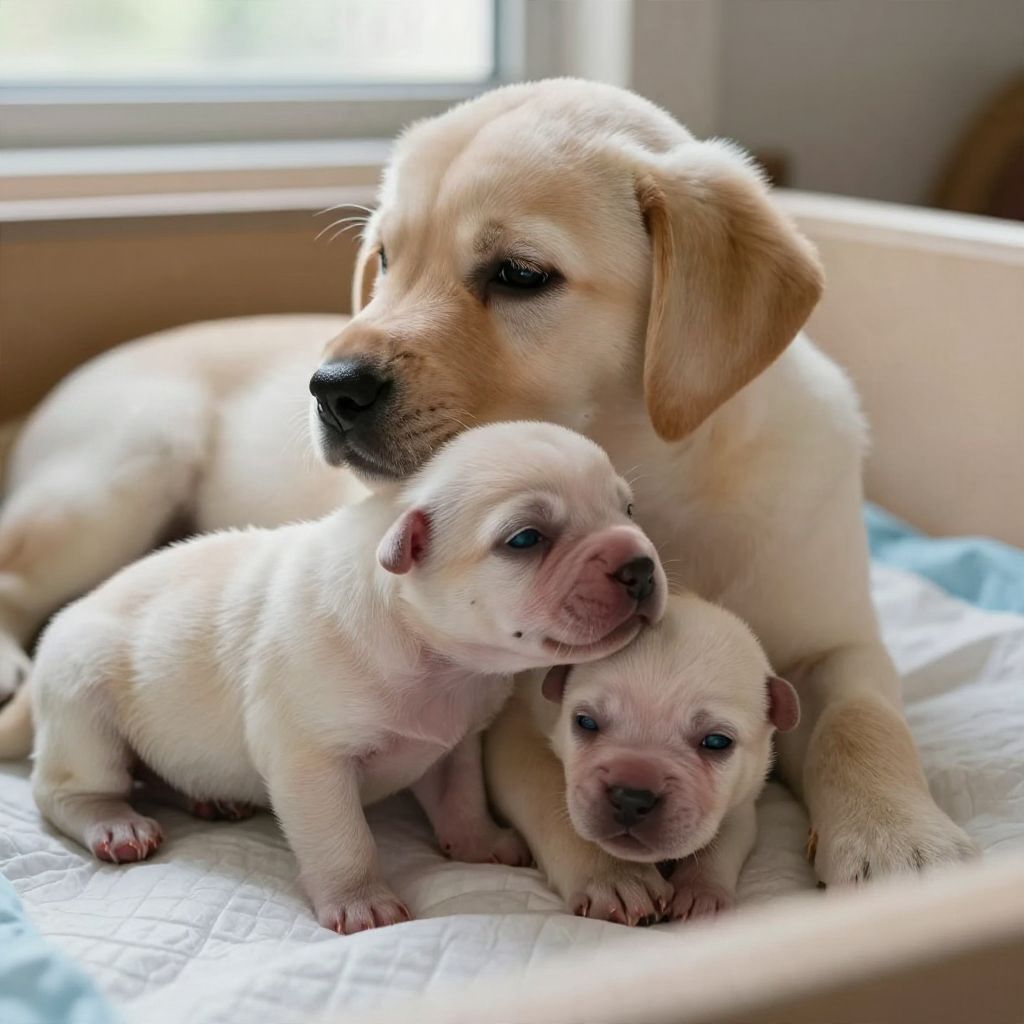
If you’re wondering when do puppies eyes open, the usual answer is around 10 to 14 days after birth. Some puppies open them a little earlier or later, and both timing and how quickly vision develops can vary.
Until then, newborn puppies rely mostly on touch, smell, and warmth. Their eyes should open gradually, and if one or both stay closed, look red, swollen, or painful, contact a veterinarian.
When do puppies eyes open?
Most puppies open their eyes between 10 and 14 days old, though some may take a few days more. The opening is usually gradual, starting with a small slit rather than fully open eyes. If a puppy’s eyes are still closed after about 2 weeks, or they look irritated, a vet should examine them.
What happens before and after the eyes open?
Newborn puppies are born with immature eyes and limited vision. Their eyelids stay closed to protect developing structures, so the first stage is simply the lids opening, not instant clear sight.
Before eye opening
- Puppies spend most of their time sleeping and nursing.
- They navigate by smell, touch, and warmth.
- Their ears are also closed or not fully functional at first.
After eye opening
- Vision is usually blurry at first and improves over time.
- Puppies may blink, squint, or seem unsure of bright light.
- They still need gentle handling and a safe, quiet environment.
Why timing can vary from puppy to puppy
There is normal variation in development. A puppy’s exact age, overall health, and individual growth rate can affect when the eyes open and how quickly they begin functioning well.
- Age at birth and early growth: Puppies that are smaller or slower to mature may open their eyes a little later.
- Breed and body type: Some breeds and lines may trend earlier or later, but there is no guarantee for any individual puppy.
- Health status: Illness, infection, or poor early care can delay normal development.
- Litter conditions: Very cold, dirty, or stressful environments can affect a puppy’s wellbeing.
What you should see when the eyes open normally
Healthy eye opening is usually gentle and gradual. The eyelids separate without strong swelling, discharge, or obvious discomfort. The eyes may look bluish or hazy at first, which is often normal in very young puppies.
- Eyes open a little at a time, not suddenly and forcefully.
- There may be mild sensitivity to light.
- The puppy continues nursing, sleeping, and gaining weight.
If the eyes open but the puppy still seems weak, is not nursing well, or is not gaining weight, that is a reason to call your veterinarian.
Warning signs that need veterinary attention
Some eye issues in newborn puppies can become serious quickly. Do not try to pull open sealed eyelids or treat the eyes at home without veterinary guidance.
- Eyes still closed after about 14 days
- Swelling around the eyelids
- Yellow, green, or thick discharge
- Redness, heat, or obvious pain
- One eye opens but the other does not
- Cloudiness, bulging, or a misshapen eye
- Foul odor from the eye area
- Any injury, scratch, or bite near the eye
These signs can point to infection, injury, or another problem that needs prompt veterinary care. Eye problems in very young puppies should be taken seriously because they can affect vision and overall health.
How to care for newborn puppies while their eyes are closed
The best care is simple, gentle, and focused on warmth, cleanliness, and monitoring. Puppies at this stage are fragile, so avoid unnecessary handling and keep their environment stable.
- Keep the whelping area warm and dry. Newborn puppies cannot regulate body temperature well.
- Check that the mother is nursing and cleaning them normally. If the mother is absent or struggling, get veterinary help quickly.
- Observe without disturbing them too much. Watch for weight gain, nursing, and normal movement.
- Keep bedding clean. A clean nest lowers the risk of eye and skin irritation.
- Handle with clean hands. This helps reduce the chance of introducing germs.
Do not use over-the-counter eye drops, human medications, or home remedies unless your veterinarian specifically tells you to. Newborn puppies are not small adult dogs, and their eyes are especially sensitive.
Common mistakes to avoid
When people are eager to see the puppies’ eyes, they sometimes interfere in ways that can cause harm. The safest approach is patience and observation.
- Do not force the eyelids open. This can injure delicate tissue.
- Do not wipe the eyes aggressively. Gentle cleaning should only be done if a vet recommends it.
- Do not assume discharge is normal. Thick or colored discharge needs attention.
- Do not delay care for a closed or swollen eye. Early treatment matters.
How eye opening fits into puppy development
Eye opening is one milestone in a puppy’s early development. Around the same time, you may notice more movement, better coordination, and increasing awareness of the surroundings. Even so, puppies are still developing and need calm, protected care.
As they grow, they will start exploring more, but their vision, hearing, and coordination continue to mature over several weeks. This is one reason young puppies should not be pushed into rough handling or overstimulating environments too early.
When to contact a veterinarian right away
Some situations should not wait for a routine appointment. If you notice any of the following, seek veterinary advice promptly.
- The puppy seems painful, lethargic, or unable to nurse.
- There is swelling, pus, or a strong odor around the eyes.
- One or both eyes remain closed past the expected age.
- The eye looks injured, cloudy, or unusually shaped.
- The puppy has other concerning signs, such as poor weight gain or dehydration.
If the puppy has a sudden eye injury, severe swelling, bleeding, or appears very unwell, treat it as urgent. Young puppies can deteriorate quickly, so early veterinary care is the safest choice.
What to expect after the eyes open
Once the eyes open, the puppy still won’t see like an adult dog right away. Vision improves gradually, and the puppy may be more alert to movement, light, and nearby littermates over the following days and weeks.
You can help by keeping the area safe and predictable. Avoid bright lights, loud noise, and rough play, and continue to supervise interactions closely.
Helpful ways to support healthy development
- Keep the nest area calm and secure.
- Continue routine weight checks if your breeder or veterinarian recommends them.
- Watch for normal nursing and increasing activity.
- Schedule veterinary care if anything seems off, even if the puppy is otherwise active.
Bottom line
When do puppies eyes open? Usually around 10 to 14 days old, with some normal variation. The process should be gradual and free of pain, swelling, or discharge. If the eyes stay closed too long or look abnormal, a veterinarian should check the puppy promptly.
If you want to learn more about early puppy development, you may also find it helpful to read about why puppies sleep so much and when puppies start teething.