
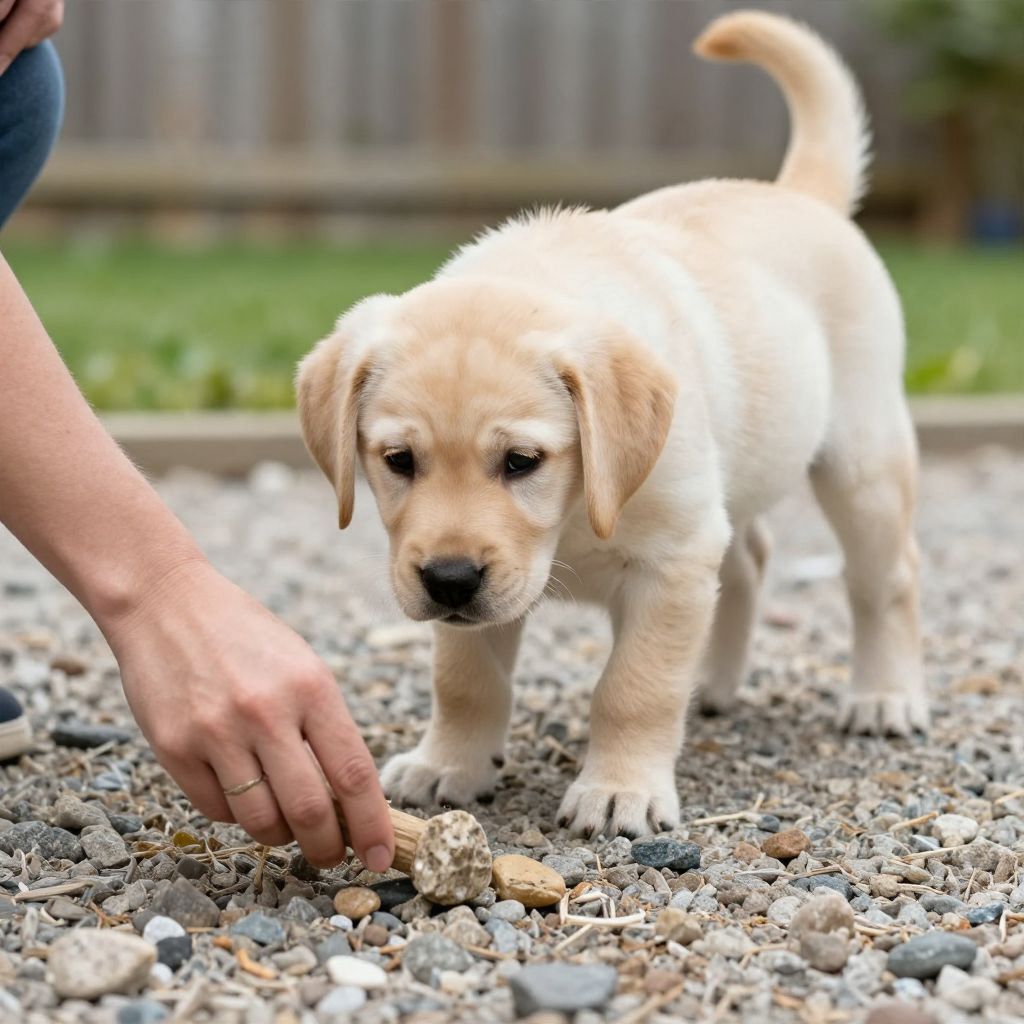
Why do dogs eat rocks? It can happen for several reasons, from curiosity and boredom to stress, hunger, or a medical problem that drives pica. Because rocks can damage teeth, block the intestines, or cause choking, this behavior should never be ignored.
The right response depends on your dog’s age, habits, and symptoms. Some dogs need more enrichment or training, while others need a veterinary exam to rule out pain, nutritional issues, or illness.
Why do dogs eat rocks?
Dogs may eat rocks because they are exploring, teething, bored, anxious, under-stimulated, or dealing with pica, a condition that causes eating non-food items. It can also happen if a dog has nausea, dental pain, parasites, or another health issue. Since rocks are dangerous, repeated rock-eating needs prompt attention.
Common reasons dogs eat rocks
Curiosity and normal exploration
Puppies especially use their mouths to investigate the world. A rock may be picked up, chewed, or swallowed simply because it is available and interesting.
This is more common in young dogs, but any dog can do it if the environment offers tempting objects and no supervision.
Boredom or lack of enrichment
Dogs that do not get enough exercise, play, training, or mental stimulation may seek out unusual things to chew or swallow. Rocks can become a target when a dog is trying to self-entertain.
This is often seen in dogs left alone for long periods, dogs with limited access to safe chew toys, or dogs whose needs vary with age and energy level.
Stress, anxiety, or frustration
Some dogs eat rocks when they feel stressed, confined, or frustrated. Changes in routine, separation anxiety, noise sensitivity, or environmental stressors can all contribute.
If the behavior appears during stressful events, the rock-eating may be part of a broader anxiety pattern rather than a simple “bad habit.”
Teething or oral discomfort
Puppies may chew hard objects because their gums hurt while teething. Adult dogs may also chew rocks if they have dental disease, a broken tooth, or mouth pain.
If your dog drops food, chews on one side, paws at the mouth, or resists hard treats, have the mouth checked by a veterinarian.
Pica or a medical problem
Pica is the repeated eating of non-food items, including rocks. It can be linked to medical issues such as gastrointestinal upset, nutrient imbalance, parasites, or other illnesses, though sometimes no single cause is found.
Because pica can have multiple causes, a veterinary exam is important if the behavior is repeated or hard to stop.
Hunger, diet issues, or scavenging habits
Some dogs that are hungry, fed inconsistently, or not getting a balanced diet may try to eat non-food items. Others may have learned to scavenge and swallow anything interesting before you can intervene.
Do not assume the problem is “just hunger,” though. Rock-eating can still signal illness or a behavioral issue even when appetite seems normal.
Why eating rocks is dangerous
Rocks are not a harmless chew. They can break teeth, scratch the mouth, cause choking, or get stuck in the stomach or intestines. In some cases, a swallowed rock can lead to a life-threatening blockage.
Smaller dogs may be at risk from smaller rocks, while larger dogs may swallow bigger stones that are harder to pass. The danger depends on the size, shape, and number of rocks eaten.
Red-flag symptoms after rock ingestion
- Repeated vomiting or retching
- Drooling, gagging, or trouble swallowing
- Abdominal pain, bloating, or a hunched posture
- Loss of appetite or refusal to drink
- Constipation, straining, or no stool
- Diarrhea, especially with blood
- Lethargy, weakness, or collapse
- Coughing, choking, or breathing trouble
If your dog is choking, struggling to breathe, has a swollen abdomen, or is repeatedly vomiting after eating rocks, seek urgent veterinary care immediately.
What to do right away if your dog eats rocks
- Remove access to rocks and any other small objects your dog might swallow.
- Do not try unsafe home remedies or force vomiting unless a veterinarian specifically instructs you to do so.
- Call your veterinarian for advice, especially if you know how many rocks were eaten, their size, or whether your dog is showing symptoms.
- Watch closely for vomiting, pain, appetite changes, or changes in bowel movements.
- Go to an emergency clinic if your dog is choking, in distress, or showing any red-flag symptoms.
If possible, tell the vet when it happened, how many rocks were eaten, and whether the rocks were small pebbles or larger stones. That information helps guide next steps.
How veterinarians may evaluate the problem
Your veterinarian may ask about your dog’s diet, environment, stress level, and any recent changes at home. They may also examine the mouth and abdomen and recommend imaging if a swallowed rock is suspected.
Depending on the situation, your vet may look for dental disease, digestive issues, parasites, or other medical causes. If the behavior seems behavioral rather than medical, the vet may suggest a training or behavior plan.
How to stop a dog from eating rocks
Manage the environment first
Prevention starts with limiting access. Supervise your dog outdoors, especially in areas with gravel, landscaping stones, driveways, or construction debris.
- Use a leash or long line during walks and yard time if needed.
- Block access to rock beds, planters, and loose gravel.
- Pick up rocks from play areas when possible.
- Provide safe chew toys so your dog has better options.
Increase exercise and mental enrichment
Many dogs benefit from more structured activity. The right amount varies by age, breed tendencies, health, and individual energy level, but most dogs do better with daily physical and mental outlets.
- Food puzzles or snuffle mats
- Short training sessions using rewards
- Fetch, tug, scent games, or walks
- Rotating safe chew toys
Teach a reliable “leave it” and “drop it”
Reward-based training can help prevent rock swallowing. Practice with low-value objects first, then gradually increase difficulty in controlled settings.
Keep sessions short and successful. If your dog guards objects, becomes frantic, or swallows items faster when approached, work with a qualified trainer or veterinary behaviorist.
Check the diet and feeding routine
Feed a complete, balanced diet appropriate for your dog’s life stage. Sudden changes, inconsistent meals, or inappropriate feeding amounts can sometimes contribute to scavenging behavior.
If you suspect hunger or digestive discomfort, talk with your veterinarian before changing foods or adding supplements.
Address anxiety or compulsive behavior
If rock-eating happens during stressful moments, focus on reducing triggers and building predictable routines. Dogs with anxiety may need a behavior plan that includes management, desensitization, and reward-based training.
For persistent, repetitive pica, a veterinarian or veterinary behaviorist can help determine whether a deeper behavioral or medical issue is involved.
Common mistakes to avoid
- Waiting to see if the rock “passes on its own” when your dog has symptoms
- Using punishment, which can increase stress and make the behavior worse
- Assuming only puppies do this
- Leaving dogs unsupervised in rock-filled yards or trails
- Ignoring repeated non-food eating as “just a phase”
When to call the vet even if your dog seems fine
Call your veterinarian if your dog repeatedly eats rocks, even without immediate symptoms. Repeated behavior may point to a medical issue, a nutritional concern, or a training and enrichment problem that needs a plan.
You should also seek advice if your dog has a history of pica, is a puppy with frequent mouthing, or has recently started eating rocks after a change in routine, food, or environment.
Conclusion
Dogs eat rocks for many reasons, but none of them make the behavior safe. Focus on prevention, enrichment, and reward-based training, and get veterinary help quickly if your dog swallowed rocks or shows any warning signs.
If you want to understand related non-food eating habits, you may also find why dogs eat dirt and why dogs eat their vomit helpful for comparison.