
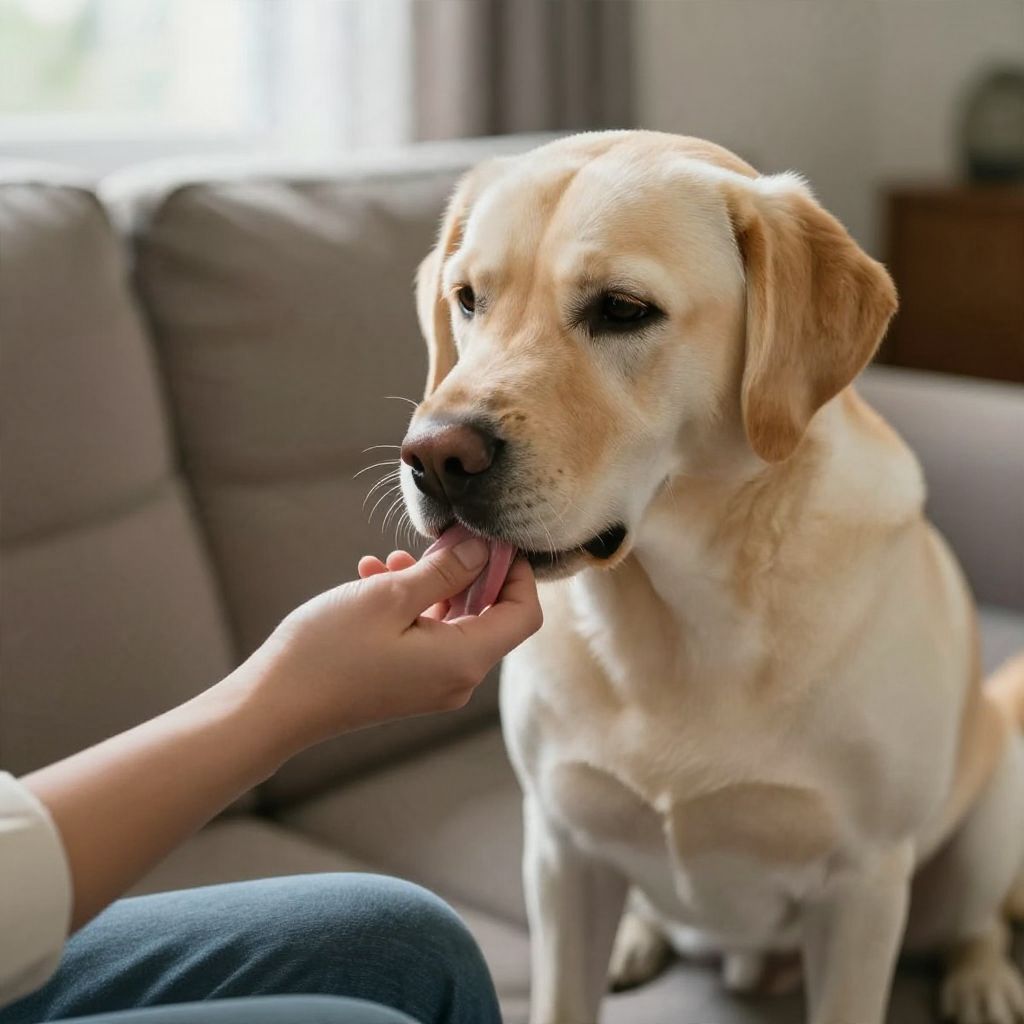
Why does my dog lick me all the time? Most of the time, licking is normal dog communication: affection, attention-seeking, tasting salt on your skin, or soothing themselves when they feel excited or unsure. It can also become a habit if it reliably gets your response.
Usually, the answer is not one single cause. The key is to look at when the licking happens, whether it seems calm or frantic, and whether any health or behavior changes are happening too.
Why does my dog lick me all the time?
Dogs lick people for several normal reasons: to show social bonding, ask for attention, explore taste and smell, or self-soothe when stressed. If the licking is sudden, intense, or paired with other symptoms, it may point to anxiety, discomfort, nausea, skin irritation, or another health issue that needs a veterinarian’s input.
Common reasons dogs lick their people
Affection and social bonding
Many dogs lick as a friendly, social behavior. In dog groups, licking can help maintain bonds and signal peaceful intent, and some dogs carry that habit into their relationship with you.
If your dog licks gently while relaxing beside you, that is often just part of their normal social style.
Attention-seeking
Dogs quickly learn that licking gets a reaction. If you talk, pet, laugh, or push them away, they may see that as attention and repeat the behavior.
This is especially common in dogs that are bored, under-exercised, or have learned that licking is an effective way to start interaction.
Salt, scent, and taste
Your skin can taste interesting to a dog, especially after exercise, sweating, or using lotions and soaps. Some dogs are simply drawn to the salty or scented residue on your hands, arms, or feet.
This does not usually mean anything is wrong, but it can make licking more frequent at certain times of day.
Stress, excitement, or self-soothing
Licking can be a calming behavior. A dog that is excited, uncertain, or mildly anxious may lick you to help regulate their feelings.
If the licking increases during visitors, loud noises, grooming, car rides, or changes in routine, stress may be part of the picture.
Habit and reinforcement
Once a dog gets repeated reinforcement for licking, the habit can become very strong. Even a small response from you may keep the behavior going.
That is why consistency matters: if you sometimes encourage it and sometimes discourage it, your dog may keep trying.
When licking is normal vs. when it may be a problem
Occasional licking that is gentle, context-based, and easy to interrupt is usually normal. It becomes more concerning when it is compulsive, hard to stop, or paired with other changes in behavior or health.
- Usually normal: brief licking during cuddling, greeting, or after exercise.
- More concerning: constant licking that seems frantic, repetitive, or hard to redirect.
- Needs veterinary attention: licking that starts suddenly, comes with vomiting, drooling, pain, itching, skin changes, or changes in appetite or energy.
Possible health reasons behind excessive licking
Nausea or digestive discomfort
Some dogs lick more when they feel nauseated or have stomach upset. You may also notice lip-smacking, drooling, grass eating, reduced appetite, or vomiting.
If your dog is licking constantly and seems unwell, contact your veterinarian rather than assuming it is just a behavior issue.
Pain or discomfort
Dogs sometimes lick people more when they are uncomfortable, restless, or seeking reassurance. Pain can also make a dog clingy or unusually needy.
Because dogs often hide pain, subtle changes matter: stiffness, reluctance to jump, panting at rest, or sensitivity to touch can all be clues.
Skin irritation or allergies
While this is more obvious when dogs lick themselves, itchiness and irritation can also increase general restless behavior, including licking you more often. Environmental allergies, fleas, or skin infections may be involved.
If your dog is scratching, chewing paws, or has red skin, odor, or hair loss, a veterinary exam is a good idea.
Compulsive behavior or anxiety
In some dogs, licking becomes repetitive and difficult to interrupt. This can happen with chronic stress, lack of enrichment, or underlying anxiety disorders.
A veterinarian or certified veterinary behaviorist can help determine whether the licking is part of a broader behavior problem.
What to do if your dog licks you all the time
1. Figure out the pattern
Notice when the licking happens most often. Does it occur when you sit down, after meals, when you return home, or during stressful moments?
Patterns help you tell the difference between affection, attention-seeking, and possible anxiety or discomfort.
2. Don’t accidentally reward it
If licking is attention-seeking, try not to reinforce it. Calmly stand up, turn away, or briefly leave the room when it starts, then reward quiet, settled behavior.
Consistency matters more than intensity. A big reaction can be more rewarding than you think.
3. Redirect to an appropriate behavior
Teach your dog what to do instead of licking. You can ask for a sit, down, mat, or hand target, then reward that behavior with praise, treats, or play.
- Keep a few treats nearby for quick redirection.
- Reward calm behavior before licking starts.
- Use a mat or bed as a “settle” spot.
4. Increase enrichment and exercise
A dog that is mentally and physically satisfied is often less likely to use licking as a default activity. This is especially helpful for energetic dogs, young dogs, and dogs that spend a lot of time indoors.
- Use food puzzles or scatter feeding.
- Offer sniff walks and training games.
- Rotate chew-safe enrichment items.
- Build in predictable daily routines.
5. Check for stress triggers
If your dog licks more during noise, visitors, handling, or separation, reduce exposure where possible and work on gradual positive exposure to the trigger.
For dogs with clear anxiety, a qualified trainer or veterinary behaviorist can help you create a humane plan.
6. Keep skin and grooming products in mind
Sometimes the simplest answer is that your skin tastes good to your dog. Fragranced lotions, food residue, sweat, or salty skin can all encourage licking.
Washing hands or changing products may reduce the behavior, especially if your dog targets the same spots repeatedly.
What not to do
It is tempting to scold a dog for licking, but punishment often creates confusion or stress without solving the cause. It can also make anxious dogs more clingy or more repetitive.
- Do not yell, hit, or use aversive tools.
- Do not assume the dog is being “dominant.”
- Do not ignore sudden changes that may signal illness.
When to call the veterinarian
Contact your veterinarian if the licking is new, much more frequent than usual, or seems compulsive. A medical check is especially important if you also notice other symptoms.
- Vomiting, diarrhea, drooling, or lip-smacking
- Loss of appetite or drinking more or less than usual
- Itching, redness, odor, hair loss, or skin lesions
- Stiffness, limping, restlessness, or signs of pain
- Sudden behavior changes, confusion, or unusual anxiety
Seek urgent veterinary care right away if your dog is repeatedly licking and also has trouble breathing, collapses, has a swollen face, cannot settle, is vomiting repeatedly, seems severely painful, or may have eaten something toxic.
Does breed, age, or personality matter?
Yes, individual differences matter a lot. Some dogs are naturally more tactile, expressive, or prone to social licking, but breed alone does not determine the behavior.
Puppies may lick more as they explore and learn social cues. Senior dogs may lick more if they are anxious, uncomfortable, or experiencing cognitive changes. A shy dog may lick differently from a confident, outgoing one.
How to reduce licking without harming your bond
You do not need to stop all licking. The goal is to reduce excessive licking while preserving the positive parts of your relationship.
- Notice the situations that trigger licking.
- Stop rewarding the behavior with attention.
- Teach and reward an alternative behavior.
- Provide more exercise, enrichment, and routine.
- Ask your vet about any sudden or intense change.
Bottom line
Why does my dog lick me all the time? Most often, it is a normal mix of affection, attention-seeking, taste, or self-soothing. If it becomes sudden, obsessive, or comes with other symptoms, check with your veterinarian and use reward-based training to guide your dog toward calmer behaviors.
If you want to learn more about related behavior patterns, you may also find why does my dog lick me so much and why does my dog lick me excessively helpful for comparison.