
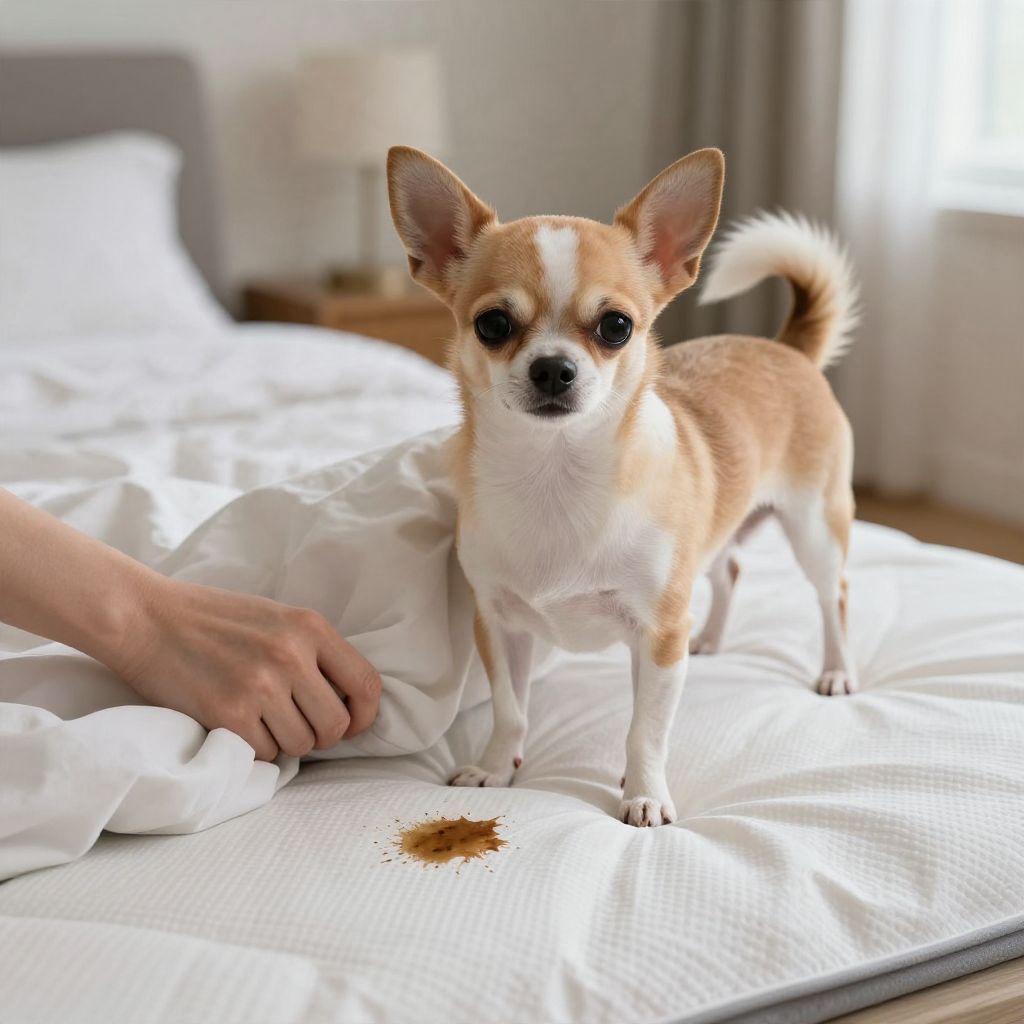
If you’re asking, “Why does my dog pee on my bed?” the answer is usually one of a few things: a medical problem, incomplete housetraining, stress, marking, or a change in routine. Bedding can also hold odors that invite repeat accidents.
The good news is that this behavior is often fixable once you identify the trigger. The key is to rule out health issues first, then manage access, clean thoroughly, and retrain without punishment.
Why does my dog pee on my bed?
Dogs pee on beds most often because of a urinary issue, poor housetraining, anxiety, territorial marking, or a lapse in bladder control. Beds absorb scent and feel soft and secure, so some dogs choose them repeatedly. Start by ruling out medical causes, then address behavior and environment.
Common causes of bed peeing
1. A urinary or medical problem
Frequent accidents, straining, licking the genitals, blood in the urine, increased thirst, or sudden changes in bathroom habits can point to illness. Urinary tract infections, bladder inflammation, kidney disease, diabetes, and age-related incontinence are all possible causes.
Do not assume it is “just behavior” if the peeing is new or sudden. A veterinarian should evaluate your dog, especially if accidents happen despite good housetraining.
2. Incomplete housetraining
Puppies and newly adopted dogs may not yet understand where to eliminate. Even dogs that seem mostly trained can regress after a move, schedule change, or inconsistent supervision.
Soft surfaces like beds can be especially tempting because they feel similar to grass or bedding in a crate, and they absorb scent well enough that your dog may return to the same spot.
3. Anxiety, stress, or excitement
Some dogs urinate when overwhelmed, scared, or overexcited. This can happen during greetings, thunderstorms, visitors, separation, or changes in the household.
Dogs with anxiety may also seek out your bed because it smells like you and feels safe. That comfort can make the bed a preferred place to relieve themselves when they are stressed.
4. Territorial marking
Marking is usually a small amount of urine placed to communicate scent. It is more common in unneutered males, but females and neutered dogs can mark too, especially in multi-pet homes or when new animals or people are present.
Marking is often triggered by new smells, unfamiliar dogs outside, or changes in household dynamics. It is not the same as a full bladder accident, though the two can look similar.
5. Age-related changes
Senior dogs may have weaker bladder control, mobility issues, cognitive decline, or medical problems that make it harder to get outside in time. A dog that used to be reliable may suddenly start using the bed because it is close, soft, and easy to access.
If your older dog is having accidents, a veterinary exam is important. Many senior-related causes can be managed once identified.
What to do first
- Schedule a veterinary visit if the problem is new, frequent, or accompanied by other symptoms.
- Keep your dog out of the bedroom or off the bed until the issue is under control.
- Clean all soiled bedding and mattress areas thoroughly with an enzyme cleaner made for pet urine.
- Take your dog out more often, especially after waking, eating, drinking, play, and excitement.
- Reward outdoor elimination immediately with calm praise and a treat.
When the bed peeing is a medical concern
Call your veterinarian promptly if you notice any of the following:
- Blood in the urine
- Straining to urinate or producing only small amounts
- Frequent attempts to pee with little output
- Accidents that start suddenly in a previously trained dog
- Excessive thirst or increased urination
- Vomiting, lethargy, fever, or loss of appetite
- Pain, whining, or a tense posture when urinating
Seek urgent veterinary care if your dog cannot urinate, seems very painful, has a swollen abdomen, or is weak and collapsing. These can be emergencies.
How to stop your dog from peeing on the bed
1. Prevent access while you retrain
Management matters because every repeat accident strengthens the habit. Close the bedroom door, use a baby gate, or crate your dog only if they are already comfortable and properly crate-trained.
If your dog is allowed on the bed sometimes, make that access consistent. Mixed rules can confuse training and make the behavior harder to change.
2. Clean the mattress and bedding correctly
Regular cleaners may remove the smell for you, but not for your dog. Use an enzymatic cleaner designed for pet urine and follow the label directions carefully.
Wash bedding thoroughly, and if urine soaked into the mattress, treat the area as soon as possible. If odor remains, your dog may keep returning to the same spot.
3. Reinforce outdoor potty habits
Take your dog out on a predictable schedule and praise the exact behavior you want. Keep the reward simple and immediate so your dog connects going outside with good things.
- First thing in the morning
- After meals
- After naps
- After play or excitement
- Before bedtime
4. Watch for patterns
Note when accidents happen, what was happening before them, and whether your dog had just eaten, slept, played, or become stressed. Patterns can help you and your veterinarian narrow down the cause.
For example, peeing only when visitors arrive suggests anxiety or excitement, while peeing overnight or after drinking more than usual may point more toward a medical issue.
5. Reduce stress triggers
If anxiety seems likely, keep routines predictable and avoid scolding. Provide a quiet resting area, regular exercise, and enrichment such as sniffing games, food puzzles, and structured walks.
For dogs with separation distress, fear, or repeated stress urination, a certified trainer or veterinary behaviorist can help build a humane plan.
What not to do
- Do not rub your dog’s nose in urine.
- Do not punish after the fact; dogs do not connect delayed punishment with the accident.
- Do not use ammonia-based cleaners, which can smell urine-like to dogs.
- Do not ignore repeated accidents in a senior dog or a dog with other symptoms.
- Do not rely on diapers alone without addressing the cause.
How age changes the answer
Puppies
Puppies need frequent potty breaks, close supervision, and a very consistent routine. Bed accidents in puppies often reflect incomplete training rather than defiance.
Limit unsupervised access to the bed until your puppy can reliably hold their bladder and understands where to go.
Adult dogs
In adult dogs, a sudden change is more concerning than an occasional mistake. If your adult dog was reliable and now pees on the bed, a veterinary check is a smart first step.
Senior dogs
Older dogs may need more bathroom breaks, easier access to the outdoors, and medical evaluation for incontinence or cognitive changes. Soft bedding can become a preferred accident spot if getting outside takes too long.
Could breed or size matter?
Breed alone does not determine whether a dog will pee on your bed. Individual temperament, training history, age, and health matter much more than breed labels.
That said, some dogs are more sensitive to stress, and some small dogs may be easier to miss when they need a bathroom break. Large dogs can also have accidents simply because they have a larger bladder volume and may leave a bigger mess when something is wrong. These are tendencies, not guarantees.
When to get professional help
If your dog keeps peeing on the bed after a medical exam, or if the behavior is tied to fear, separation issues, or marking, get help from a qualified professional. A certified trainer using reward-based methods can help with housetraining and management, while a veterinary behaviorist can address more complex anxiety or compulsive patterns.
Bring notes about timing, triggers, and any changes in appetite, water intake, or energy. That information can make the evaluation much more effective.
Bottom line
If you’re wondering why your dog pees on your bed, start by ruling out illness, then manage access, clean thoroughly, and retrain with patience. Most dogs improve when the cause is identified and the plan is consistent. If accidents are sudden, frequent, or paired with other symptoms, contact your veterinarian right away.
If you want more help with the cleanup side of the problem, you may also find how to get dog pee out of a mattress useful, along with other related dog-care guidance.