
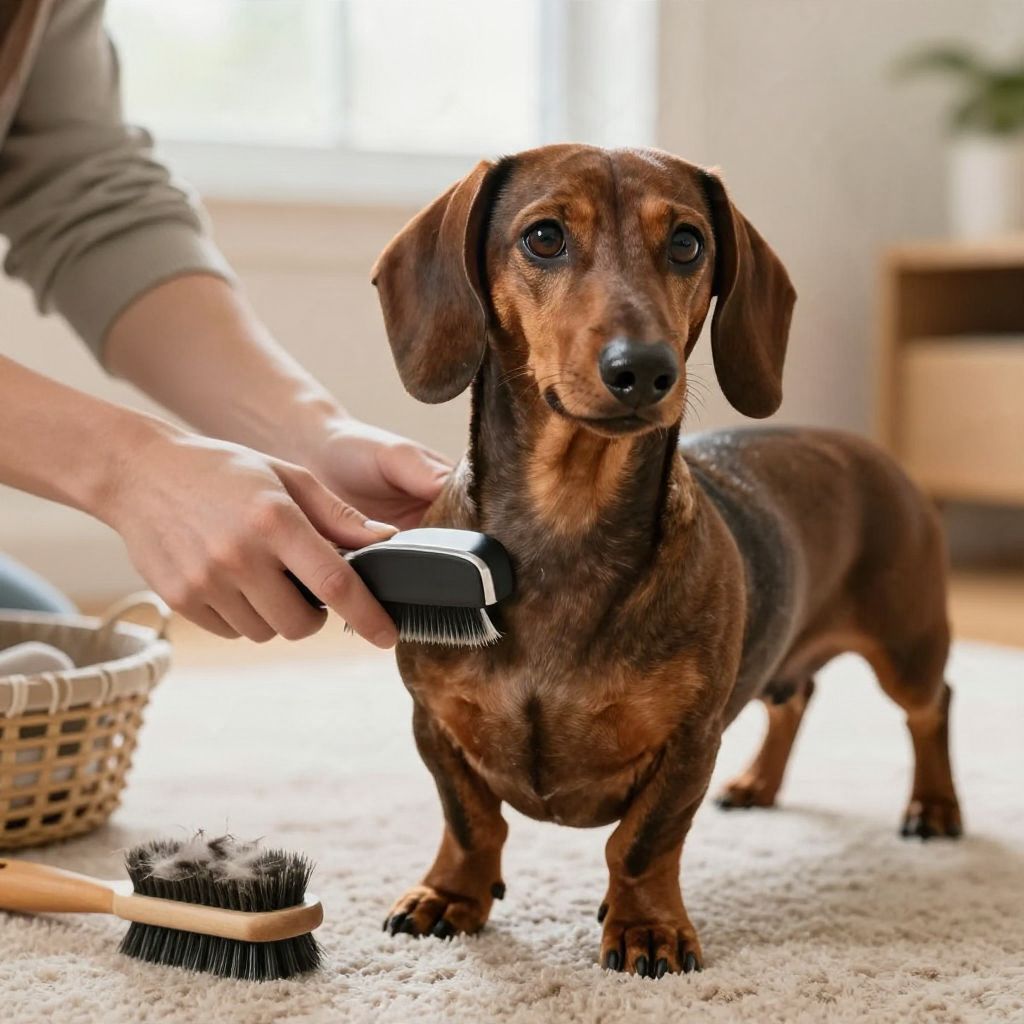
Do Weiner Dogs shed? Yes, most do, but the amount depends on coat type, grooming, season, and your dog’s individual skin and health. Some dachshunds shed only lightly, while others leave more hair around the home.
If you live with a weiner dog, regular brushing and a simple grooming routine can make shedding much easier to manage. Sudden or excessive hair loss can also signal a skin problem, so it helps to know what is normal.
Do Weiner Dogs Shed?
Yes, weiner dogs shed, but the amount varies a lot by coat type. Smooth-coated dachshunds usually shed lightly to moderately, long-haired dogs may shed more visibly, and wire-haired dogs often shed less but still lose some hair. If shedding suddenly increases, ask your veterinarian to check for skin disease, parasites, allergies, or other health issues.
How Much Do Weiner Dogs Shed by Coat Type?
Not every dachshund sheds the same way. Coat texture, grooming habits, and the dog’s overall health all affect how much loose hair ends up on your clothes, furniture, and floors.
Smooth-coated weiner dogs
Smooth-coated dachshunds have short hair that can seem easy to manage, but they still shed year-round. Their hair is often small and fine, so it may collect on upholstery and clothing even when the dog does not look especially fluffy.
Long-haired weiner dogs
Long-haired dachshunds usually need more brushing because their coat can trap loose hairs before they fall out. You may notice more visible shedding during brushing sessions, especially around the ears, chest, belly, and tail.
Wire-haired weiner dogs
Wire-haired dachshunds often have a rougher coat that can shed less noticeably than the other coat types. Even so, they still need grooming, and some loose hair will still come out naturally over time.
Why Do Weiner Dogs Shed?
Shed hair is normal. Dogs replace old or damaged hairs as part of the natural coat cycle, and shedding can increase at certain times of year or when the coat is not cared for regularly.
- Seasonal coat changes: Some dogs shed more when temperatures change.
- Normal hair growth cycles: Old hairs fall out so new ones can grow in.
- Grooming habits: Brushing removes loose hair before it spreads around your home.
- Skin health: Dry skin, allergies, parasites, or infection can worsen shedding.
- Age and health: Puppies, adults, and seniors may shed differently depending on their condition.
How to Reduce Shedding in a Weiner Dog
You cannot stop shedding completely, but you can usually reduce it and keep your dog more comfortable. The best approach is regular grooming, good skin care, and attention to any changes in coat quality.
Brush your dog consistently
Brushing is one of the most effective ways to control loose hair. It also helps you spot skin irritation, bumps, dandruff, or fleas early.
- Brush smooth-coated dogs with a soft grooming tool or rubber curry brush.
- Brush long-haired dogs more often to prevent tangles and remove loose undercoat.
- Use a gentle approach so grooming stays positive and stress-free.
Bathe only as needed
Bathing can help remove loose hair, but too-frequent washing may dry out the skin and make shedding look worse. Use a dog-safe shampoo and follow your veterinarian’s advice if your dog has sensitive skin.
Support healthy skin and coat
A balanced diet matters because skin and coat health depend on overall nutrition. If your dog’s coat looks dull or flaky, talk with your veterinarian before adding supplements or changing food.
- Feed a complete and balanced dog food appropriate for your dog’s age and size.
- Keep fresh water available.
- Ask your veterinarian before using oils, supplements, or medicated products.
Control fleas and other parasites
Fleas can cause itching, scratching, and hair loss. Even a small infestation may make shedding appear much worse, so consistent parasite prevention is important.
When Shedding Is Normal and When It Is Not
Normal shedding is usually gradual and even. You may notice loose hair on bedding or clothing, but your dog should still have a healthy coat and comfortable skin.
Call your veterinarian if you notice any of the following:
- Patchy hair loss or bald spots
- Red, inflamed, or scaly skin
- Strong odor from the skin or ears
- Constant scratching, licking, or chewing
- Excessive dandruff
- Sudden increase in shedding
- Hair loss along with weight changes, low energy, or poor appetite
Seek urgent veterinary care if your dog has open sores, swelling, severe itching, signs of pain, trouble breathing, or a sudden collapse. Those symptoms are not normal shedding concerns.
Common Grooming Mistakes That Can Make Shedding Seem Worse
Some well-meaning habits can irritate the skin or leave more loose hair behind. Keeping grooming simple and consistent usually works better than trying to overdo it.
- Brushing too hard: Aggressive grooming can irritate the skin and make your dog dislike being handled.
- Using the wrong tool: A brush that is too harsh may not suit your dog’s coat type.
- Bathing too often: Overwashing can dry the skin.
- Ignoring mats: Tangled hair can trap dirt, moisture, and loose coat.
- Skipping parasite control: Fleas and mites can cause major coat problems.
How to Make Shedding Easier at Home
If your weiner dog sheds onto furniture or clothing, a few practical habits can help you stay ahead of it without making grooming a chore.
- Brush your dog in one easy-to-clean area.
- Use washable blankets or covers on favorite resting spots.
- Vacuum regularly, especially where your dog sleeps.
- Keep a lint roller or pet hair remover nearby.
- Wipe your dog’s coat with a damp grooming cloth if your dog tolerates it.
Do Puppies Shed Too?
Yes, puppies shed as they grow, and their coat may change as adult hair comes in. This can make the coat look uneven or fluffier for a while, which is usually normal.
If a puppy loses hair in patches, has irritated skin, or seems uncomfortable, schedule a veterinary exam. Young dogs can develop skin infections, parasites, or allergies just like adults.
Can Diet Affect Shedding?
Diet can influence coat quality, but food is not a quick fix for normal shedding. A poor diet may contribute to dry skin or a dull coat, while a complete and balanced diet supports healthy hair growth.
- Choose food formulated for your dog’s life stage.
- Avoid switching foods repeatedly without a reason.
- Do not rely on human foods to improve shedding.
- Ask your veterinarian before starting supplements.
When to Talk to a Groomer or Veterinarian
A professional groomer can help if your dachshund’s coat is getting tangled, if you are unsure which brush to use, or if grooming at home feels difficult. A veterinarian should evaluate any shedding that seems excessive, sudden, or linked to skin changes.
If your dog is itchy, has hair loss, or seems uncomfortable, do not assume it is just “normal shedding.” Skin problems are common and often easier to treat when caught early.
Conclusion
So, do Weiner Dogs shed? Yes, they do, but the amount depends on coat type and health. Regular brushing, sensible bathing, parasite prevention, and attention to skin changes will help you manage shedding and keep your dog comfortable. If the shedding seems unusual, check with your veterinarian.
If you want to compare coat care by dachshund type, you may also find this guide to dachshund shedding and this article on long-haired dachshunds helpful.