
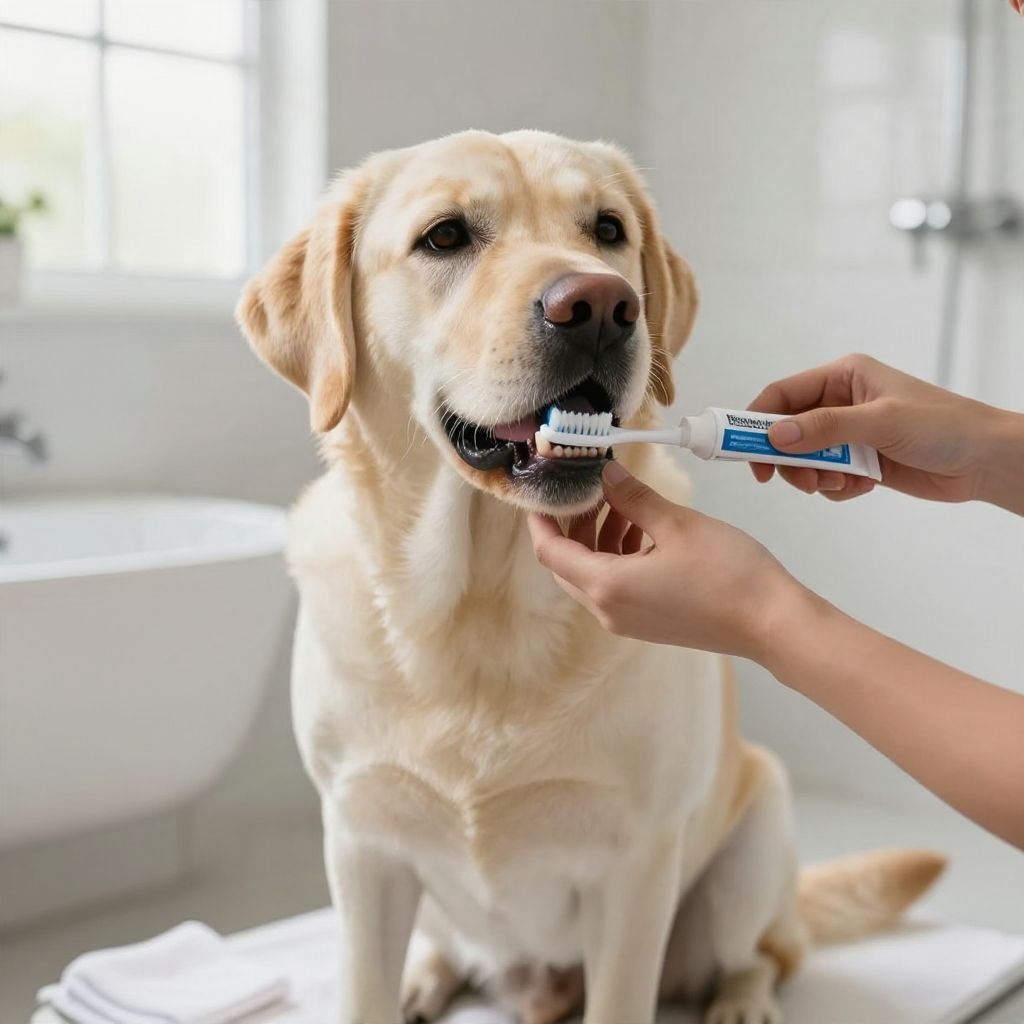
How do you clean a dog’s teeth safely and effectively at home? The best method is regular brushing with a dog-specific toothbrush and toothpaste, plus gradual training so your dog accepts the routine.
Daily brushing is ideal, but even a few times a week can help reduce plaque and freshen breath. If your dog already has pain, heavy tartar, or bleeding gums, a veterinary dental exam is the safest next step.
How To Clean A Dog’S Teeth?
Use a soft dog toothbrush and enzymatic dog toothpaste, then brush gently along the gumline in short sessions. Start slowly, reward calm behavior, and build up over days or weeks. Never use human toothpaste, and ask your vet if your dog has bad breath, loose teeth, swelling, or signs of mouth pain.
What You Need Before You Start
Having the right supplies makes the process easier for both you and your dog. Most dogs do best with simple tools and a calm routine.
- Dog toothbrush or finger brush sized for your dog’s mouth
- Dog toothpaste made for canine use
- Soft cloth or gauze for beginners
- Treats for positive reinforcement
- A quiet, well-lit place where your dog feels relaxed
Choose tools that match your dog’s size and temperament. A small dog may need a smaller brush head, while a larger dog may tolerate a longer handle more easily.
Step-by-Step Guide to Cleaning Your Dog’s Teeth
1. Help your dog get comfortable with handling
Before brushing, let your dog get used to having the muzzle, lips, and cheeks touched. Keep these practice sessions short and calm.
- Touch the outside of the mouth briefly.
- Lift the lips for a second or two.
- Reward calm behavior right away.
2. Introduce the toothpaste
Let your dog lick a small amount of dog toothpaste from your finger or the brush. This helps create a positive association with the routine.
Use only toothpaste designed for dogs. Human toothpaste can contain ingredients that are unsafe if swallowed.
3. Start with a few teeth
At first, do not try to clean the whole mouth. Focus on the outside surfaces of the front teeth or one side of the mouth.
- Lift the lip gently.
- Angle the brush toward the gumline.
- Use small, gentle strokes.
The outer surfaces are usually the most practical to clean at home because most dogs resist having the inside of the mouth brushed.
4. Work along the gumline
Plaque tends to build up where the tooth meets the gum. Brush in small circles or short back-and-forth motions along that edge.
Do not scrub hard. Firm pressure can irritate the gums, especially if your dog already has inflammation.
5. Gradually increase the area you clean
As your dog becomes more comfortable, slowly add more teeth and more time. Many dogs do best with a gradual training plan rather than a full-mouth brushing session on day one.
- Front teeth first
- Then the side teeth
- Then the back teeth if your dog allows it
6. End on a positive note
Finish with praise, a treat, or a short play session. A positive ending helps your dog cooperate next time.
How Often Should You Brush Your Dog’s Teeth?
Daily brushing is the most effective home routine for many dogs, but consistency matters more than perfection. If daily brushing is not realistic, aim for as often as you can manage safely and calmly.
Some dogs tolerate brushing well from puppyhood, while others need a slower approach because of past handling experiences, anxiety, or mouth sensitivity. Your dog’s age, dental history, and temperament all affect what is realistic.
Signs Your Dog May Need a Vet Dental Exam
Home care helps with plaque, but it cannot treat advanced dental disease. Watch for signs that your dog needs professional care.
- Persistent bad breath
- Yellow or brown tartar buildup
- Red, swollen, or bleeding gums
- Drooling more than usual
- Chewing on one side only
- Dropping food or refusing hard food
- Pawing at the mouth
- Loose, broken, or missing teeth
- Facial swelling
Seek urgent veterinary care if your dog has facial swelling, significant bleeding, severe pain, trouble eating, or seems unwell. These can signal infection or another serious problem.
Common Mistakes to Avoid
Many brushing problems come from using the wrong products or moving too fast. Avoid these common mistakes when cleaning your dog’s teeth.
- Using human toothpaste, which may be unsafe if swallowed
- Forcing the mouth open or holding your dog down
- Trying to clean every tooth during the first session
- Brushing too hard and irritating the gums
- Ignoring signs of pain or fear
- Relying only on treats, chews, or water additives instead of brushing
Some dental chews and toys may help with plaque control, but they are not a complete replacement for brushing or veterinary dental care. Choose products that are appropriate for your dog’s size and chewing style to reduce choking or tooth-fracture risk.
How To Clean Teeth If Your Dog Won’t Let You Brush
Some dogs need a slower training plan, especially if they are anxious, older, or not used to mouth handling. Start with very short sessions and reward calm behavior generously.
- Touch the muzzle briefly, then reward.
- Lift the lip for one second, then reward.
- Let your dog lick toothpaste from the brush.
- Touch the brush to a tooth for one second.
- Gradually add more contact over several days or weeks.
If your dog still resists, growls, snaps, or panics, stop and ask your veterinarian or a certified reward-based trainer for help. Never punish fear or resistance; that usually makes tooth care harder and less safe.
Puppies, Adult Dogs, and Senior Dogs: What Changes?
Puppies
Puppies are often easier to train because they are still learning routines. Gentle, positive practice now can make lifelong dental care much easier.
Use tiny sessions and make the experience playful. Keep everything low-pressure so your puppy learns that mouth handling is normal.
Adult dogs
Adult dogs may already have habits, good or bad. If your dog is new to brushing, take extra time to build trust and make the routine predictable.
Senior dogs
Older dogs may have dental disease, sore gums, or worn teeth that make brushing uncomfortable. A veterinary exam is especially important if your senior dog has bad breath, appetite changes, or difficulty chewing.
For senior dogs, comfort matters as much as cleanliness. Your vet can advise whether home brushing is appropriate and how to adapt the routine if your dog has arthritis, missing teeth, or oral pain.
What About Dog Breeds and Mouth Shape?
Breed can influence how easy or difficult tooth cleaning feels, but it does not determine behavior with certainty. Short-muzzled dogs, toy breeds, and dogs with crowded teeth may need extra attention because plaque can build up more easily in tight spaces.
Large dogs, working dogs, and mixed-breed dogs may vary widely in cooperation and dental risk. Your dog’s individual mouth shape, coat of tartar, chewing habits, and training history matter more than breed labels alone.
Can You Use Dental Chews, Water Additives, or Toys?
These products can be useful additions, but they should not replace brushing when brushing is possible. They work best as part of a broader dental care plan.
- Dental chews may help reduce plaque on some dogs when used correctly.
- Water additives may be helpful for some owners, but results vary.
- Dental toys can support chewing and enrichment, but supervision is important.
Choose products that are appropriate for your dog’s size and chewing style. Very hard items can crack teeth, especially in dogs that chew aggressively.
When Professional Dental Cleaning Is Needed
Some dogs need a professional cleaning under anesthesia to remove tartar below the gumline and check for hidden dental problems. This is common when there is heavy buildup, gum disease, loose teeth, or oral pain.
Your veterinarian can explain the benefits and risks based on your dog’s age, heart health, and overall condition. If your dog has a medical issue, your vet may recommend pre-anesthetic testing before scheduling a procedure.
Practical Routine You Can Start Today
If you want a simple plan, begin with short, positive sessions and build from there.
- Pick a calm time of day.
- Let your dog sniff the brush and toothpaste.
- Practice lip lifts and gentle mouth handling.
- Brush a few teeth for a few seconds.
- Reward your dog immediately.
- Repeat often and increase slowly.
Small, consistent steps usually work better than trying to do everything at once. The goal is to make tooth cleaning a normal part of your dog’s care, not a stressful event.
Conclusion
To clean your dog’s teeth well, use dog-safe tools, brush gently along the gumline, and build the habit gradually with rewards. Watch for pain, bleeding, or heavy tartar, and see your veterinarian if your dog shows signs of dental disease. Consistent home care plus professional dental checkups gives your dog the best chance at a healthy mouth.
If you want more practical dog-care guidance, you may also find how to clean dogs teeth and how to clean a dog wound helpful.