
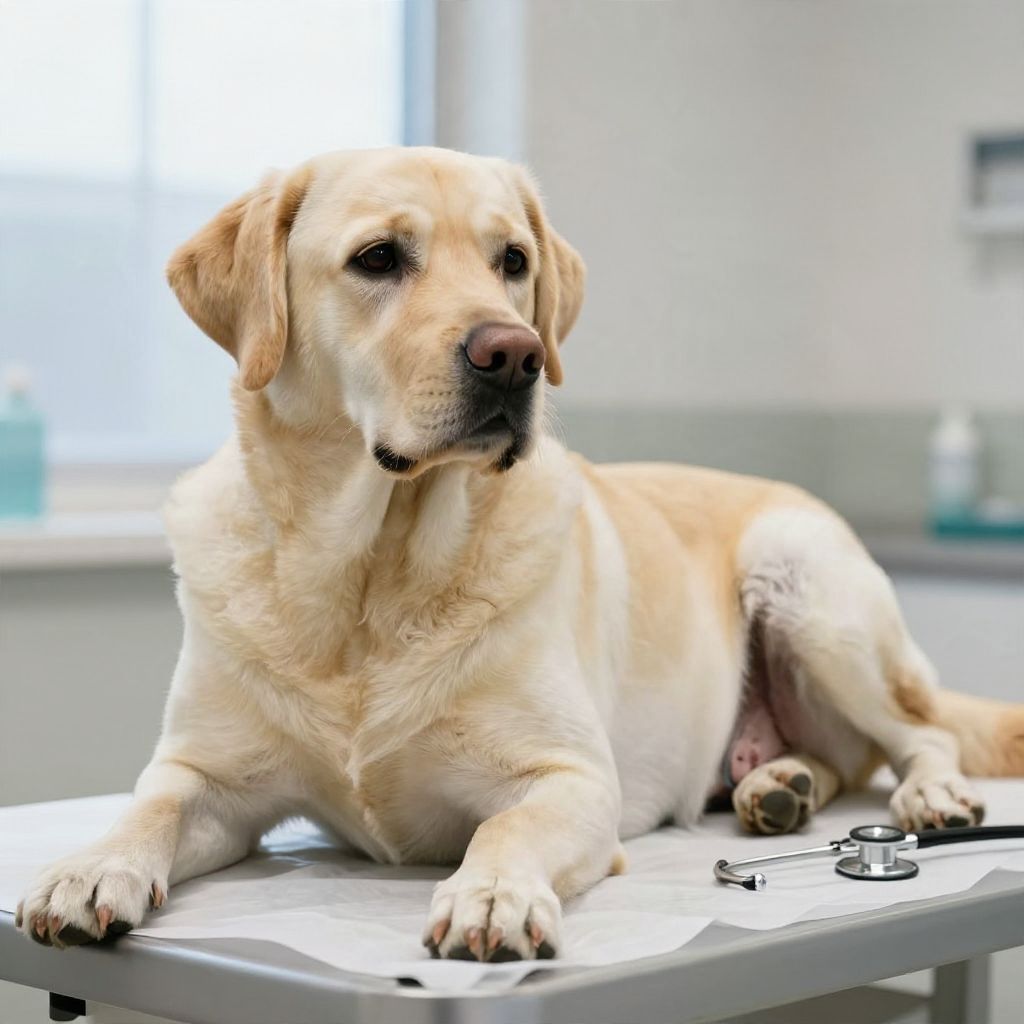
If you’ve noticed nipples on your dog and wondered whether the number is normal, you’re not alone. Most dogs have a predictable pattern, but there can be individual differences that are still completely normal.
Knowing what’s typical can help you spot changes like swelling, pain, discharge, or new lumps that should be checked by a veterinarian.
How many nipples do dogs have?
Most dogs have 8 to 10 nipples, but some have more or fewer and still be healthy. The exact number can vary by individual dog, and it is usually not tied to sex, breed, or size. What matters most is whether the nipples and surrounding skin look and feel normal.
Why do dogs have nipples?
Dogs have nipples because they are mammals. Both female and male dogs have them, even though only females use them for nursing puppies.
In most dogs, nipples are arranged in two rows along the underside of the body, running from the chest toward the groin. Their number and spacing can vary a little from dog to dog.
How many nipples are normal on a dog?
There is no single exact number that every dog must have. A normal dog may have 6, 8, 10, or even more nipples, and some dogs may have an odd number or one that is smaller, hidden, or harder to find.
What matters is the overall pattern and whether the nipples appear healthy. A sudden change in size, color, shape, or comfort is more important than the count itself.
Things that can affect the number you notice
- Body shape: Some nipples are easier to see on lean dogs than on dogs with more body fat.
- Coat length: Long or dense fur can hide smaller nipples.
- Age: Puppies and young dogs may have tiny nipples that are easy to miss.
- Individual variation: Like people, dogs can have natural differences in anatomy.
Do male dogs have nipples?
Yes. Male dogs usually have nipples too, and that is completely normal. Since male dogs do not lactate, the nipples are simply a normal part of their anatomy.
If a male dog’s nipple area becomes enlarged, red, painful, or develops discharge, that is not normal and should be evaluated by a veterinarian.
Do female dogs have more nipples than male dogs?
Not necessarily. Male and female dogs usually have a similar number of nipples, and the count is not a reliable way to tell sex or reproductive status. Spayed females still have nipples, and intact males do too.
Pregnancy, nursing, and hormonal changes can make nipples look larger or more prominent in female dogs, but that does not mean the dog has more nipples than another dog.
Where are dog nipples located?
Dog nipples are usually found in two rows on the underside of the body. They may appear along the chest, belly, and near the groin area.
Some nipples may be small or tucked into the skin folds, especially in puppies, dogs with thick coats, or dogs carrying extra weight. A few may be harder to spot than others.
Common places to check
- Chest area near the front legs
- Mid-belly
- Lower abdomen
- Near the groin
What if your dog has an unusual number of nipples?
An unusual number of nipples is often just a normal anatomical difference. Extra nipples can happen, and some dogs have fewer visible nipples than expected because one is very small, hidden, or not fully developed.
If the area looks symmetrical, painless, and unchanged over time, it is usually not a concern. If you are unsure whether a lump is a nipple or something else, a vet exam can help clarify it.
When an extra bump may not be a nipple
Not every bump on the belly is a nipple. Other possibilities include skin tags, warts, cysts, ticks, or masses under the skin. A new bump that is growing, firm, painful, or irregular should be checked.
How to tell a nipple from a lump or tick
It can be hard to tell the difference at first, especially if your dog has a lot of fur. A nipple is usually paired with others in a line and has a consistent shape and location on the underside of the body.
A tick, lump, or skin growth may not match that pattern and may feel different to the touch.
Helpful checks you can do at home
- Part the fur gently and look at the underside of the body.
- Check whether the bump appears in the same paired row as the other nipples.
- Look for symmetry, color, and size compared with nearby nipples.
- Notice whether your dog reacts to touch with pain or irritation.
- If you are unsure, take a clear photo and ask your veterinarian.
When nipple changes may signal a health problem
Most nipples are harmless, but changes can sometimes point to skin irritation, infection, hormonal changes, or mammary gland disease. Any new or changing mass near a nipple deserves attention, especially in adult or senior dogs.
Early veterinary evaluation is important because the cause cannot be confirmed by appearance alone.
Call your veterinarian if you notice
- Swelling or enlargement of one or more nipples
- Redness, heat, or tenderness
- Discharge, bleeding, or crusting
- A lump near the nipple or under the skin
- One nipple that suddenly looks different from the others
- Itching, licking, or chewing at the area
Urgent warning signs
Seek prompt veterinary care if your dog has a rapidly growing mass, severe pain, pus, bleeding that does not stop, trouble walking because of swelling, fever, lethargy, or signs of illness along with nipple changes.
Do puppies have nipples too?
Yes, puppies are born with nipples. They are usually very small and may be difficult to see until the puppy grows or the coat changes.
As puppies mature, the nipples may become easier to notice. That is normal. A nipple that becomes red, swollen, or painful is not normal and should be checked.
Do spayed or neutered dogs still have nipples?
Yes. Spaying or neutering does not remove nipples. The procedure affects reproductive organs, not the nipples themselves.
After spaying, some female dogs may have less hormonal swelling around the mammary area over time, but the nipples remain part of normal anatomy.
How to check your dog safely
If you want to count or inspect your dog’s nipples, keep the process calm and gentle. Use this as a brief body check rather than a long handling session.
- Choose a quiet time when your dog is relaxed.
- Lift the fur gently and look along the belly and chest.
- Compare each nipple for size, color, and tenderness.
- Stop if your dog seems uncomfortable.
- Ask your vet if you find a bump you cannot identify.
Common mistakes people make
Because nipples can look like small bumps, people sometimes mistake normal anatomy for a problem, or they ignore a real change because they assume “it’s just a nipple.” Both situations can lead to confusion.
- Assuming every bump is harmless: New lumps should not be dismissed.
- Trying to pop or squeeze a nipple: This can cause pain or infection.
- Comparing your dog to a strict “normal” number: Variation is common.
- Waiting too long on changes: Early vet care is best for suspicious growths.
When to ask a veterinarian
You should contact your veterinarian if you are unsure whether a bump is a nipple, if the area changes, or if your dog seems bothered by it. A vet can examine the skin and mammary tissue and determine whether anything needs follow-up.
This is especially important for intact females, older dogs, and any dog with a new mass near the mammary line.
Bottom line
Most dogs have 8 to 10 nipples, but the exact number can vary and still be normal. Focus less on counting and more on whether the nipples look symmetrical, comfortable, and unchanged.
If you notice swelling, pain, discharge, or a new lump, schedule a veterinary visit promptly. For more related dog anatomy reading, you may also find do boy dogs have nipples? and how many nipples do dogs have? helpful.