
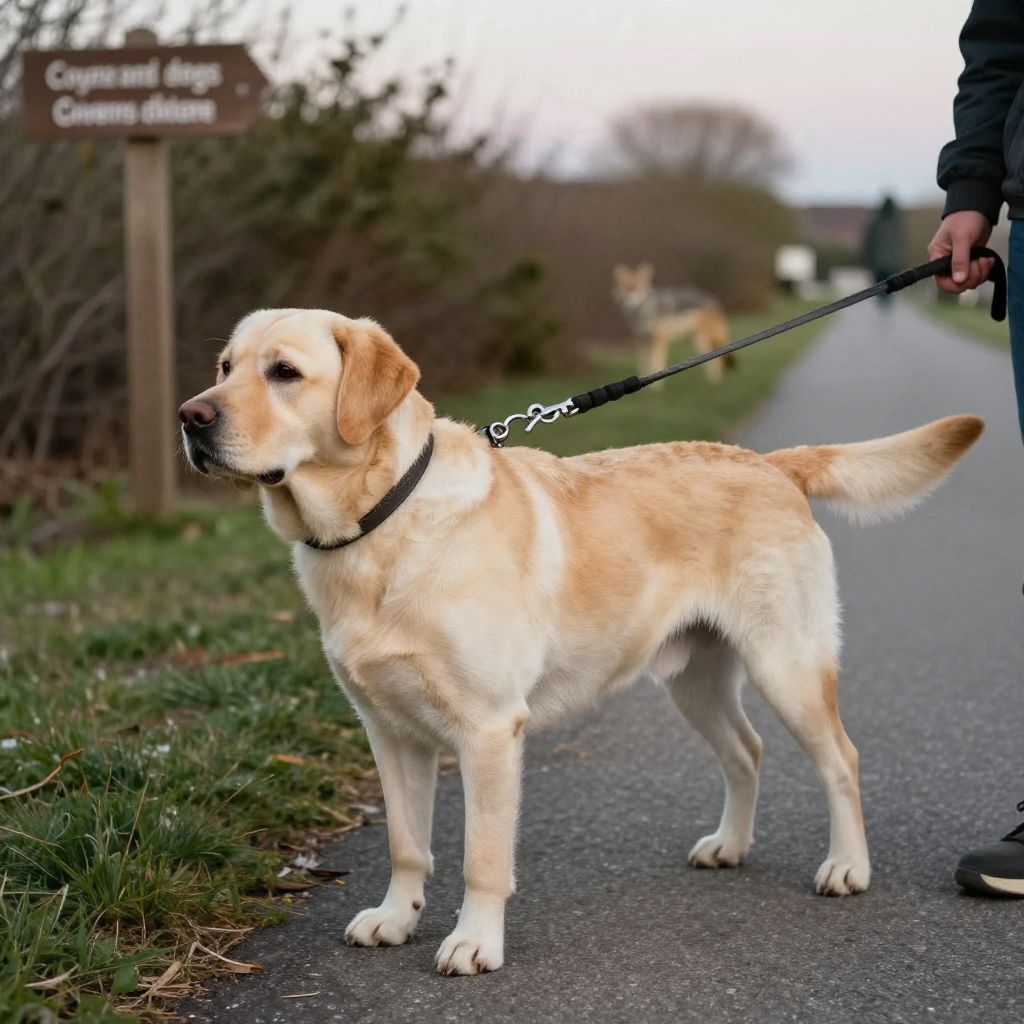
Do coyotes attack dogs? Yes, they can, especially when a dog is small, off-leash, alone, or near denning areas. Most coyote encounters are avoidable with good supervision, secure fencing, and smart walking habits.
The risk is not the same for every dog. Size, age, health, temperament, and whether your dog is leashed or supervised all affect danger, so prevention matters more than breed stereotypes.
Do Coyotes Attack Dogs?
Yes. Coyotes may attack dogs when they see them as prey, a territorial threat, or a competitor for food. Small dogs are generally at higher risk, but larger dogs can also be injured if a coyote is bold, defending pups, or part of a group.
When Coyote Attacks Are Most Likely
Coyote behavior changes with season, location, and food availability. You are most likely to have trouble when coyotes are hungry, habituated to people, or protecting a den or pups.
Higher-risk situations
- Walking a small dog at dawn, dusk, or after dark
- Letting a dog roam off-leash near brush, parks, golf courses, or open fields
- Having pet food, fallen fruit, or garbage outside
- Living near greenbelts, trails, or suburban edges where wildlife corridors exist
- Encountering a coyote during breeding or pup-rearing season
Dogs that may be at greater risk
- Very small dogs and toy breeds
- Puppies, because they are less aware and easier to carry off
- Older dogs or dogs with mobility problems
- Dogs with poor recall that may chase wildlife
- Dogs left alone in fenced yards with gaps, low fencing, or climbable structures
How to Keep Your Dog Safe
Prevention is the best protection. You can reduce risk by limiting unsupervised outdoor time, avoiding attractants, and teaching your dog reliable leash manners and recall.
- Keep your dog leashed in areas where coyotes are known to live.
- Supervise yard time, especially for small dogs and puppies.
- Use a secure fence and check for holes, loose boards, and climbable objects near the fence line.
- Bring in food sources such as pet food, birdseed, compost, and fallen fruit.
- Walk with awareness and avoid isolated routes at low-light hours when possible.
- Carry noise such as a whistle or air horn if allowed in your area, and use it only as a deterrent when needed.
Training that helps
Reward-based training can improve safety without fear or force. Focus on a strong recall, loose-leash walking, and a reliable “leave it” cue so you can redirect your dog away from wildlife quickly.
- Practice recall in low-distraction settings first.
- Reward your dog for checking in with you outdoors.
- Teach your dog to come to you immediately when called.
- Do not rely on punishment if your dog chases wildlife; it can make future behavior worse.
What To Do If You See a Coyote Near Your Dog
If a coyote appears, stay calm and make yourself look larger. Most coyotes will back away if they are not cornered and you respond confidently.
Use these steps
- Pick up small dogs if you can do so safely.
- Stand tall and face the coyote.
- Shout firmly and use loud clapping or a whistle.
- Back away slowly while keeping your dog close.
- Do not run, which may trigger pursuit.
If the coyote does not retreat, continue to haze it from a safe distance by making noise and moving toward it without approaching too closely. Your goal is to teach the animal to avoid people and dogs.
What If a Coyote Attacks Your Dog?
If an attack happens, your first priority is your own safety. Use whatever barrier is available, such as a leash, jacket, backpack, or stick, to separate the animals without putting your hands near the coyote’s mouth.
After the incident
- Move your dog to a safe place right away.
- Check for punctures, bleeding, limping, swelling, or signs of pain.
- Call your veterinarian promptly, even if injuries look small.
- Contact urgent care immediately for heavy bleeding, trouble breathing, collapse, or severe wounds.
Important: Coyote bites can cause deep tissue damage, infection, and shock. Do not assume a few small punctures are minor, because hidden injuries are common.
When To Call a Veterinarian Right Away
Any bite, scratch, or crushing injury from a wild animal deserves veterinary attention. Some problems are not obvious at first, and delays can make recovery harder.
Red flags that need urgent care
- Active bleeding that does not stop quickly
- Difficulty breathing
- Weakness, collapse, or extreme lethargy
- Deep puncture wounds or torn skin
- Swelling, limping, or obvious pain
- Signs of shock such as pale gums or a rapid heartbeat
- Any bite near the neck, chest, abdomen, eyes, or joints
Your veterinarian may recommend wound cleaning, pain control, antibiotics, rabies risk assessment, and follow-up care. Do not give human medications unless your vet specifically tells you to do so.
Can Coyotes Enter Fenced Yards?
Yes. Coyotes can jump, climb, dig, or slip through openings if a yard is not secure. A standard fence may help, but it is not always enough on its own.
Ways to improve yard safety
- Repair gaps under gates and fence panels
- Remove stacked items near fences that could act as stepping points
- Bring pets inside at night
- Use motion-activated lighting if appropriate for your property
- Never leave small dogs alone outdoors for long periods
If coyotes repeatedly visit your yard, contact local wildlife authorities or animal control for guidance. Avoid feeding wildlife or trying to trap a coyote yourself unless you are trained and authorized to do so.
How Age, Size, and Temperament Affect Risk
There is no single “safe” dog type, but some individual traits matter. A calm, well-supervised large dog may be safer than a tiny dog left alone, while a bold dog that chases wildlife may invite conflict.
Consider these factors
- Size: Smaller dogs are easier targets and may be seen as prey.
- Age: Puppies and seniors may react slowly or have less stamina.
- Health: Dogs with pain, blindness, hearing loss, or mobility issues may struggle to escape.
- Temperament: Curious or prey-driven dogs may run toward coyotes instead of away.
- Training history: Dogs with strong leash skills and recall are easier to protect.
Breed can influence typical behavior tendencies, but it does not guarantee how a dog will react. Individual personality, training, and environment matter more than labels.
Common Mistakes Dog Owners Make
Many coyote incidents happen because people underestimate risk or assume a coyote will always run away. That is not a safe assumption, especially if the animal has become used to people.
- Letting a small dog out alone at night
- Ignoring repeated coyote sightings near the home
- Leaving food outside for pets or wildlife
- Assuming a fence is automatically coyote-proof
- Trying to approach, corner, or feed a coyote
Practical Daily Habits That Lower Risk
Small routine changes can make a big difference. The goal is to reduce attractants, increase supervision, and make it harder for coyotes to view your dog as an easy target.
- Feed your dog indoors when possible.
- Pick up bowls, toys, and leftovers after outdoor time.
- Keep cats and small pets inside, especially at night.
- Use a short leash in known coyote areas.
- Stay alert when walking in brushy or quiet areas.
When Professional Help Is Useful
If your dog is fearful, reactive, or difficult to control outdoors, a certified reward-based trainer can help you build safer leash and recall skills. If your dog was bitten or seems unwell after an encounter, a veterinarian should examine them promptly.
For more background on wild canids and dog safety, you may also find this guide to coyotes and dogs useful, along with our related reading on what makes a dog dangerous.
The bottom line: coyotes can attack dogs, but careful supervision, secure fencing, and consistent training greatly reduce the risk. If you see a coyote often, treat it as a real safety issue and adjust your routine before an encounter happens.