
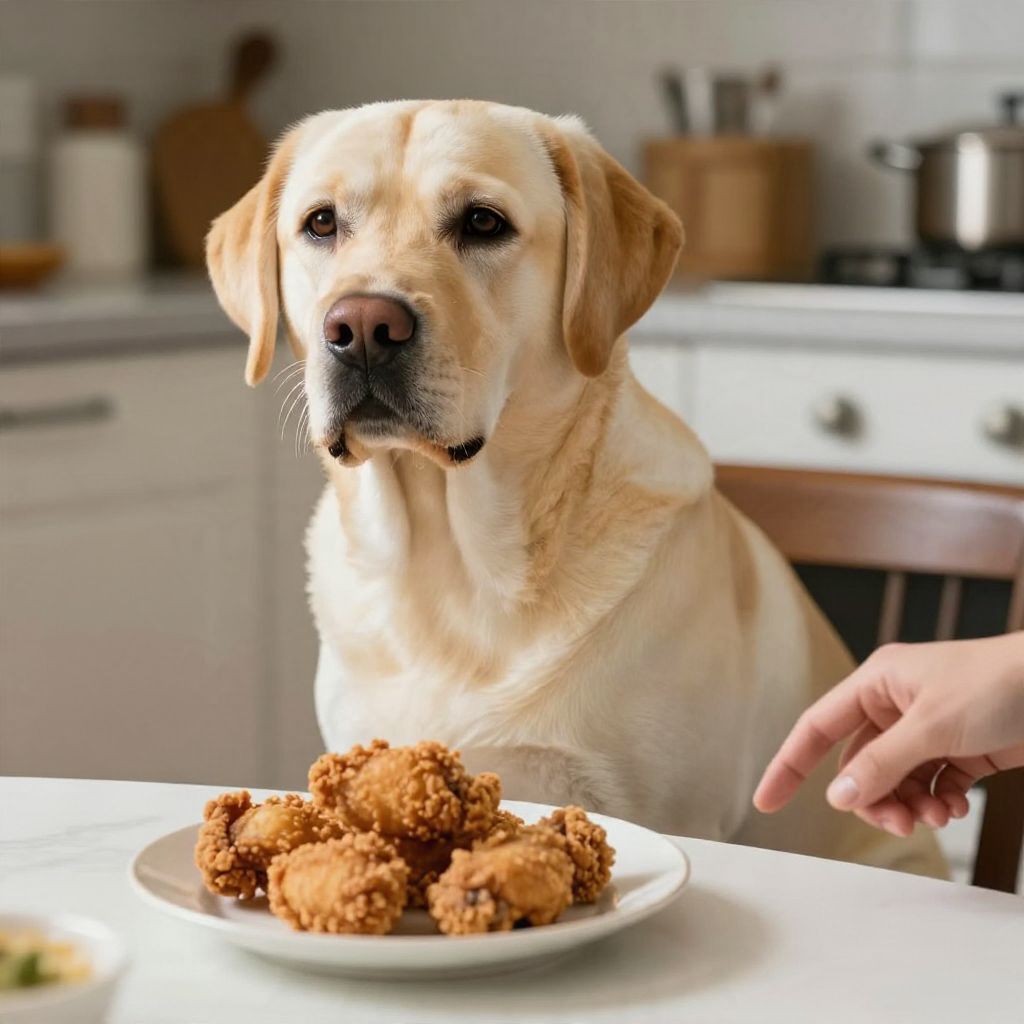
Can dogs eat fried chicken? In most cases, it’s best to say no. Fried chicken is usually too greasy, salty, and heavily seasoned for dogs, and the breading or bones can create extra risks.
If your dog stole a small bite, they may be fine, but larger amounts can upset the stomach or, in some dogs, trigger more serious problems. What matters most is the ingredients, the amount eaten, and whether bones were involved.
Can dogs eat fried chicken?
Dogs should not regularly eat fried chicken. The frying oil, salt, spices, and breading can cause digestive upset, and cooked bones may splinter and injure the mouth, throat, or intestines. A tiny plain bite is usually less concerning than a large portion, but fried chicken is not a safe or healthy treat.
Why fried chicken is risky for dogs
Fried chicken is a human food built for taste, not canine digestion. Even when the meat itself is chicken, the preparation makes it much less suitable for dogs.
1. High fat content
Fried foods can be hard on a dog’s digestive system. Too much fat may lead to vomiting, diarrhea, abdominal pain, or, in some dogs, pancreatitis, which can be serious.
2. Heavy seasoning and salt
Many fried chicken recipes include garlic powder, onion powder, paprika, chili, or large amounts of salt. Some seasonings are irritating, and garlic and onion are especially concerning for dogs.
3. Breading and batter
The coating often adds extra fat and salt, and it can be difficult for some dogs to digest. Large amounts may cause stomach upset or contribute to weight gain if fed often.
4. Cooked bones
Cooked chicken bones are a major hazard. They can splinter, choke a dog, or cause internal injury. If the fried chicken had bones, treat that as a bigger concern than the meat itself.
What to do if your dog ate fried chicken
If your dog ate a small amount of plain fried chicken meat and seems normal, monitor them closely. If they ate a large amount, had bones, or the chicken was heavily seasoned, contact your veterinarian for advice.
- Check what was eaten. Note whether it was meat only, breading, skin, seasoning, or bones.
- Watch for symptoms. Mild stomach upset may pass, but worsening signs need veterinary attention.
- Do not induce vomiting unless a veterinarian tells you to. This can be unsafe in some situations, especially with bones.
- Keep fresh water available. Let your dog drink normally, but do not force food.
Call a veterinarian promptly if you notice:
- Repeated vomiting
- Diarrhea that is severe or persistent
- Abdominal pain, bloating, or a tense belly
- Loss of appetite lasting more than a short time
- Lethargy or weakness
- Choking, gagging, or trouble swallowing
- Coughing, drooling, or pawing at the mouth
- Blood in vomit or stool
Get urgent veterinary care right away if:
- Your dog may have swallowed a cooked bone
- Your dog has trouble breathing
- Your dog collapses or seems very weak
- Your dog has a swollen belly or repeated unproductive retching
- Your dog is vomiting repeatedly and cannot keep water down
How much fried chicken is too much?
There is no universal safe amount, because dogs vary by size, age, health, and sensitivity. A small dog may react to less fat and seasoning than a larger dog. Dogs with a history of pancreatitis, obesity, sensitive stomachs, or other medical conditions may be at higher risk.
Instead of trying to find a “safe” portion, it’s better to avoid fried chicken as a treat. If you want to share chicken, choose plain, fully cooked, boneless chicken with no seasoning, skin, or breading.
Are some dogs more vulnerable?
Yes, individual health matters. A young, healthy dog may tolerate a tiny accidental bite better than a senior dog or one with digestive disease. Breed alone does not decide the outcome, but body size, medical history, and current health can influence how a dog responds.
- Small dogs may be affected by smaller amounts of fat or salt.
- Dogs with pancreatitis history may be especially sensitive to fatty foods.
- Overweight dogs can be more affected by frequent high-calorie treats.
- Puppies may have more digestive upset from rich foods and should not be given fried chicken as a snack.
- Senior dogs may have more medical conditions that make greasy foods a poor choice.
What if the fried chicken had spices or sauce?
Seasonings and sauces can make fried chicken even less suitable. Garlic and onion ingredients are common in coatings, rubs, gravies, and dipping sauces, and they are not appropriate for dogs. Very spicy or very salty foods can also irritate the stomach.
If your dog ate chicken covered in sauce, spicy seasoning, or a restaurant coating, the risk is higher than with a plain piece of fried chicken. When in doubt, call your veterinarian and describe exactly what was eaten.
Can dogs eat the skin or breading?
Chicken skin and breading are usually the least dog-friendly parts of fried chicken. They are often the fattiest, saltiest, and most heavily seasoned parts, which makes them more likely to upset your dog’s stomach.
Even if your dog seems eager for the crispy coating, that does not mean it is a good treat. A small amount may not cause a problem in every dog, but it is still not a recommended food.
Safer ways to share chicken with your dog
If you want to give your dog chicken, keep it simple. Plain chicken can be a useful occasional treat when prepared safely and served in moderation.
- Use boneless, skinless, fully cooked chicken
- Avoid salt, garlic, onion, pepper blends, and sauces
- Remove all bones before serving
- Offer only a small amount as a treat, not a meal replacement
- Introduce new foods slowly if your dog has a sensitive stomach
For dogs that need a special diet, ask your veterinarian before adding even plain chicken. Some dogs need tighter control of fat, protein, or calories.
Common mistakes to avoid
- Giving fried chicken as a regular reward
- Letting your dog chew on cooked bones
- Assuming a small dog “can handle it” because they beg for food
- Feeding fried chicken after an upset stomach has already started
- Using fried chicken as a substitute for a balanced dog food
When to call your vet after your dog eats fried chicken
Contact your veterinarian if your dog ate a significant amount, swallowed bones, or has any health condition that could make fatty foods risky. It is also smart to call if you are unsure what ingredients were used, especially if the chicken came from a restaurant or takeout meal.
Your vet can help you decide whether home monitoring is reasonable or whether your dog needs an exam. If your dog is showing emergency signs, do not wait.
The bottom line
Can dogs eat fried chicken? It is not a good choice for dogs, and cooked bones make it especially risky. A tiny accidental bite may only cause mild upset, but larger amounts, seasoning, or bones can lead to serious problems. When possible, skip fried chicken and offer plain, boneless chicken instead.
If you want to compare this topic with another common chicken snack, you may also find can dogs eat chicken nuggets helpful. For more on this exact food, see can dogs eat fried chicken.