
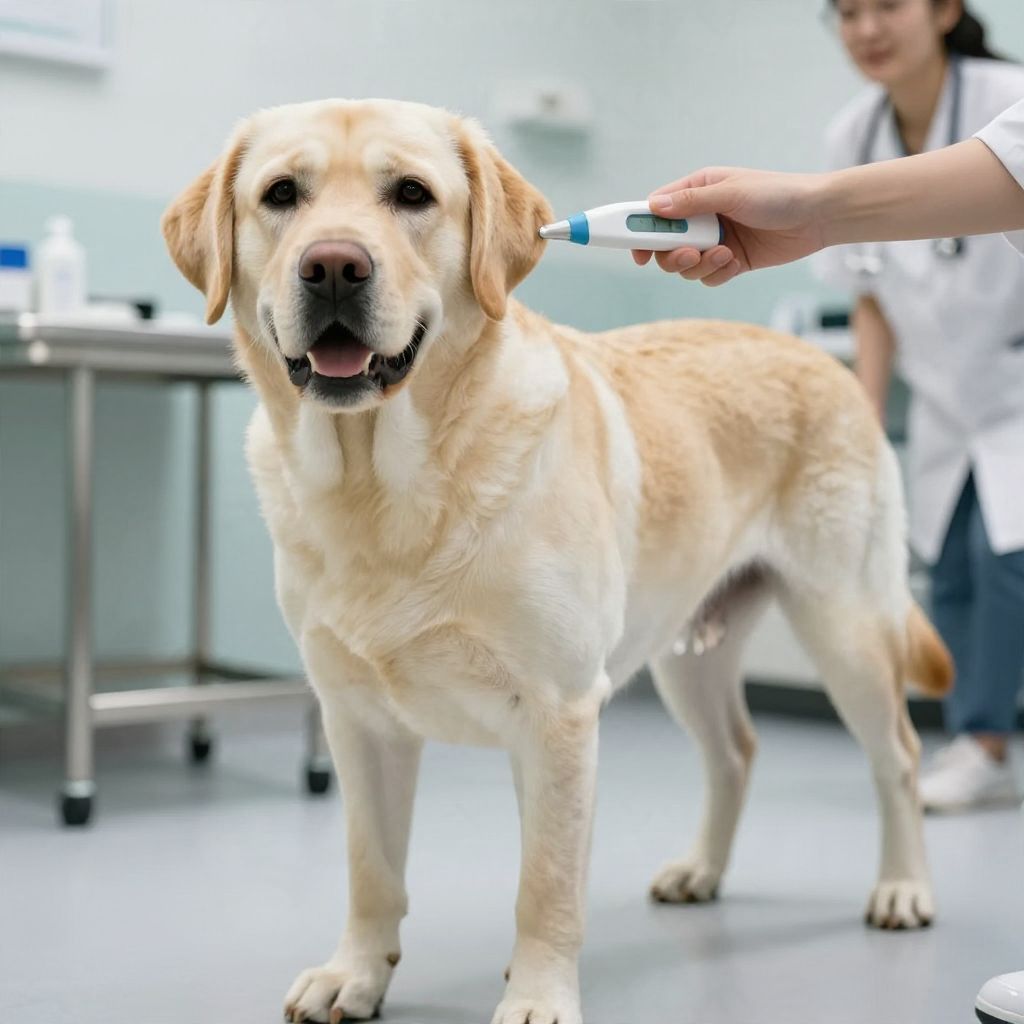
What is a normal temperature for a dog, and when should you worry? A dog’s body temperature is usually higher than a human’s, so feeling warm does not automatically mean fever. Knowing the normal range helps you spot illness early and decide when a vet visit is needed.
Most dogs have a normal rectal temperature between 100.5°F and 102.5°F (38.1°C to 39.2°C). A reading above that range may suggest fever, heat stress, or another health problem, while a lower reading can signal hypothermia or shock. If your dog seems unwell, contact a veterinarian promptly.
What is a normal temperature for a dog?
A normal temperature for a dog is generally 100.5°F to 102.5°F when taken rectally. Small changes can happen with excitement, exercise, stress, or a warm environment, but a persistent reading outside this range is worth taking seriously and discussing with your veterinarian.
How to take your dog’s temperature safely
The most accurate home method is a rectal thermometer made for pets or people. Ear thermometers can be less reliable unless used correctly, and touch alone is not accurate enough to confirm fever.
Simple steps
- Use a digital thermometer and keep it clean.
- Have another person gently hold your dog if needed.
- Apply a small amount of lubricant to the tip.
- Lift the tail and insert the thermometer gently into the rectum.
- Wait for the reading, then clean the thermometer afterward.
If your dog resists strongly, seems painful, or you are worried about injury, stop and ask your vet for help. Forcing the process can make things worse and may not be safe for every dog.
What can affect a dog’s temperature?
Several factors can influence temperature without meaning a serious illness. Age, body size, coat type, activity level, and the surrounding environment all matter, and individual dogs can vary a little within the normal range.
- Exercise: Running, playing, or stress can temporarily raise temperature.
- Heat and humidity: Warm weather can push body temperature up quickly.
- Excitement or anxiety: Some dogs get warmer at the vet or during handling.
- Age and health status: Puppies, seniors, and dogs with chronic illness may be less able to regulate body temperature.
Breed can matter indirectly, too. Dogs with very short noses, heavy coats, or small body mass may have more trouble handling heat or cold, but no breed has one guaranteed “normal” response in every situation.
When is a dog’s temperature considered a fever?
A temperature above 102.5°F may be a fever, especially if your dog also seems tired, is not eating, is vomiting, or has other signs of illness. Fever is not a diagnosis by itself; it is a clue that something is wrong and needs veterinary attention.
Common causes can include infection, inflammation, immune disease, injury, or other internal problems. You should not try to guess the cause at home, because the right treatment depends on what is actually happening.
Signs that may go with fever
- Lethargy or unusual quietness
- Reduced appetite
- Shivering or trembling
- Warm ears or body
- Rapid breathing
- Restlessness
- Vomiting or diarrhea
These signs can also happen with pain, heatstroke, poisoning, or other emergencies, so temperature alone should never be the only thing you consider.
When is a low temperature dangerous?
A temperature below about 99°F can be concerning, especially if your dog is weak, shivering, or not responding normally. Low temperature can happen with cold exposure, shock, severe illness, or after anesthesia, and it should not be ignored.
Very low temperature is an emergency. If your dog seems disoriented, collapses, has pale gums, or is hard to wake up, seek urgent veterinary care right away.
Heatstroke and emergency warning signs
One of the biggest temperature-related dangers in dogs is heatstroke. A dog can overheat fast in a parked car, on a hot walk, during intense play, or in humid weather, even if the temperature outside does not seem extreme.
Seek emergency veterinary care immediately if your dog has any of these signs:
- Heavy panting that does not settle
- Bright red, pale, or blue gums
- Weakness, stumbling, or collapse
- Vomiting or diarrhea
- Confusion or unresponsiveness
- A very high temperature, especially above 104°F
While you are on the way to the vet, move your dog to a cooler area and use cool, not icy, water if advised by a professional. Do not delay care to “see if it passes.”
What should you do if your dog’s temperature is abnormal?
If your dog’s temperature is slightly outside the normal range but your dog otherwise seems comfortable, call your veterinarian for advice. If the temperature is clearly high or low, or your dog has other symptoms, your vet may want to examine your dog the same day.
Helpful information to share with your vet
- The exact temperature and how you took it
- Any recent exercise, travel, or heat exposure
- Changes in appetite, drinking, urination, or stool
- Vomiting, coughing, limping, or pain
- Any possible toxin exposure or injury
This information can help your vet decide how urgent the situation is and what tests may be needed.
Common mistakes dog owners make
Temperature concerns are easy to misread, especially if you are worried. A few common mistakes can delay proper care or make the problem worse.
- Relying on touch alone: A warm nose or ears do not confirm fever.
- Waiting too long: Fever, heatstroke, and hypothermia can worsen quickly.
- Using unsafe human medications: Never give medicine unless your vet tells you to.
- Ignoring behavior changes: Lethargy, pain, or refusal to eat can matter even with a mild temperature change.
- Assuming all dogs react the same way: Age, size, coat, and health all affect risk.
How to help your dog stay in a healthy temperature range
Prevention matters, especially in extreme weather or for dogs that are young, old, overweight, or medically fragile. A few simple habits can reduce risk.
- Provide shade and fresh water at all times.
- Avoid hard exercise during hot or humid conditions.
- Use caution with cold exposure, wet fur, and icy conditions.
- Never leave your dog in a parked car.
- Watch closely after surgery, illness, or anesthesia.
- Ask your vet about extra precautions if your dog has a heart, breathing, or endocrine condition.
Puppies and senior dogs may need closer monitoring because they can be less resilient when temperatures swing too high or too low. If your dog has a chronic condition, your veterinarian can help you set a realistic plan for home monitoring.
When to contact a veterinarian
Contact a veterinarian if your dog’s temperature is outside the normal range and does not quickly return to normal, or if your dog has any other concerning signs. You should also call if you are unsure whether the reading is accurate, because a repeat check may be needed.
Go urgently if your dog has collapse, severe weakness, trouble breathing, seizures, pale gums, repeated vomiting, or suspected heatstroke. These are not situations to monitor at home.
For more related reading, you may find these helpful: how to tell if your dog has a fever and can dogs get fevers?
The bottom line: a normal temperature for a dog is usually 100.5°F to 102.5°F, but symptoms matter just as much as the number. If your dog seems unwell, has a high or low reading, or shows emergency signs, contact your veterinarian right away.