
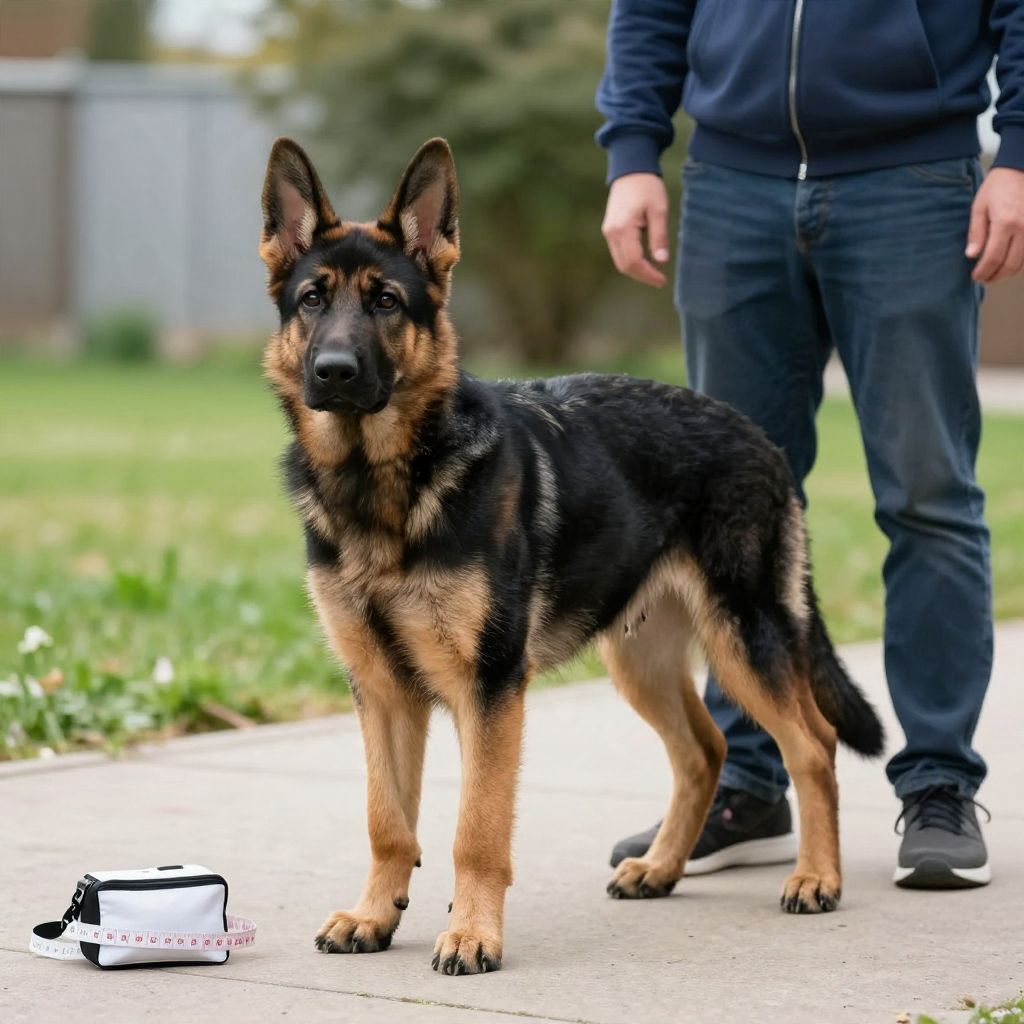
If you’re wondering when do German Shepherds stop growing, the short answer is that most keep getting taller until about 12 to 18 months, then continue filling out for several more months. Some dogs look “adult” sooner, but muscle, chest width, and overall body condition often keep changing into early adulthood.
Growth varies by genetics, sex, nutrition, activity, and overall health. A vet can help you tell normal development apart from problems such as being underweight, growing too fast, or having joint pain.
When do German Shepherds stop growing?
Most German Shepherds reach their full height between 12 and 18 months, but many do not fully mature in body shape and muscle until 18 to 24 months. Larger individuals may take a little longer to “finish,” while some smaller or early-maturing dogs look mature sooner. Height usually slows before body filling does.
What growth looks like by age
German Shepherd puppies grow quickly in the first year, then slow down as they approach adulthood. That growth pattern is normal, but it can vary from dog to dog.
Typical stages
- 8 to 16 weeks: Rapid growth, lots of leg lengthening, and big changes in coordination.
- 4 to 8 months: Noticeable height gain; puppies may look awkward or “all legs.”
- 8 to 12 months: Growth slows, but the body is still changing.
- 12 to 18 months: Many reach near-adult height.
- 18 to 24 months: Muscles, chest, and overall adult build continue to develop.
Some dogs keep broadening and filling out beyond two years, especially if they are very active, intact, or simply slower to mature. That does not usually mean they are still “growing” in height.
Why German Shepherd growth varies
There is no single exact stop date for every German Shepherd. Several factors can change the timeline.
- Genetics: Puppies from larger or slower-maturing lines may take longer.
- Sex: Males often appear larger and may finish filling out a bit later than females, though this is not universal.
- Nutrition: Poor diet can affect healthy development; overfeeding can encourage excess weight rather than healthy growth.
- Activity level: Exercise supports muscle development, but too much high-impact activity can stress joints in a growing dog.
- Health status: Illness, parasites, endocrine issues, or orthopedic problems can affect growth.
If your puppy seems much smaller, larger, or more awkward than expected, your veterinarian can check whether the pattern is normal for that individual.
How to support healthy growth
Healthy growth is less about making a puppy grow faster and more about helping them develop at a steady, safe pace.
Feed an appropriate puppy diet
Choose a complete, balanced large-breed puppy food if your veterinarian recommends it. Large-breed formulas are designed to support controlled growth, which is important for a breed prone to joint stress.
- Feed measured meals rather than free-feeding.
- Keep treats modest so they do not crowd out balanced nutrition.
- Avoid adding calcium or supplements unless your vet specifically advises it.
Protect growing joints
German Shepherd puppies are active, but their bones and joints are still developing. Too much repetitive strain can be a problem.
- Use short, age-appropriate walks instead of long endurance outings.
- Avoid repeated jumping from heights, hard running on slick floors, and forced stair use when possible.
- Choose controlled play sessions with rest breaks.
Build muscle safely
Gentle, regular exercise helps puppies develop coordination and strength. Good options include leash walks, sniffing games, basic training, and supervised play with compatible dogs.
Keep activity varied and low pressure. A tired puppy is not always a well-developed puppy; some need both physical exercise and mental enrichment.
How to tell if your German Shepherd is growing normally
Normal growth usually looks steady rather than dramatic. Your puppy should gradually gain height and body condition without obvious pain or sudden changes in appetite or energy.
Signs growth is likely on track
- Steady weight gain over time
- Increasing height with no major limping
- Good appetite and normal energy
- Age-appropriate coordination that improves over time
- No persistent swelling, pain, or reluctance to move
Signs to ask a vet about
- Sudden slowing or stopping of growth
- Persistent diarrhea, vomiting, or poor appetite
- Repeated limping or stiffness
- Obvious underweight or excessive thinness
- Rapid weight gain that seems like fat rather than healthy growth
These signs do not always mean something is seriously wrong, but they are worth checking early. In young dogs, small issues can become bigger if they are ignored.
Common mistakes owners make during growth
Many growth concerns come from well-intentioned choices that are not ideal for a developing dog.
- Overfeeding: Extra weight can stress joints and make a puppy look “bigger” without being healthier.
- Too much exercise: Long runs, intense jumping, or repetitive fetch can strain developing bodies.
- Too little exercise: Puppies still need movement, training, and enrichment to build coordination.
- Using adult food too early: Puppies need a diet formulated for growth.
- Guessing instead of tracking: Regular weight checks and body-condition checks help you notice changes early.
When growth concerns need veterinary attention
Contact your veterinarian if you are worried about how your German Shepherd is developing. Early evaluation is especially important if growth problems come with pain, weakness, or changes in behavior.
Urgent red flags
- Sudden inability to bear weight
- Severe swelling in a limb or joint
- Extreme lethargy or collapse
- Repeated vomiting, bloating, or trouble breathing
- Obvious trauma after a fall, collision, or accident
These are not “wait and see” situations. Seek urgent veterinary care if they happen.
What to expect as your German Shepherd matures
Even after height slows, your dog may still look adolescent for a while. The chest may broaden, the neck and shoulders may fill in, and the coat may also change in texture and fullness as adulthood approaches.
Behavior can mature at a different pace than body size. A dog that looks nearly grown may still act like a puppy in attention span, impulse control, and energy level.
Training and socialization still matter
Continue reward-based training through adolescence. This helps your dog learn polite manners, settle calmly, and cope with new situations while the body is still changing.
- Practice short, positive training sessions.
- Reward calm behavior and focus.
- Keep socialization positive and controlled.
- Use management tools like gates, leashes, and crates when needed for safety.
Frequently asked practical questions
Will my German Shepherd keep getting taller after one year?
Possibly a little, but many are close to adult height by then. Most of the later change is filling out rather than major height gain.
How can I tell if my puppy is too skinny?
You should be able to feel the ribs easily without seeing them sharply. If the hips, spine, or ribs are very prominent, ask your vet to assess body condition and diet.
Can exercise stunt growth?
Moderate, age-appropriate exercise does not stunt growth. The concern is excessive impact or repetitive strain, which can stress joints in a developing puppy.
Should I switch to adult food when my dog stops growing?
Not based only on height. Many German Shepherds do best staying on a growth-appropriate diet until they are fully mature, but the right timing depends on your dog and your veterinarian’s advice.
Bottom line
When do German Shepherds stop growing? Most stop gaining height around 12 to 18 months and continue filling out until about 18 to 24 months. Support steady growth with balanced nutrition, sensible exercise, and regular vet checkups, and ask for help if your puppy shows pain, poor growth, or sudden changes.
If you want more general guidance on canine growth timelines, you may also find what age dogs stop growing and at what age dogs stop growing helpful for comparison.