
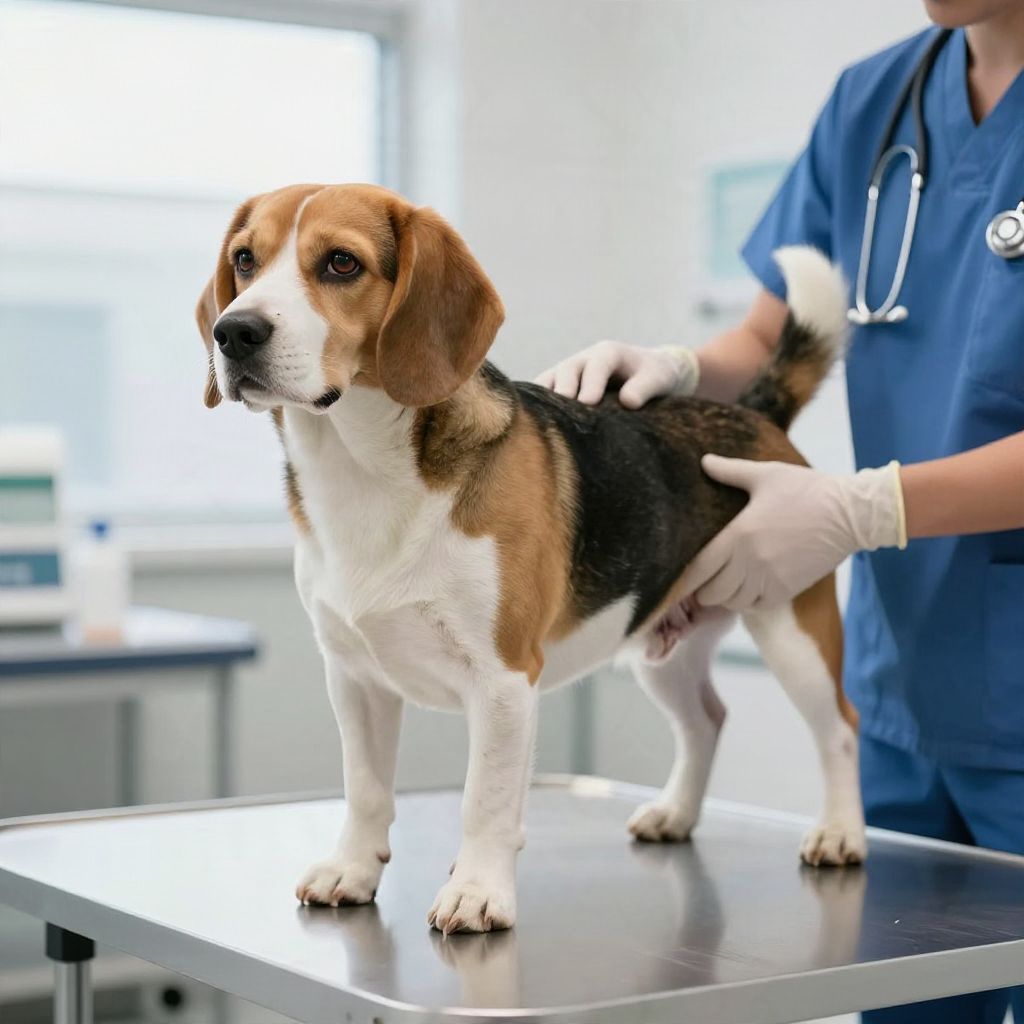
Dogs have anal glands because these small scent sacs help them leave chemical messages in their stool and around their rear end. Most dogs empty them naturally during bowel movements, but some develop problems when the glands do not drain well.
If your dog is scooting, licking the area, or seems uncomfortable, the cause may be anal gland irritation, impaction, infection, or something else entirely. A veterinarian can help you figure out what is going on and whether treatment is needed.
Why do dogs have anal glands?
Dogs have anal glands to produce a unique scent used for communication and identification. The glands normally release fluid when a dog passes a firm stool, which helps empty them naturally. When that does not happen, the glands can become full, irritated, or infected.
How anal glands work
Anal glands, also called anal sacs, sit just inside the anus at about the 4 o’clock and 8 o’clock positions. They contain a strong-smelling fluid that is part of normal canine anatomy.
In healthy dogs, pressure from a bowel movement helps squeeze out a small amount of this fluid. The scent may help dogs recognize one another, mark territory, and communicate information about identity and status.
What is normal?
- Occasional scent release during defecation
- No scooting or repeated licking
- No swelling, redness, or pain around the anus
- No foul odor beyond the brief normal gland smell
Common reasons anal glands become a problem
Not every dog has anal gland trouble, but some are more prone to it because of body shape, stool consistency, allergies, weight, or individual anatomy. These factors can affect how well the glands empty.
Soft stool or diarrhea
Firm stool helps express the glands naturally. If your dog has loose stool, the glands may not get enough pressure to empty, which can lead to buildup.
Chronic skin or food allergies
Allergies can cause inflammation around the rear end and may contribute to recurrent anal gland issues in some dogs. Itching, licking, and skin irritation often happen at the same time.
Obesity or reduced muscle tone
Extra body weight may make natural emptying less efficient for some dogs. Less activity can also affect overall bowel health and muscle tone.
Individual anatomy
Some dogs simply have narrower ducts or glands that do not drain as easily. Breed tendencies can exist, but they are not guarantees, and any dog can develop a problem.
Age-related changes
Older dogs may have more recurring issues because of changes in bowel habits, muscle tone, or other health conditions. Puppies can have anal gland problems too, but it is less common.
Signs your dog may have anal gland trouble
Anal gland problems often show up as behavior changes or visible discomfort. These signs do not confirm the cause, but they are worth taking seriously.
- Scooting or dragging the rear end on the floor
- Frequent licking or biting near the anus
- Foul fishy odor
- Swelling, redness, or discharge near the rear end
- Pain when sitting or defecating
- Straining, whining, or sudden restlessness
Seek veterinary care promptly if you see blood, pus, a lump near the anus, severe pain, fever, lethargy, or your dog cannot poop normally. These can signal infection, abscess, or another urgent problem.
What to do if you suspect anal gland problems
If your dog is scooting or licking, start by checking for obvious irritation and then contact your veterinarian if the behavior continues. Repeated scooting is not something to ignore, even if your dog otherwise seems fine.
- Look for swelling, redness, discharge, or a strong odor.
- Note whether your dog is having soft stool, diarrhea, or constipation.
- Avoid squeezing the glands yourself unless a veterinarian has shown you how.
- Schedule a veterinary exam if the signs last more than a day or keep returning.
A veterinarian can examine the area, check the glands, and look for other causes such as parasites, skin disease, rectal irritation, or pain from the back end or spine.
Can you express your dog’s anal glands at home?
Some owners learn how to express anal glands, but it is not always necessary and it is not always safe to do without guidance. Incorrect expression can cause pain, bruising, or injury, especially if the glands are infected or impacted.
If your vet recommends home expression, ask for a demonstration first. If your dog is painful, the area is swollen, or you are unsure, let a veterinary professional handle it.
When home expression is a bad idea
- The area is red, swollen, or bleeding
- Your dog reacts with pain or snaps when touched
- You notice pus, a wound, or a lump
- Your dog has repeated problems and needs frequent help
How veterinarians treat anal gland problems
Treatment depends on the cause. A simple full gland may only need expression, while infection or abscess may require additional veterinary treatment and follow-up.
Your veterinarian may recommend cleaning the area, flushing the glands, checking for infection, and addressing the underlying cause, such as diarrhea, allergies, or weight issues. Never use leftover medications or home remedies without veterinary guidance.
How to reduce the chance of repeat problems
Some dogs never have another issue after one episode, while others need ongoing management. Prevention focuses on keeping bowel movements healthy and addressing triggers early.
- Feed a complete, balanced diet appropriate for your dog’s age and health
- Keep your dog at a healthy body condition
- Support regular exercise and routine bathroom habits
- Work with your vet if your dog has chronic diarrhea or constipation
- Ask about allergy management if itching and skin problems are recurring
Diet changes can sometimes help if stool quality is part of the problem, but the right approach depends on the dog. A veterinarian can help you choose a plan that fits your dog’s needs instead of guessing.
When scooting is not just about anal glands
Scooting is a common sign of anal gland discomfort, but it is not the only possible cause. Parasites, diarrhea, skin irritation, foreign material stuck to the fur, or pain around the tail and hips can also lead to the same behavior.
If your dog keeps scooting after the glands are checked or expressed, ask your veterinarian to look for other causes. That is especially important if the behavior is new, frequent, or paired with vomiting, diarrhea, or appetite loss.
When to get urgent veterinary help
Some anal gland problems can become serious quickly. Do not wait for a routine appointment if your dog has any of the following:
- Marked swelling or a painful lump near the anus
- Pus, blood, or a ruptured-looking sore
- Fever, lethargy, or loss of appetite
- Straining to defecate or inability to pass stool
- Sudden severe pain or distress
These signs can mean infection or abscess, and your dog should be seen as soon as possible.
The bottom line
Dogs have anal glands as a normal part of canine scent communication, but the glands can become problematic when they do not empty well. If your dog is scooting, licking, or smells unusually fishy, arrange a veterinary check so you can treat the cause safely and prevent repeat trouble.
If you want to learn more, see why dogs drag their butt and how to express anal glands for related guidance.