
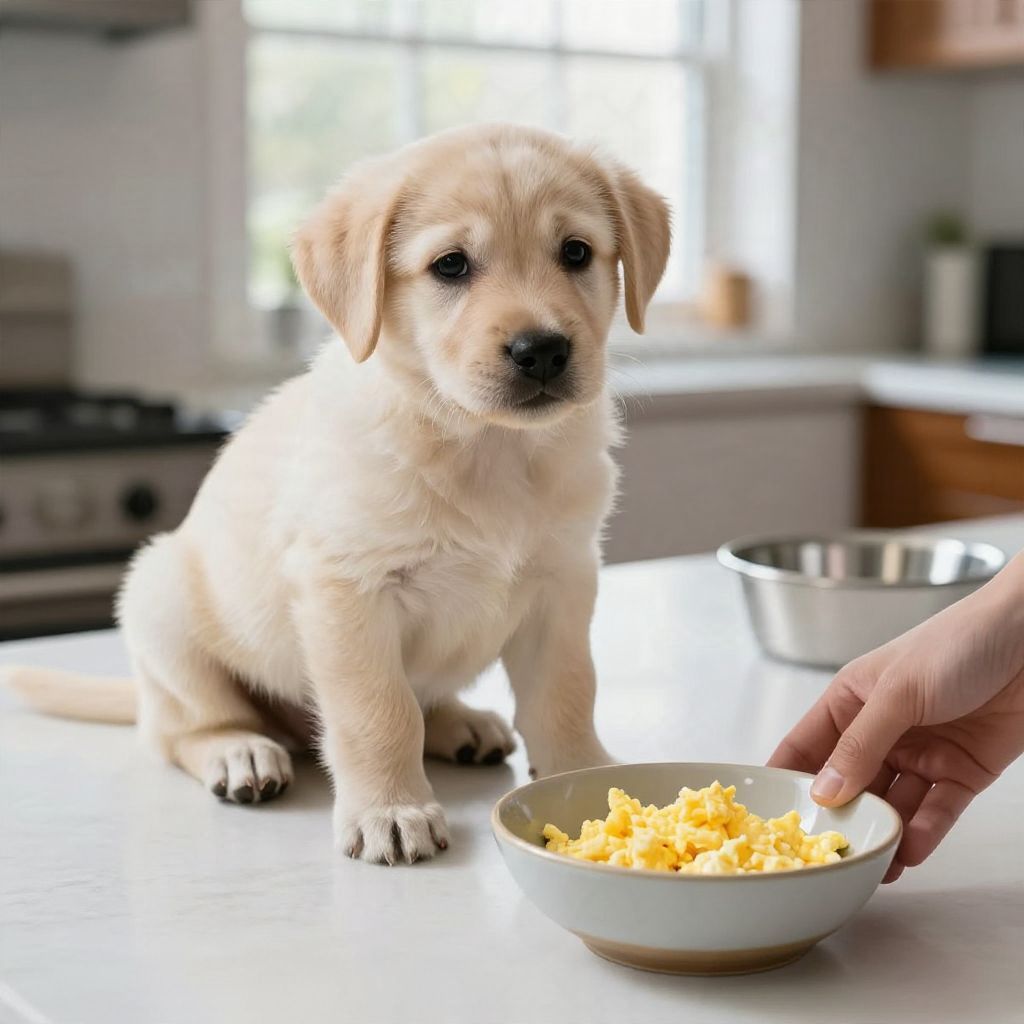
Can puppies eat eggs? Yes, most puppies can eat eggs when they are fully cooked, served plain, and offered in small amounts. Eggs can be a useful occasional treat because they provide protein and other nutrients, but they should not replace a complete puppy diet.
The safest approach is to introduce eggs gradually and watch for stomach upset or signs of food sensitivity. If your puppy has a history of digestive issues, pancreatitis, or a special diet, check with your veterinarian before adding eggs.
Can puppies eat eggs?
Yes, puppies can usually eat cooked eggs in moderation. Scrambled, boiled, or poached eggs without butter, oil, salt, onions, or seasoning are generally the safest options. Eggs should be an occasional supplement or treat, not a main meal, and they are best introduced slowly to see how your puppy tolerates them.
Why eggs can be a helpful puppy treat
Eggs are nutrient-dense, so a small amount can add variety to your puppy’s diet. They contain protein and several vitamins and minerals that support growth, but your puppy’s regular food should already be balanced for development.
Potential benefits
- High-quality protein: Supports muscle growth and overall development.
- Palatable flavor: Can be useful for picky eaters when used sparingly.
- Easy to prepare: Plain cooked eggs are simple to serve safely.
Even with these benefits, eggs are still a treat. Too much extra food can unbalance your puppy’s diet or contribute to weight gain, especially in smaller breeds or less active puppies.
How to safely feed eggs to puppies
If you want to try eggs, keep the preparation simple and consistent. Start with a very small portion and observe your puppy for digestive changes over the next day or two.
- Cook the egg fully.
- Serve it plain, with no seasoning.
- Offer a small bite first, especially if it is your puppy’s first time.
- Watch for vomiting, diarrhea, itching, or unusual gas.
- Only continue if your puppy tolerates it well.
Best ways to prepare eggs
- Boiled: Simple and easy to portion.
- Scrambled: Cooked through in a dry pan or with minimal plain cooking fat, if any.
- Poached: A good plain option with no added ingredients.
Avoid serving eggs with cheese, butter, bacon, sausage, garlic, onion, salt, pepper, or sauces. Those extras can create digestive upset or introduce ingredients that are unsafe for dogs.
Can puppies eat raw eggs?
Raw eggs are not the best choice for puppies. They can carry harmful bacteria such as Salmonella, which may make your puppy sick and can also affect people handling the food. Raw eggs may also be harder for some puppies to digest.
For that reason, cooked eggs are the safer option. If you are considering any raw diet approach for your puppy, speak with your veterinarian first because growing dogs have specific nutritional needs.
How much egg can a puppy have?
The right amount depends on your puppy’s size, age, activity level, and overall diet. There is no universal serving that fits every puppy, so think in terms of a small treat rather than a regular food portion.
Practical portion guidance
- Start with a few small bites for a first taste.
- Use only a modest amount as an occasional treat.
- Reduce other treats that day so you do not overfeed.
If your puppy is very small, young, or prone to tummy trouble, keep portions especially tiny. If you are unsure how much fits into your puppy’s daily calories, ask your veterinarian for guidance.
When eggs may not be a good idea
Some puppies should avoid eggs or only have them after veterinary advice. Individual health history matters more than a blanket “yes” or “no.”
Use extra caution if your puppy has:
- A sensitive stomach or frequent diarrhea
- A history of vomiting after new foods
- Pancreatitis or a diet restriction for fat intake
- Known food allergies or suspected food intolerance
- A veterinary-prescribed therapeutic diet
Breed alone does not determine whether eggs are safe. Dogs of any breed can react differently, so your puppy’s individual health and diet plan matter most.
Signs your puppy may not tolerate eggs well
Some puppies do fine with eggs, while others may develop digestive upset or skin symptoms. A mild reaction can happen even when the food is cooked properly.
Watch for these signs after feeding eggs:
- Vomiting
- Diarrhea
- Excessive gas
- Itchy skin or face rubbing
- Ear irritation or repeated scratching
- Reduced appetite
If symptoms are mild and your puppy otherwise seems well, stop feeding eggs and monitor closely. If symptoms are severe, persistent, or your puppy seems unwell, contact your veterinarian.
When to call the vet right away
Some symptoms need urgent veterinary care and should not be watched at home. Puppies can become dehydrated quickly, and food reactions can sometimes be more serious than they first appear.
Seek prompt veterinary help if your puppy has:
- Repeated vomiting
- Bloody diarrhea
- Swollen face, hives, or trouble breathing
- Severe lethargy or weakness
- A painful or distended abdomen
- Signs of dehydration, such as dry gums or collapse
If you suspect your puppy ate a large amount of raw egg, spoiled egg, or egg mixed with a harmful ingredient, contact your veterinarian or an emergency clinic for advice.
Common mistakes to avoid
Eggs are simple, but a few common mistakes can turn a safe treat into a problem. The goal is to keep the food plain, limited, and appropriate for a growing puppy.
- Feeding raw eggs: Increases the risk of foodborne illness.
- Adding seasoning: Onion, garlic, and excess salt are unsafe.
- Using eggs as a meal replacement: Puppies need complete and balanced nutrition.
- Giving too much at once: Can trigger stomach upset.
- Ignoring symptoms: Ongoing diarrhea or vomiting should be taken seriously.
How eggs fit into a balanced puppy diet
Your puppy’s main diet should be a complete puppy food that matches their life stage. Eggs can be a helpful occasional treat, but they do not provide everything a growing dog needs in the correct balance.
If you want to use eggs for training rewards, keep the pieces tiny. That lets you reward good behavior without overfeeding or replacing the nutrition in your puppy’s regular meals.
Good times to offer a little egg
- As an occasional treat after training
- To encourage appetite in a healthy puppy, if your vet agrees
- As a novel food in very small amounts during diet variety
For puppies with weight concerns or digestive sensitivity, treats should be even more limited. Your veterinarian can help you decide whether eggs fit into your puppy’s routine.
Helpful tips for first-time feeding
If this is your puppy’s first egg, keep the experience calm and simple. Introduce only one new food at a time so you can tell what caused any reaction.
- Choose a plain cooked egg.
- Offer a tiny amount after your puppy has already eaten normally.
- Observe your puppy for the rest of the day.
- Wait before introducing any other new treat.
This slow approach is especially useful for puppies with sensitive digestion or a history of food reactions. It also helps you avoid guessing later if your puppy gets an upset stomach.
Bottom line: can puppies eat eggs?
Yes, most puppies can eat plain, fully cooked eggs in moderation. Keep portions small, avoid raw eggs and seasonings, and stop if your puppy shows signs of digestive upset or allergy. When in doubt, your veterinarian can help you decide whether eggs are a good fit for your puppy’s diet.
If you want to keep learning about safe puppy feeding, you may also find it helpful to read about can dogs eat raw chicken and can dogs eat raw fish.