
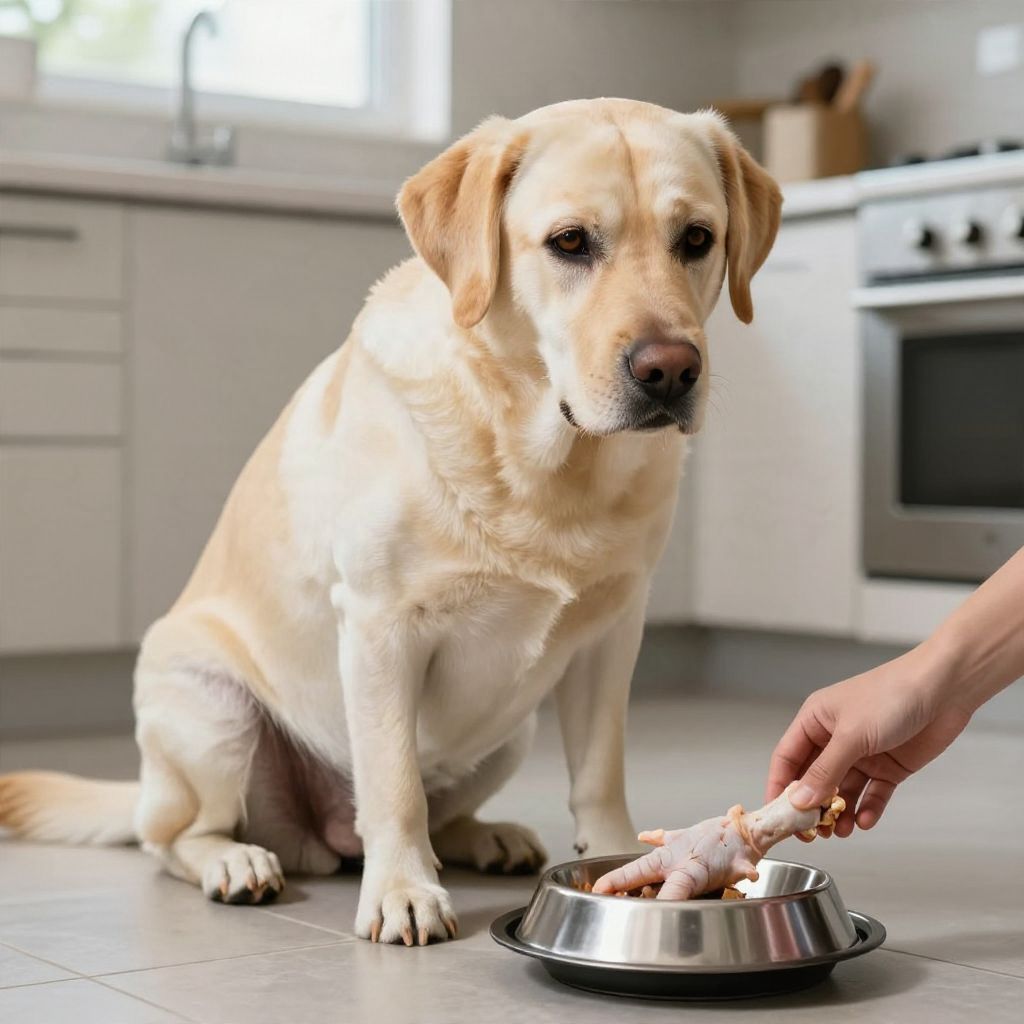
Can dogs eat raw chicken feet? In some cases, yes—but only if you handle them safely and your dog can chew them well. Raw chicken feet are sometimes used as a treat or chew, but they also carry food-safety and choking risks that matter for puppies, seniors, and dogs with dental or immune problems.
The safest choice depends on your dog’s size, chewing style, health, and your ability to source and store the feet properly. If you are unsure, ask your veterinarian before offering them.
Can Dogs Eat Raw Chicken Feet?
Yes, some dogs can eat raw chicken feet as an occasional treat if they are fresh, handled hygienically, and fed under supervision. They are not a complete food, and they are not right for every dog. Puppies, dogs with swallowing issues, and dogs with weakened immune systems need extra caution.
Are Raw Chicken Feet Safe for Dogs?
Raw chicken feet can be safe for healthy dogs when they are sourced from a reputable supplier and kept cold until feeding time. The main concerns are bacterial contamination, choking, and digestive upset. Safety also depends on your dog’s chewing habits and whether they tend to gulp food.
Potential benefits
- They can provide a novel chew that many dogs enjoy.
- They may offer some enrichment and help satisfy chewing instincts.
- They contain natural connective tissue and cartilage.
Important limitations
- They do not replace a balanced diet.
- They are not automatically “healthier” than other treats.
- They can still cause problems even in dogs that usually tolerate raw foods.
Main Risks to Know Before Feeding Raw Chicken Feet
Before you offer raw chicken feet, it helps to understand the most common hazards. Some are mild, while others can be serious enough to require veterinary care.
Bacterial contamination
Raw poultry can carry bacteria such as Salmonella or Campylobacter. Dogs may sometimes handle exposure better than people, but they can still get sick and they can spread germs through saliva, stools, and contaminated surfaces.
Choking or swallowing problems
Some dogs chew carefully. Others try to swallow pieces whole, which raises the risk of choking or an esophageal blockage. This is especially concerning for dogs that gulp treats or have a history of swallowing things quickly.
Digestive upset
Even when a dog is otherwise healthy, a rich or unfamiliar treat can lead to vomiting, loose stool, or stomach discomfort. A sudden change in diet is more likely to upset sensitive dogs.
Dental concerns
Raw chicken feet are softer than many bones, but they can still be too much for dogs with weak, cracked, or painful teeth. Dogs with known dental disease may need gentler options.
Which Dogs Should Avoid Raw Chicken Feet?
Not every dog is a good candidate for raw chicken feet. Individual health and behavior matter more than breed alone, though some dogs are naturally more likely to gulp food or chew aggressively.
- Puppies: Their teeth, digestive systems, and chewing habits are still developing.
- Senior dogs: Older dogs may have dental pain, slower digestion, or weaker immune defenses.
- Dogs with immune compromise: Raw food can pose extra risk for dogs on medications or with chronic illness.
- Dogs with a history of pancreatitis or sensitive stomachs: A new treat may trigger GI upset.
- Dogs that swallow treats whole: These dogs are at higher risk of choking.
- Dogs with dental disease or missing teeth: Chewing may be uncomfortable or unsafe.
How to Feed Raw Chicken Feet Safely
If your vet says raw chicken feet are appropriate for your dog, careful handling matters. Treat them like raw poultry, not like a casual snack from the fridge.
- Buy from a reputable source with good food-safety practices.
- Keep them refrigerated or frozen until use.
- Thaw in the refrigerator, not on the counter.
- Wash your hands, bowls, and any surfaces that touch the raw feet.
- Feed only while you can supervise.
- Remove the treat if your dog tries to gulp it or becomes overly excited.
- Discard leftovers promptly and do not refreeze thawed leftovers unless the supplier’s guidance says it is safe.
Supervision tips
- Stay close enough to intervene if your dog starts to choke.
- Separate dogs if they compete over food.
- Choose a calm place where your dog can focus on chewing.
How Much Should You Give?
There is no universal amount that fits every dog. The right portion depends on your dog’s size, daily calorie intake, and how they tolerate rich treats. Raw chicken feet should be an occasional treat, not a major part of the diet.
A practical rule is to start small and monitor your dog’s stool, appetite, and comfort afterward. If your dog has a sensitive stomach, even a small amount may be too much.
Signs Your Dog Did Not Tolerate It Well
Watch your dog closely after the first feeding. Mild digestive changes can happen with any new food, but some signs need prompt attention.
- Repeated vomiting
- Diarrhea that is severe, bloody, or lasting more than a day
- Drooling, gagging, or repeated swallowing
- Coughing or trouble breathing
- Abdominal pain, bloating, or restlessness
- Lethargy or refusal to eat
Seek urgent veterinary care immediately if your dog is choking, cannot breathe normally, has a swollen abdomen, collapses, or cannot keep water down.
Raw Chicken Feet vs. Other Treat Options
Raw chicken feet are only one possible chew. Depending on your dog, another option may be safer and easier to manage.
- Commercial dental chews: Often easier to portion and store safely.
- Frozen enrichment toys: Good for dogs that need mental stimulation without raw poultry.
- Cooked, boneless treats made for dogs: Lower raw-food contamination risk, though still should be given in moderation.
- Vet-recommended dental products: Helpful if your main goal is oral care rather than a chew experience.
If your dog has a history of food sensitivity, a commercial treat with clear ingredients may be a better choice than raw poultry.
Common Mistakes to Avoid
Many problems happen because raw chicken feet are treated like a casual snack instead of a raw animal product. Avoid these common mistakes:
- Leaving them out at room temperature too long
- Feeding them to a dog that gulps food
- Giving them to multiple dogs at once without supervision
- Assuming “raw” always means “natural and safe”
- Using them as a replacement for a complete diet
- Ignoring vomiting, diarrhea, or coughing after feeding
When to Ask Your Veterinarian
Check with your veterinarian before feeding raw chicken feet if your dog is very young, elderly, medically fragile, or has a history of digestive trouble. A vet can help you judge whether the chew is reasonable for your dog’s specific needs.
You should also ask for advice if your dog has dental disease, takes medications that affect immunity, or has ever had a choking episode. In those cases, a safer chew may be the better option.
Bottom Line
Can dogs eat raw chicken feet? Yes, some healthy dogs can, but only with careful sourcing, strict hygiene, and close supervision. They are not risk-free, and they are not suitable for every dog. If your dog is prone to gulping, has health issues, or has a sensitive stomach, choose a safer alternative and ask your vet for guidance.
If you want to compare raw poultry options or learn more about feeding raw chicken safely, you may also find is raw chicken good for dogs and can dogs eat raw chicken feet helpful for further reading.