
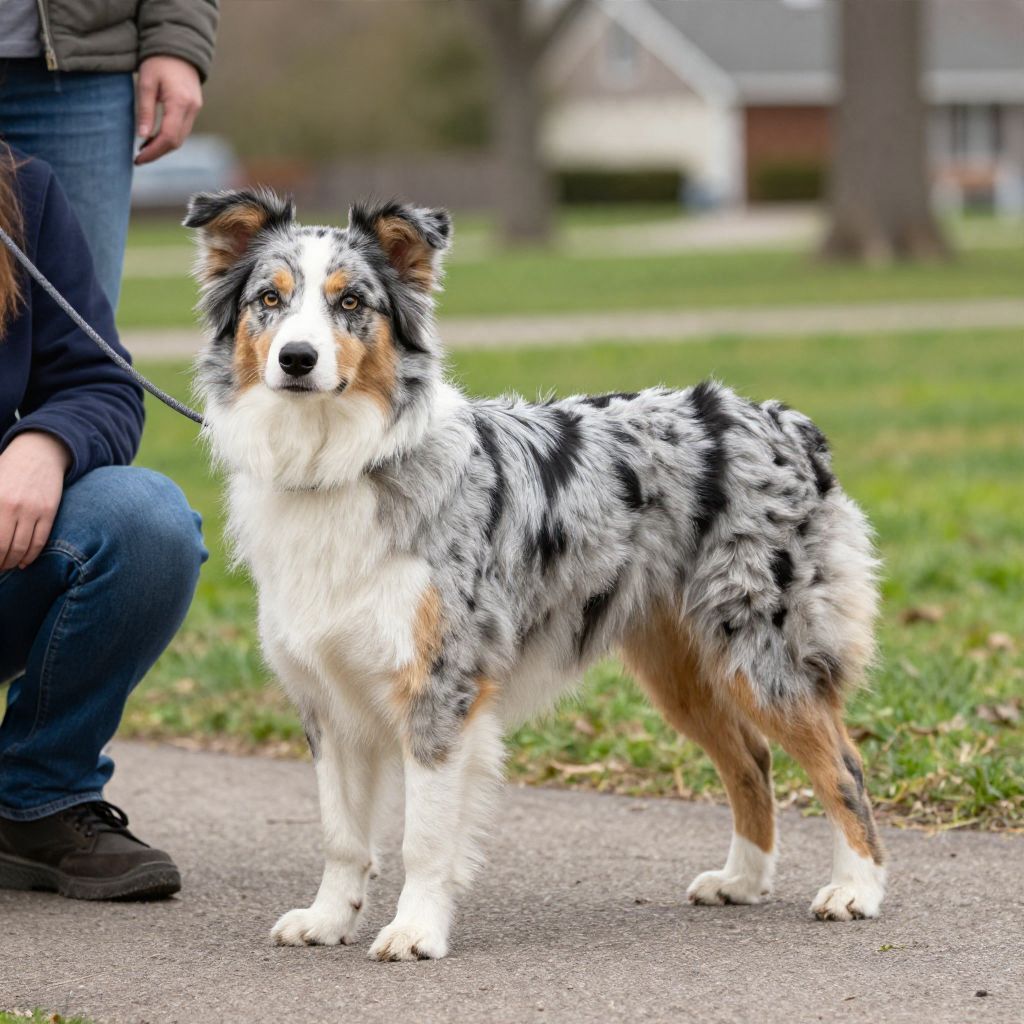
If you’re asking how big Mini Aussies get, the usual answer is that they stay medium-small rather than tiny. Most adult Mini Australian Shepherds are built for agility and activity, so their final size depends on genetics, sex, and overall health.
Knowing the typical range helps you plan for food, exercise, grooming, travel, and training. It also helps you spot growth or weight changes that may need a vet’s attention.
How Big Do Mini Aussies Get?
Mini Aussies, also called Miniature Australian Shepherds, typically reach about 14 to 18 inches tall at the shoulder and weigh roughly 20 to 40 pounds as adults. Some are a bit smaller or larger depending on breeding, sex, and body build, so your dog’s exact size may fall outside the average.
What Affects a Mini Aussie’s Adult Size?
Several factors influence how big your Mini Aussie gets, and not every dog follows the same pattern. Genetics is the biggest factor, but nutrition, activity, and overall health during puppyhood also matter.
1. Genetics and parent size
If the parents are on the smaller or larger end of the breed range, puppies often trend that way too. Responsible breeders can usually give you a better estimate based on the parents and previous litters, but they still cannot guarantee an exact adult size.
2. Sex
Males are often a little taller or heavier than females, but individual variation is common. A compact female may outweigh a taller male if she has a sturdier frame.
3. Body condition
A dog that is overweight may look “bigger,” but extra fat is not healthy growth. A lean, fit Mini Aussie should have a visible waist when viewed from above and ribs that are easy to feel without pressing hard.
4. Age and growth stage
Puppies grow quickly in the first several months, then gradually fill out. Many Mini Aussies reach most of their height by around 10 to 12 months, but they may keep developing muscle and maturity until they are closer to 18 months old.
Mini Aussie Size at Different Ages
Growth patterns vary, but this general timeline can help you understand what to expect. Your puppy may be ahead of or behind these ranges and still be healthy.
- 8 weeks: Often a small, lightweight puppy that still looks very young and delicate.
- 4 to 6 months: Rapid growth is common, and the puppy may look long-legged and slightly awkward.
- 6 to 12 months: Height growth slows, while muscle and coordination improve.
- 12 to 18 months: Many dogs settle into their adult body shape and weight.
If your puppy seems much smaller or larger than littermates, that can still be normal. What matters most is steady growth, good appetite, normal energy, and a healthy body condition.
How to Tell If Your Mini Aussie Is a Healthy Weight
Weight and size are not the same thing. A Mini Aussie can be within the typical height range and still be underweight or overweight.
Healthy body condition signs
- You can feel the ribs easily, but they are not sharply visible.
- There is a noticeable waist behind the ribs when viewed from above.
- The belly tucks up slightly from the side.
- Your dog moves easily and does not seem slowed by extra weight.
Signs your dog may be too heavy
- You cannot feel the ribs without pressing firmly.
- The waist is hard to see.
- Your dog tires quickly or seems less willing to exercise.
- There is fat buildup around the neck, base of the tail, or abdomen.
If you are unsure, ask your veterinarian to score your dog’s body condition. That is more useful than relying on the scale alone.
How Big Do Mini Aussies Get Compared With Standard Aussies?
Mini Aussies are notably smaller than standard Australian Shepherds, but they still need the same kind of active lifestyle. The smaller size can make them easier to manage in some homes, yet they are still athletic herding dogs that need daily exercise and mental work.
- Mini Aussie: usually about 14 to 18 inches tall and 20 to 40 pounds
- Standard Aussie: generally larger, with more height and weight
Because size can vary by breeder line, it is wise to ask for the parents’ measurements if you want a better idea of your puppy’s likely adult size.
What This Size Means for Daily Care
A Mini Aussie’s size affects the practical parts of care, but not in the way many people expect. They are small enough to fit in many homes, yet sturdy and energetic enough to need real structure.
Exercise needs
Most Mini Aussies need more than a quick potty walk. Plan for daily physical activity and brain work, such as:
- brisk walks
- fetch or tug with rules
- short training sessions
- puzzle toys and scent games
- safe off-leash exercise in secure areas
Young puppies should not be overexercised with long, repetitive runs or jumps while their bodies are still developing. If you are unsure about safe activity levels for a growing puppy, ask your vet.
Food and feeding
Mini Aussies need a complete, balanced dog food appropriate for their life stage. Because they are active, some need more calories than similarly sized low-energy dogs, but the right amount depends on age, metabolism, and activity level.
Avoid guessing based only on breed. Instead, monitor body condition and adjust with your veterinarian’s guidance if your dog is gaining or losing too much weight.
Grooming
Mini Aussies often have a medium-length coat that sheds and benefits from regular brushing. Size does not reduce grooming needs, and coat care is still important for skin health and comfort.
- Brush several times a week, or more during heavy shedding
- Check ears for redness, odor, or debris
- Trim nails regularly
- Bathe only as needed to avoid drying the skin
Common Mistakes When Estimating Mini Aussie Size
People often assume a puppy will stay tiny because of the word “mini,” but Mini Aussies are not toy dogs. They are still medium-small, athletic dogs with real exercise and training needs.
- Assuming every Mini Aussie is the same size. Individual dogs can vary quite a bit.
- Confusing puppy fluff with adult size. A fluffy puppy can look larger than it really is.
- Overfeeding to “help them grow.” Extra food can cause unhealthy weight gain, not better development.
- Ignoring body condition. A dog can be short and still be overweight.
- Expecting a small dog’s low exercise needs. Mini Aussies are usually active and mentally demanding.
When Size Concerns Should Lead to a Vet Visit
Most size differences are normal, but some changes deserve attention. Contact your veterinarian if your Mini Aussie is not growing as expected or suddenly changes body shape.
Call your vet promptly if you notice:
- poor appetite or weight loss
- persistent diarrhea or vomiting
- extreme thirst or urination changes
- low energy or weakness
- limping, pain, or trouble moving
- a puppy that seems much smaller than littermates and is not gaining steadily
Seek urgent veterinary care if your dog has trouble breathing, collapses, has repeated vomiting, cannot stand, or shows signs of severe pain. Those are emergencies, regardless of breed size.
How to Support Healthy Growth in a Mini Aussie Puppy
Good early care helps your puppy grow into a strong adult. The goal is steady, healthy development rather than fast growth.
- Feed a high-quality puppy diet if your vet recommends one for your puppy’s age
- Keep meals measured instead of free-feeding unless your vet advises otherwise
- Track weight and body condition during routine vet visits
- Use reward-based training to build manners and confidence
- Provide safe socialization with people, dogs, sounds, and environments
Mini Aussies are often bright and quick to learn, so early training and enrichment can make daily life easier as they grow.
Is a Mini Aussie the Right Size for Your Home?
For many people, the answer is yes because the breed is manageable in size without being fragile. Still, the right fit depends more on your lifestyle than on the dog’s measurements.
A Mini Aussie may suit you well if you want a dog that is:
- compact but athletic
- energetic and trainable
- comfortable with regular grooming and exercise
- able to join you in active routines
If you want a very low-energy dog or a dog that needs minimal mental stimulation, this breed type may be a poor match even though the size is convenient.
Conclusion
So, how big do Mini Aussies get? Most adults are about 14 to 18 inches tall and 20 to 40 pounds, but healthy variation is normal. Focus on steady growth, a lean body condition, and regular vet care so your dog develops well and stays comfortable.
If you’re comparing related breeds and sizes, you may also find it helpful to read about how big Mini Goldendoodles get or how big Mini Bernedoodles get.