
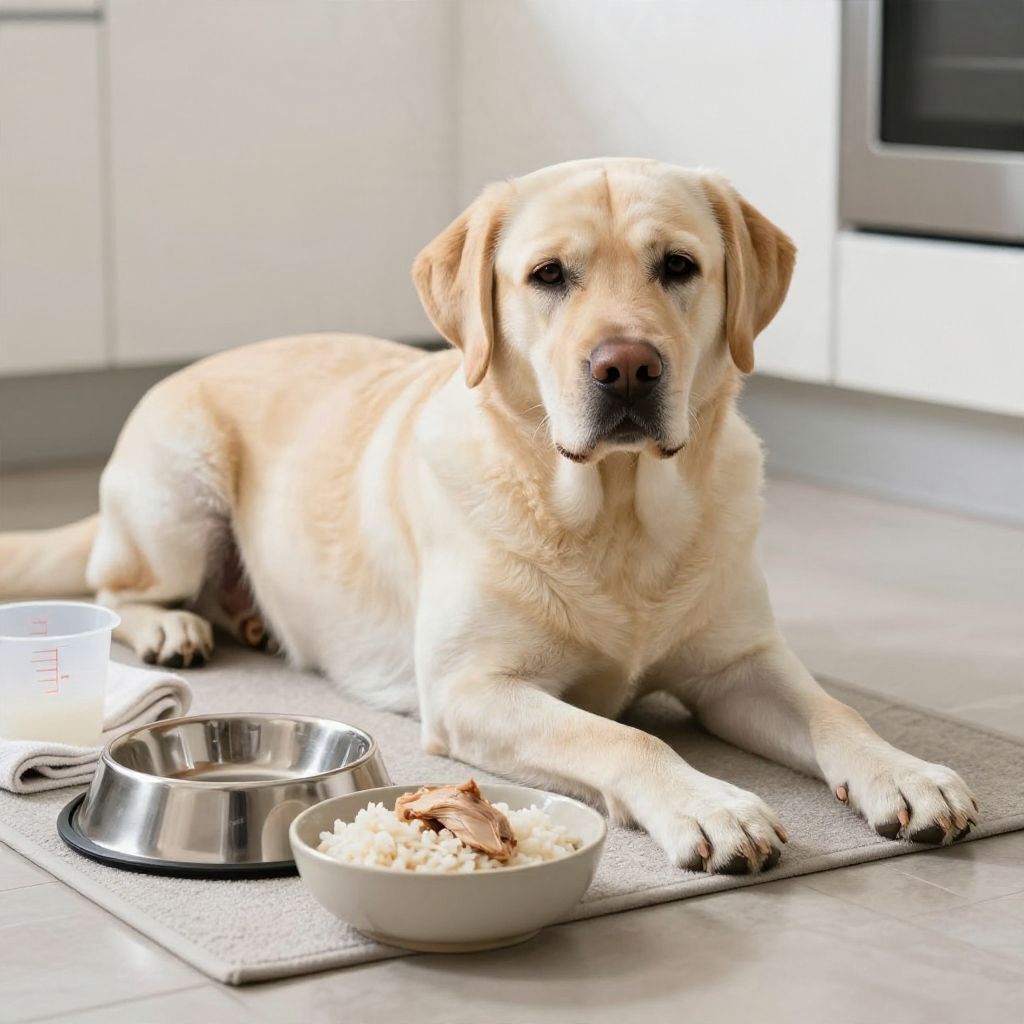
If your dog has an upset stomach, the safest first step is usually to pause rich treats and watch for warning signs. Mild stomach upset often improves with short-term rest, bland food, and plenty of water, but vomiting, repeated diarrhea, pain, or lethargy can mean your dog needs a veterinarian.
What you give depends on the cause, your dog’s age, size, health, and symptoms. Some dogs only need a temporary diet change, while others should not eat at all until a vet says it is safe.
What To Give Dog With Upset Stomach?
For a mild upset stomach, offer small amounts of water and a bland, easy-to-digest food if your dog is not vomiting repeatedly. Plain cooked chicken or turkey with white rice is a common short-term option, but if symptoms are severe, persistent, or your dog seems weak, call your veterinarian first.
Start With Water and a Short Rest From Food
If your dog has mild nausea, soft stool, or a single vomiting episode, the stomach may need a brief break. Keep fresh water available and offer small sips rather than letting your dog gulp large amounts.
Do not force food right away if your dog is actively vomiting. For many otherwise healthy adult dogs, a short pause from food can help settle the stomach, but puppies, toy breeds, seniors, and dogs with medical conditions may need faster veterinary guidance because they can become dehydrated more quickly.
What to watch during the first few hours
- Whether your dog can keep water down
- How often vomiting or diarrhea happens
- Energy level and alertness
- Signs of pain, bloating, or repeated retching
- Any possible exposure to garbage, toxins, bones, or foreign objects
Best Bland Foods for a Mild Upset Stomach
Once vomiting has stopped and your dog is interested in food, a bland diet is often easier to tolerate than regular meals. Keep portions small at first and feed several small meals instead of one large one.
- Plain cooked chicken or turkey without skin, seasoning, butter, or oil
- Plain white rice cooked soft
- Plain boiled potato in small amounts, if your dog tolerates it
- Plain canned pumpkin in small amounts may help some dogs with loose stool, but it is not a cure-all
- Veterinary gastrointestinal diets if your vet recommends them
These foods are temporary support, not a long-term diet. They are meant to calm the stomach while you monitor your dog and decide whether veterinary care is needed.
How to feed a bland diet safely
- Start with a very small meal.
- Wait a few hours and watch for vomiting, diarrhea, or worsening discomfort.
- If your dog keeps it down, offer another small meal later.
- Gradually return to the regular diet over a few days if symptoms improve.
Foods and Remedies You Should Not Give
Some common human foods and home remedies can make an upset stomach worse or create new problems. Avoid experimenting with “natural” fixes unless your veterinarian has already approved them.
- Fatty foods, greasy leftovers, and rich treats
- Seasoned foods, especially those with onion, garlic, heavy salt, or spicy ingredients
- Milk or cream, which can worsen diarrhea in many dogs
- Alcohol, caffeine, chocolate, grapes, raisins, xylitol, and onions, which can be dangerous
- Human medications unless your veterinarian specifically instructs you to use them
Do not give over-the-counter stomach medicines without veterinary advice. Some products are unsafe for dogs, and the right choice depends on the cause of the upset stomach, your dog’s size, and other health issues.
When an Upset Stomach Is an Emergency
Some stomach problems are not mild and should be treated as urgent. If you see any of the following, contact a veterinarian or emergency clinic right away.
- Repeated vomiting or inability to keep water down
- Bloody vomit or bloody diarrhea
- A swollen, hard, or painful belly
- Retching without bringing anything up
- Extreme tiredness, collapse, or weakness
- Signs of dehydration such as dry gums, sunken eyes, or very little urination
- Known or suspected toxin ingestion
- Foreign object chewing or possible blockage
- Fever, severe pain, or a dog that seems distressed
Large-breed dogs with a distended abdomen, repeated unproductive retching, or sudden restlessness may be experiencing a life-threatening emergency. Do not wait to “see if it passes.”
How Age, Size, and Health Change What You Should Give
Not every dog should be managed the same way. A healthy adult may tolerate a short bland-diet trial, while a puppy, senior dog, or dog with chronic disease may need earlier veterinary care.
Puppies
Puppies can dehydrate quickly and may have parasites, diet changes, or infectious illness. If a puppy is vomiting, has diarrhea, or is not eating, contact your vet sooner rather than later.
Small dogs and toy breeds
Small dogs have less body reserve, so even a short bout of vomiting or diarrhea can become serious faster. Offer water carefully and monitor closely.
Senior dogs
Older dogs may have kidney disease, pancreatitis, dental pain, or other conditions that affect appetite and digestion. An upset stomach in a senior dog is worth discussing with your veterinarian, especially if it keeps happening.
Dogs with medical conditions
If your dog has diabetes, liver disease, kidney disease, inflammatory bowel disease, or a history of pancreatitis, do not make major diet changes without veterinary guidance. The safest food choice can vary a lot based on the underlying condition.
Common Causes of an Upset Stomach
An upset stomach is a symptom, not a diagnosis. The best thing to give your dog depends on what triggered it.
- Sudden diet change
- Eating garbage, table scraps, or spoiled food
- Stress or travel
- Parasites
- Infections
- Food intolerance or sensitivity
- Pancreatitis
- Foreign body ingestion
- Toxin exposure
If the stomach upset happened after a new food, a rich treat, or scavenging outdoors, tell your veterinarian exactly what your dog may have eaten. That information can help guide the safest next step.
What Not to Do at Home
Well-meaning mistakes can delay proper care. When you are trying to help your dog feel better, avoid these common errors.
- Feeding a large meal too soon
- Switching foods repeatedly in one day
- Giving fatty leftovers “to tempt appetite”
- Using human medicines without veterinary approval
- Ignoring repeated vomiting because your dog still seems interested in food
- Forcing exercise when your dog seems weak or nauseated
Gentle rest is usually better than activity when the stomach is upset. Keep your dog calm, limit access to trash or food scraps, and make sure water is available.
When to Call the Veterinarian Even If It Seems Mild
Some dogs need a vet visit even if the symptoms are not dramatic. Call your veterinarian if the upset stomach lasts more than a day, keeps returning, or comes with changes in appetite, weight, thirst, or behavior.
You should also call if your dog has recently changed diets, started a new medication, or may have eaten something unusual. A vet can help you decide whether home care is appropriate or whether your dog needs an exam, testing, or a prescription diet.
How to Prevent Future Stomach Upsets
Prevention is often easier than treatment. A few simple habits can reduce the chance of repeat stomach problems.
- Transition to new foods gradually
- Keep garbage, compost, and toxic foods out of reach
- Use treats in moderation
- Stick to a consistent feeding schedule
- Keep up with parasite prevention and routine vet care
- Watch closely during travel, boarding, or stressful changes
If your dog has repeated digestive issues, ask your veterinarian whether a food trial, parasite check, or further diagnostics would help identify the cause.
The Bottom Line
For a mild upset stomach, the safest things to give are water and a bland, easy-to-digest food in small amounts once vomiting has stopped. If your dog has repeated vomiting, bloody stool, pain, bloating, weakness, or cannot keep water down, seek veterinary care right away.
If you want more practical guidance, you may also find how to help a dog with diarrhea and what to give a dog with an upset stomach useful for next steps and warning signs.