
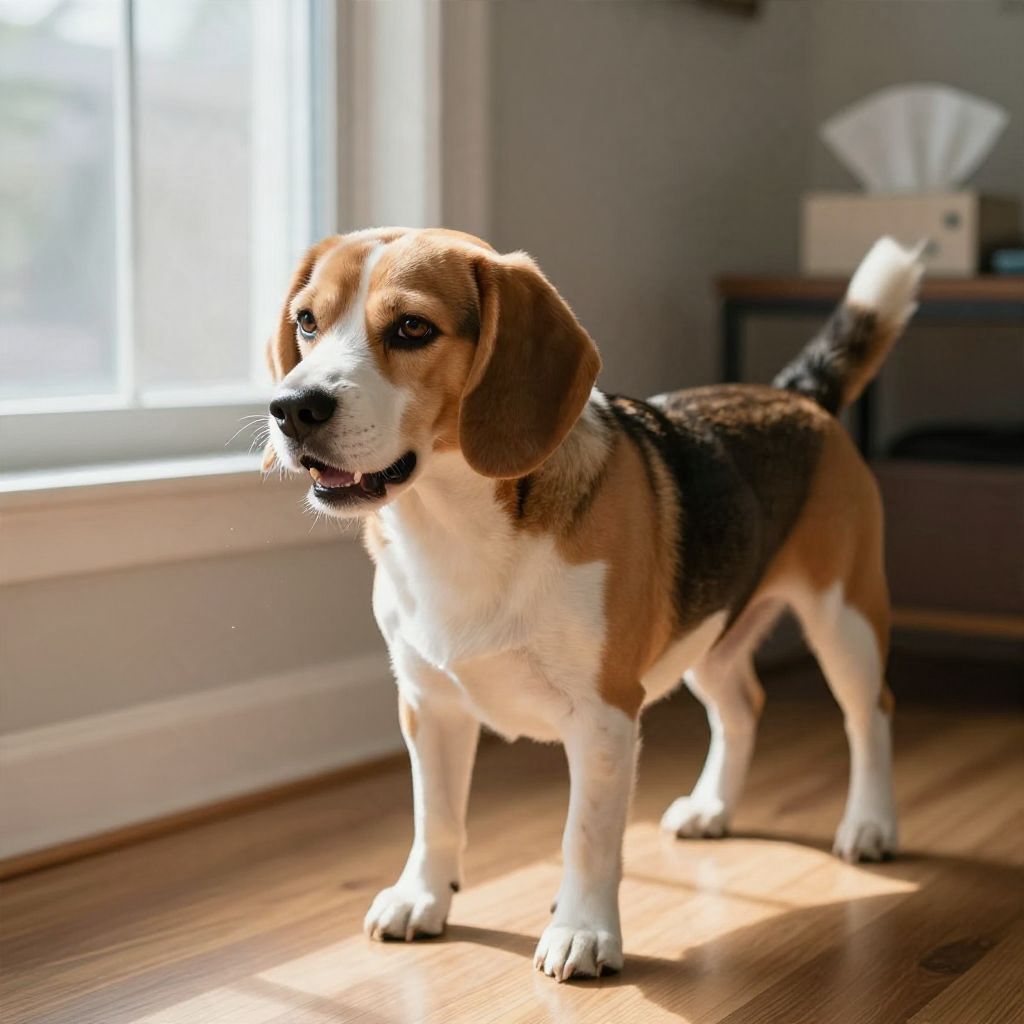
My dog is sneezing a lot, and that can be as simple as irritation from dust or pollen. It can also point to a foreign object, infection, dental disease, allergies, or—less commonly—a more serious problem.
What matters most is whether the sneezing is occasional or frequent, and whether it comes with discharge, bleeding, coughing, trouble breathing, or behavior changes. Those details help you decide when home monitoring is reasonable and when a veterinarian should examine your dog.
My Dog Is Sneezing A Lot: What Does It Mean?
Frequent sneezing usually means your dog’s nose is irritated or inflamed. Common causes include dust, perfume, smoke, grass, pollen, excitement, a foreign body, nasal infection, allergies, or dental problems. If sneezing is sudden, severe, one-sided, or paired with other symptoms, your dog should be checked by a veterinarian.
Common Reasons Dogs Sneezes a Lot
Some causes are mild and temporary, while others need medical attention. The pattern of sneezing often gives useful clues.
Environmental irritation
Dogs can sneeze after exposure to dust, cleaning sprays, smoke, scented candles, air fresheners, or dry air. Many dogs also sneeze outdoors when pollen, grass, or other irritants bother the nose.
Excitement or play
Some dogs sneeze during play, roughhousing, or social interaction. This is often a normal “play sneeze” used during excitement or communication, especially if your dog otherwise seems comfortable.
Allergies
Dogs can develop environmental allergies that affect the skin, ears, and sometimes the nose. Sneezing may happen along with itching, licking, watery eyes, or recurring ear problems. Food allergies are less likely to cause sneezing by themselves, though they can contribute to broader allergy signs.
Foreign material in the nose
Grass seeds, plant material, dirt, or small debris can get lodged in the nasal passages and cause repeated sneezing. This often starts suddenly and may be more noticeable on one side.
Upper respiratory infection
Viral or bacterial infections can cause sneezing, nasal discharge, coughing, reduced appetite, or low energy. Puppies, senior dogs, and dogs in group settings may be more vulnerable to contagious respiratory illness.
Dental disease
Advanced dental disease or an infected tooth root can sometimes affect the nasal passages, especially in upper teeth. Sneezing with bad breath, drooling, facial swelling, or reluctance to eat can point to a dental issue.
Less common but important causes
Nasal mites, nasal polyps, tumors, and other chronic conditions can also cause sneezing. These are more concerning when sneezing is persistent, worsening, or accompanied by bleeding or one-sided discharge.
When Sneezing Is Normal and When It Is Not
Not every sneeze is a warning sign. A few sneezes after sniffing around, playing, or entering a dusty room may pass quickly without treatment.
- Usually less concerning: brief sneezing, normal energy, normal appetite, no discharge, and symptoms that improve quickly.
- More concerning: repeated sneezing throughout the day, thick or colored discharge, nosebleeds, coughing, lethargy, reduced appetite, or signs of pain.
- Urgent: trouble breathing, swelling of the face, severe bleeding, collapse, or a suspected object stuck in the nose.
Red-Flag Symptoms That Need a Veterinarian Soon
If your dog is sneezing a lot and you notice any of the following, contact your veterinarian promptly. These signs can indicate an infection, injury, obstruction, or another problem that should not be ignored.
- One-sided sneezing or discharge
- Blood from the nose
- Yellow, green, or foul-smelling nasal discharge
- Repeated pawing at the nose or face rubbing
- Loss of appetite or difficulty eating
- Coughing, wheezing, or noisy breathing
- Facial swelling or obvious pain
- Eye discharge, squinting, or redness
- Fever, tiredness, or sudden behavior changes
Seek emergency care immediately if your dog is struggling to breathe, has heavy bleeding, collapses, or seems unable to get air through the nose.
What You Can Safely Do at Home
Simple observation is often the best first step when your dog seems otherwise well. Focus on reducing irritation and watching for changes rather than trying to treat the nose on your own.
- Note when the sneezing happens and whether it is one-sided or both-sided.
- Check for discharge, blood, coughing, itching, or changes in appetite.
- Reduce exposure to smoke, aerosols, strong cleaners, and dusty areas.
- Keep your dog away from tall grass, seed heads, and other outdoor irritants if symptoms start after walks.
- Use a humidified, comfortable indoor environment if the air is very dry.
- Schedule a veterinary visit if sneezing continues, worsens, or comes with other symptoms.
Avoid putting anything into your dog’s nose and do not use human cold medicines, essential oils, or unapproved home treatments. These can be harmful and may make the problem harder to diagnose.
How Vets Usually Evaluate a Dog That Is Sneezing
Your veterinarian will ask about the timing, frequency, and pattern of the sneezing, plus any discharge, exposure history, or recent grooming, travel, or boarding. That history helps narrow the likely cause.
Depending on the case, the exam may include checking the mouth and teeth, listening for respiratory sounds, looking for nasal discharge, and assessing the eyes and throat. Some dogs need additional testing such as imaging, dental evaluation, nasal examination, or lab work.
Why the pattern matters
Sudden sneezing after outdoor play can suggest irritation or a foreign body. Ongoing sneezing over days or weeks may point more toward allergies, infection, dental disease, or a chronic nasal condition.
Why one-sided sneezing stands out
If the sneezing and discharge are mostly from one nostril, a foreign body, dental issue, or localized nasal problem becomes more likely. That pattern is worth prompt veterinary attention.
Breed, Age, and Individual Differences
Any dog can sneeze a lot, but some factors change the level of concern. Brachycephalic dogs with shorter muzzles may have noisier breathing and more upper-airway sensitivity, while dogs with long noses may be more likely to inhale debris during sniffing and play.
Puppies can develop contagious respiratory illness more easily, and senior dogs may have dental disease or chronic health conditions that make sneezing more important to investigate. Your dog’s history, environment, and overall health matter more than breed alone.
Common Mistakes to Avoid
- Waiting too long when sneezing is persistent or worsening
- Assuming all sneezing is “just allergies” without checking for discharge or pain
- Using human medications without veterinary guidance
- Trying to flush the nose or remove a suspected object yourself
- Ignoring dental problems, bad breath, or facial swelling
How to Lower Irritation and Support Comfort
Prevention depends on the cause, but a few practical habits can help reduce sneezing triggers in many dogs.
- Keep your home free of smoke and heavy fragrance sprays
- Vacuum regularly if dust or pollen seems to trigger symptoms
- Rinse bedding often if your dog has seasonal irritation
- Maintain routine dental care and veterinary dental checks
- Watch for sneezing after outdoor sniffing, especially in weedy areas
- Keep vaccinations and preventive care up to date as recommended by your vet
When Sneezing and Other Symptoms Appear Together
It helps to look at the whole picture, not just the sneezing. Sneezing plus coughing, fever, low energy, or appetite loss can mean a respiratory illness. Sneezing plus bad breath, drooling, or facial swelling can suggest dental disease. Sneezing plus nosebleeds or one-sided discharge needs prompt evaluation.
If your dog is otherwise normal and the sneezing is brief, you can monitor closely for a day or two. If it keeps happening, becomes more frequent, or changes in character, call your veterinarian rather than waiting for it to “go away on its own.”
Conclusion
If my dog is sneezing a lot, I first look for simple triggers like dust, pollen, smoke, or play, but I stay alert for discharge, blood, pain, coughing, or breathing trouble. When the sneezing is persistent, one-sided, or paired with other symptoms, a veterinary exam is the safest next step.
For more related reading, you may also find why dogs sneeze when playing and whether dogs can catch colds from humans helpful.