
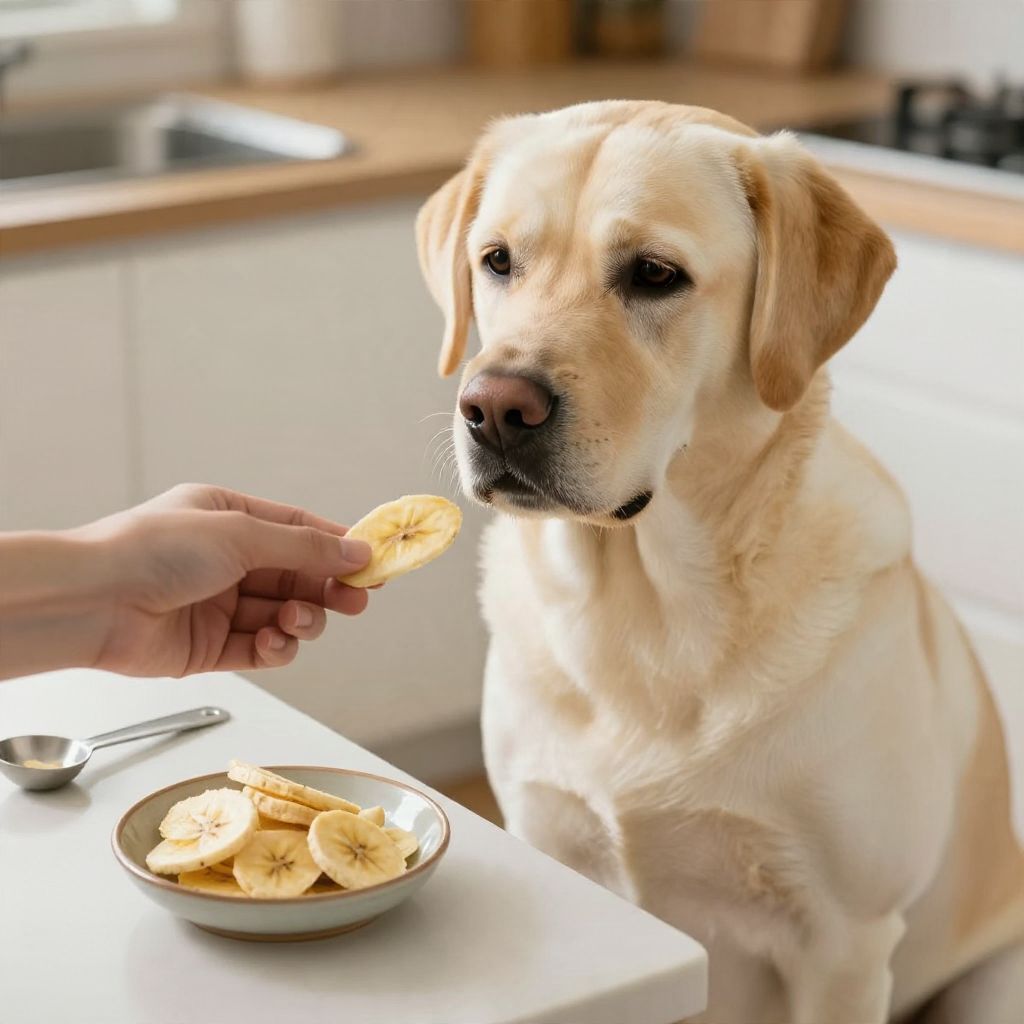
Can dogs eat banana chips? Sometimes, but only if they’re plain, unsweetened, and given in very small amounts. Many store-bought banana chips are fried, coated in sugar, or flavored with extra ingredients that are not ideal for dogs.
If you want to share banana chips with your dog, check the label first and keep portions tiny. For many dogs, fresh banana is a safer, simpler treat than processed chips.
Can Dogs Eat Banana Chips?
Yes, dogs can eat plain banana chips in small amounts, but they are not the best treat choice. Many banana chips are high in sugar, fat, or additives, which can upset your dog’s stomach or add unnecessary calories. Fresh banana is usually safer and easier to portion.
Are Banana Chips Safe for Dogs?
Banana itself is not toxic to dogs, but banana chips are a processed version that may include ingredients you do not want your dog eating. The safest option is a plain, unsweetened, unflavored chip with no chocolate, xylitol, spices, or artificial sweeteners.
What to check on the label
- Added sugar or syrups
- Coconut oil or other added fats
- Salt or seasoning blends
- Artificial sweeteners, especially xylitol
- Chocolate, raisins, nutmeg, or other unsafe mix-ins
If the ingredient list is long or unclear, it is better to skip the snack and offer a simpler treat.
Why Banana Chips Can Be a Poor Choice
Even when banana chips are not toxic, they can still be a problem for dogs. Processing often changes a healthy fruit into a snack that is more calorie-dense and less suitable for regular feeding.
Common concerns
- Too much sugar can contribute to weight gain and dental issues.
- Added fat may trigger stomach upset in sensitive dogs.
- Crunchy texture can be hard for some senior dogs or dogs with dental disease.
- Large portions can crowd out balanced food and treats that better support your dog’s diet.
Dogs with pancreatitis, obesity, diabetes, or sensitive stomachs often need extra caution with any processed treat, including banana chips. Your veterinarian can help you decide what fits your dog’s needs.
How Much Banana Chip Can a Dog Have?
There is no universal amount that works for every dog. Size, age, activity level, health status, and overall diet all matter. Treats should stay small and make up only a limited part of your dog’s daily intake.
A practical feeding guide
- Choose plain banana chips with no harmful additives.
- Offer just one small piece the first time.
- Watch for vomiting, loose stool, itching, or unusual thirst.
- If your dog tolerates it, keep banana chips as an occasional treat, not a daily habit.
- Adjust downward for small dogs, puppies, and dogs with health concerns.
When in doubt, use a fresh banana slice instead. It is easier to control the portion and usually contains fewer unwanted ingredients.
When Banana Chips Are Not a Good Idea
Some dogs should avoid banana chips altogether or only have them after your veterinarian says they are appropriate. A dog’s individual health matters more than whether a food is generally considered “safe.”
Use extra caution if your dog has
- Diabetes or blood sugar concerns
- Pancreatitis history
- Obesity or a weight-loss plan
- Chronic digestive sensitivity
- Dental pain or missing teeth
- A special veterinary diet
Puppies also need more careful treat choices because their digestive systems are still developing and they need balanced nutrition for growth. A tiny taste may be fine for some puppies, but large or frequent treats are not a good idea.
Signs Your Dog Did Not Tolerate Banana Chips Well
Most mild stomach upset resolves on its own, but you should pay attention to your dog’s reaction after trying any new food. Repeated symptoms may mean the treat is too rich, too sweet, or simply not right for your dog.
Watch for these signs
- Vomiting
- Diarrhea
- Gas or bloating
- Itching or facial swelling
- Restlessness or discomfort
- Refusing food after the treat
Seek urgent veterinary care if your dog has trouble breathing, collapses, has repeated vomiting, a swollen face, severe lethargy, a painful belly, or you suspect the chips contained xylitol or another toxic ingredient.
Better Alternatives to Banana Chips
If you want a banana-based treat, fresh banana is usually the easiest option. It is less processed, easier to portion, and less likely to contain extra sugar or oil.
Dog-friendlier options
- Small slices of fresh banana
- Frozen banana pieces for a cool treat
- Plain banana mashed into a lick mat in a very small amount
- Commercial dog treats made for your dog’s size and health needs
Always introduce any new treat slowly. Even safe foods can cause digestive upset if you give too much too quickly.
How to Offer Banana Chips Safely
If you decide to give banana chips, keep the experience simple and controlled. Treats should support training or enrichment, not replace balanced meals.
Safe-feeding tips
- Use only plain chips with a short ingredient list.
- Break large chips into smaller pieces if needed.
- Offer them as an occasional reward, not a routine snack.
- Store them out of reach so your dog cannot raid the bag.
- Stop immediately if your dog shows digestive upset.
If your dog tends to gulp food, supervise closely so the chips do not become a choking or swallowing issue, especially for small dogs or dogs with dental problems.
Common Mistakes Dog Owners Make
Many problems happen when people assume “fruit snack” means “healthy for dogs.” Banana chips can be misleading because they sound natural, but the packaged version may be very different from fresh fruit.
Mistakes to avoid
- Giving banana chips with added sugar or flavoring
- Using them as a daily treat
- Offering a large handful because they seem harmless
- Sharing chips from a trail mix or snack blend
- Ignoring stomach upset after the first feeding
It is also a mistake to use human snacks as a substitute for a complete dog food. Treats should stay small and occasional, even when they are made from fruit.
When to Call Your Veterinarian
Contact your veterinarian if your dog has a medical condition, is on a prescription diet, or has repeated digestive issues after eating banana chips. You should also call promptly if you are unsure whether the chips contained a harmful ingredient.
Get help right away if
- Your dog ate a large amount of banana chips
- The chips contained xylitol, chocolate, raisins, or an unknown sweetener
- Your dog is vomiting repeatedly or cannot keep water down
- Your dog seems weak, painful, or unusually sleepy
- Your dog’s belly looks swollen or feels hard
Quick action matters more than waiting to see if symptoms improve, especially when a toxic ingredient or serious stomach problem may be involved.
The Bottom Line
Dogs can eat banana chips only if they are plain and offered sparingly, but fresh banana is usually the safer, better choice. Check ingredients carefully, keep portions tiny, and avoid banana chips if your dog has health issues that make sugary or fatty treats a bad fit.
If you want more fruit-related guidance, you may also find these helpful: can Frenchies eat bananas and can dogs eat banana bread.