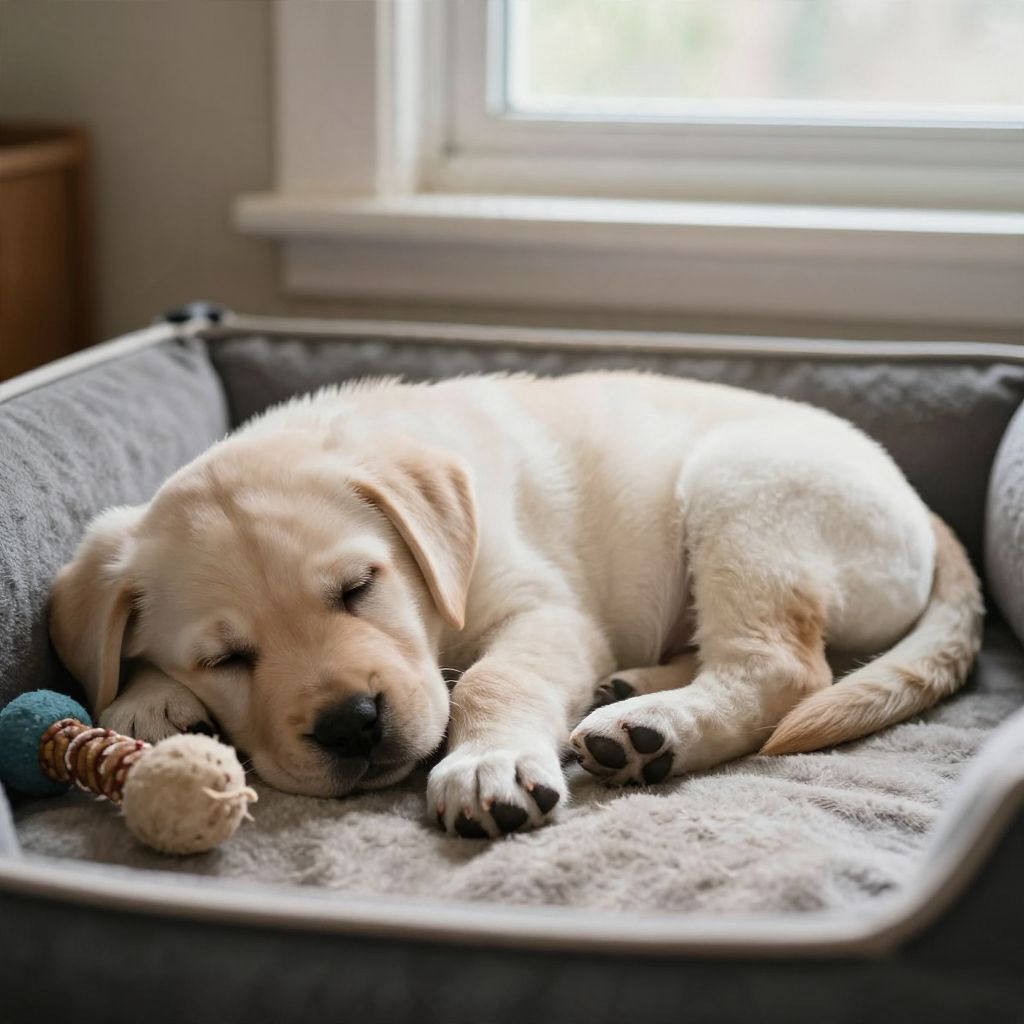
Do puppies sleep a lot? Yes—most puppies need far more sleep than adult dogs, and long naps are a normal part of healthy growth. Their bodies and brains are developing quickly, so rest helps them recover from play, process new experiences, and stay balanced.
That said, sleep needs vary by age, breed, activity level, and health. A puppy that seems unusually lethargic, hard to wake, or too tired to eat or play may need a veterinary check.
Do puppies sleep a lot?
Yes. Puppies commonly sleep most of the day, often in many short stretches rather than one long block. Sleep supports growth, learning, and immune function. A young puppy that alternates active bursts with frequent naps is usually behaving normally, as long as it wakes easily, eats well, and seems alert between rests.
How much sleep is normal for a puppy?
Most puppies sleep much more than adult dogs, but the exact amount varies. Very young puppies may nap nearly all day, while older puppies gradually stay awake for longer periods as they mature.
- Young puppies: frequent naps and short play sessions are typical.
- Older puppies: more awake time, but still substantial daily sleep.
- Active or highly stimulated puppies: may crash hard after training, exercise, or socialization.
Instead of counting every hour, look at the overall pattern. Healthy puppies usually cycle between eating, playing, exploring, eliminating, and sleeping.
Why puppies sleep so much
Puppies are doing a lot of growing in a short time. Sleep helps their bodies repair tissue, their brains organize new information, and their nervous systems settle after stimulation.
Common reasons for extra sleep
- Rapid physical growth
- Learning house rules, cues, and social skills
- Short attention spans and limited stamina
- Overstimulation from visitors, new places, or training
- Normal recovery after play, meals, and exercise
Many puppy owners worry when a puppy naps often, but frequent sleep is usually a sign that the puppy is getting what it needs.
What normal puppy sleep looks like
A healthy puppy may seem energetic for a little while, then suddenly become sleepy and settle down. This stop-start rhythm is common, especially in the early months.
- Wakes up willingly when gently encouraged
- Has periods of play, curiosity, and engagement
- Eats and drinks normally
- Uses the bathroom regularly for its age
- Recovers after naps and returns to normal behavior
Some puppies are naturally more mellow, while others are more intense and active. Individual temperament matters, so compare your puppy to its own usual pattern rather than to another dog.
When sleeping a lot is not normal
Extra sleep can be normal, but unusual tiredness can also signal illness, pain, stress, or dehydration. If your puppy is sleeping more than usual and acting “off,” pay attention to the whole picture.
Warning signs to watch for
- Hard to wake or unusually weak
- Not interested in food, water, or play
- Vomiting, diarrhea, coughing, or sneezing with lethargy
- Fever, shivering, or obvious discomfort
- Pale gums, trouble breathing, or collapse
- Sudden behavior change after a fall, toxin exposure, or rough play
Seek urgent veterinary care if your puppy has trouble breathing, collapses, has seizures, cannot stand, has repeated vomiting, seems severely weak, or may have eaten something toxic. Do not wait to see if it passes on its own.
How to support healthy puppy sleep
You can help your puppy get the rest it needs by keeping the day calm, predictable, and age-appropriate. Puppies do best when sleep is treated as part of the routine, not something they have to “earn.”
- Build in naps. Puppies often need help settling down before they become overtired.
- Keep training short. A few minutes at a time is usually enough for young puppies.
- Limit overstimulation. Too many new people, places, or games can make a puppy cranky and exhausted.
- Use a quiet sleep space. A crate, pen, or bed in a low-traffic area can help.
- Maintain a routine. Predictable mealtimes, potty breaks, and bedtime support better rest.
Many puppies sleep better when their environment is calm and their needs are met before they become overtired.
Feeding, play, and potty breaks affect sleep
Sleep is closely tied to the rest of your puppy’s routine. Hunger, a full bladder, too much activity, or not enough activity can all disrupt rest.
Helpful routine habits
- Feed a balanced puppy diet on a consistent schedule
- Offer potty breaks after waking, eating, drinking, and play
- Use short play sessions instead of marathon exercise
- End active time before your puppy is completely exhausted
If your puppy seems restless at night, the issue may be too much stimulation, an incomplete potty routine, or discomfort rather than “not enough sleep” alone.
Breed, size, and personality can change sleep patterns
Some puppies are naturally more energetic, while others are more relaxed. Breed tendencies can influence activity level, but they do not determine every puppy’s behavior.
For example, a puppy from a line bred for higher drive may need more structured activity and training, while a calmer individual may settle more easily. Body size, development stage, and daily stimulation also matter.
Use your puppy’s behavior as the guide. If the sleep pattern changes suddenly, or your puppy seems exhausted in a way that does not fit its usual personality, contact your veterinarian.
How to tell sleepiness from boredom or behavior issues
Sometimes a puppy that looks sleepy is actually under-stimulated, overstimulated, anxious, or frustrated. The clues are usually in the pattern of behavior.
- Sleepy: slow movements, yawning, settling down, eyes closing, easy to soothe
- Bored: restless, pestering, chewing, pacing, seeking attention
- Overstimulated: zooming, nipping, hard to calm, cranky after excitement
- Anxious or unwell: withdrawn, tense, trembling, hiding, or unusually quiet
If you are unsure, offer a quiet rest period first. If the behavior persists or comes with other symptoms, ask your veterinarian for guidance.
Helping an overtired puppy settle
Many behavior problems in puppies get worse when they are overtired. A puppy that has missed naps may become mouthy, wild, or unable to focus.
What to do
- Move to a calm area with fewer distractions
- Lower lights and reduce noise
- Offer a chew or soft bedding if your puppy is relaxed enough
- Keep interactions quiet and brief
- Use a consistent nap routine so rest becomes predictable
Avoid rough play when your puppy is already exhausted. Rest usually works better than trying to “wear them out” even more.
When to call the veterinarian
Contact your veterinarian if your puppy’s sleep seems abnormal, especially if the change is sudden or paired with any other symptom. Puppies can decline quickly, so early advice is valuable.
Call promptly if you notice:
- Sudden increase or decrease in sleep
- Poor appetite or refusal to drink
- Diarrhea, vomiting, or fever
- Persistent coughing, nasal discharge, or breathing changes
- Signs of pain, injury, or limping
- Possible toxin exposure or ingestion of a foreign object
If your puppy is very young and seems weak, dehydrated, or difficult to rouse, do not delay professional care.
Practical takeaways for puppy owners
Do puppies sleep a lot? Yes, and frequent naps are usually a healthy part of puppy development. The key is to watch for your puppy’s normal rhythm and notice any sudden changes.
Support good sleep with a calm routine, age-appropriate exercise, short training sessions, and a safe place to rest. If your puppy is unusually tired, not acting like itself, or showing any red-flag symptoms, contact your veterinarian right away.
If you want to learn more about puppy rest and care, you may also find how long puppies sleep and what shots puppies need helpful as you build a healthy routine.