
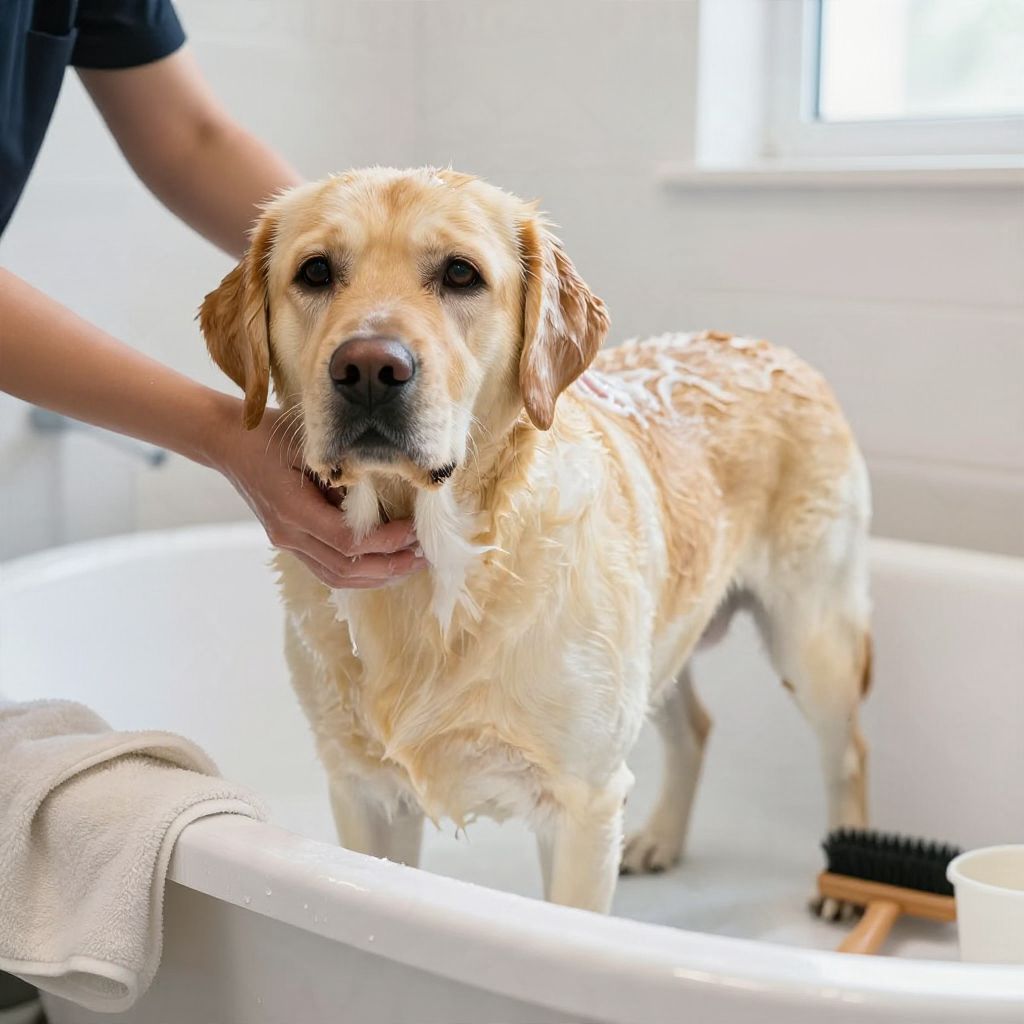
How often should a dog be bathed? For most dogs, the answer is “as needed,” not on a fixed weekly schedule. The right timing depends on coat type, skin health, activity level, and how dirty or smelly your dog gets.
Some dogs need baths only every few months, while others may need more frequent washing for skin care or lifestyle reasons. The goal is to keep your dog clean without stripping natural oils or irritating the skin.
How Often Should A Dog Be Bathed?
Most healthy dogs do well with a bath every 4 to 8 weeks, but the best schedule depends on coat type, skin condition, and daily habits. Dogs with oily coats, skin allergies, or frequent outdoor messes may need more frequent bathing, while low-odor indoor dogs often need less.
What Affects Bathing Frequency?
There is no single bathing schedule that fits every dog. A dog’s grooming needs can change based on several factors, and you should adjust the routine to the individual dog rather than the breed label alone.
Coat type
- Short-coated dogs often stay cleaner longer and may need fewer baths.
- Long-haired or feathered coats can trap dirt, debris, and moisture more easily.
- Double-coated dogs usually need regular brushing more than frequent bathing.
- Hairless or very oily coats may need a different bathing plan recommended by a veterinarian or groomer.
Skin health
Dogs with allergies, dandruff, skin infections, or greasy skin may need a specific bathing routine. In these cases, more baths are not always better, and the wrong shampoo can make irritation worse.
Activity and environment
- Dogs that hike, swim, roll in mud, or spend lots of time outdoors may need baths more often.
- Indoor dogs with limited dirt exposure may only need occasional bathing.
- Dogs who get into something sticky, smelly, or potentially harmful should be cleaned promptly.
Age and temperament
Puppies, seniors, and anxious dogs may need shorter, gentler bathing sessions. A dog that hates baths may do better with gradual training and less frequent full baths, paired with spot cleaning and brushing.
Signs Your Dog May Need A Bath
Instead of bathing on a strict calendar, watch for practical signs that your dog needs one. These clues are often more useful than counting weeks.
- Noticeable odor that brushing does not fix
- Visible dirt, mud, or debris in the coat
- Greasy or sticky fur
- Matting or coat buildup
- Pollen, grass, or allergen buildup after outdoor time
- Skin that looks dirty, flaky, or uncomfortable
If your dog suddenly smells much worse than usual, has a greasy coat, or seems itchy, the issue may be more than simple cleanliness. A vet check can help rule out skin disease, ear problems, or other medical causes.
How Often Different Dogs May Need Baths
These are general starting points, not hard rules. Your dog may need more or less frequent bathing depending on health and lifestyle.
Most healthy family dogs
Many healthy dogs do well with bathing every 4 to 8 weeks. This range helps keep the coat clean while preserving natural skin oils.
Dogs with oily coats or strong odor
Some dogs naturally produce more oil or become smelly more quickly. These dogs may need baths more often, but if odor returns very quickly after washing, ask your veterinarian whether a skin issue is present.
Dogs with allergies or skin conditions
Dogs with allergies, seborrhea, or certain skin infections may need a veterinarian-guided bathing plan. In these cases, frequency and shampoo choice matter, and you should follow professional advice rather than guessing.
Puppies
Puppies do not usually need frequent full baths unless they get dirty. Keep baths gentle, use puppy-safe products if recommended, and make the experience positive so they learn that grooming is safe.
Senior dogs
Older dogs may need bathing based on comfort, mobility, and skin health. Some seniors have thinner skin or joint pain, so shorter baths, non-slip surfaces, and careful drying can help.
Can You Bathe A Dog Too Often?
Yes. Overbathing can dry out the skin, remove protective oils, and make itching or flaking worse. Some dogs also become more anxious if baths are frequent and unpleasant.
- Dry, flaky skin
- Increased scratching or licking
- Dull coat
- Redness or irritation
- More grooming stress and resistance
If you feel your dog needs frequent cleaning, it may be better to combine less frequent baths with brushing, wipe-downs, and targeted cleaning of paws, face, or undercarriage.
How To Bathe Your Dog Safely
A calm, well-prepared bath is usually better than a rushed one. The goal is to clean your dog thoroughly without causing fear, skin irritation, or accidental injury.
- Brush out tangles and loose dirt before the bath.
- Use lukewarm water, not hot water.
- Choose a dog shampoo made for canine skin.
- Keep water and shampoo out of the eyes, ears, and nose.
- Rinse very well so no residue remains.
- Dry your dog thoroughly, especially in thick or long coats.
If your dog is nervous, keep sessions short and reward calm behavior with praise or treats. You can also break grooming into smaller steps over several days.
What Kind Of Shampoo Should You Use?
Use a shampoo designed for dogs unless your veterinarian recommends a specific medicated product. Human shampoos can be too harsh for canine skin, even if they seem gentle to people.
- Regular dog shampoo for routine cleaning
- Medicated shampoo only if prescribed or recommended by a vet
- Hypoallergenic or fragrance-free shampoo for sensitive dogs, when appropriate
Avoid using essential oils, harsh detergents, or homemade mixtures unless your veterinarian says they are safe. What seems natural is not always safe for dogs.
When Bathing Needs Veterinary Attention
Sometimes bathing is not the real solution. If your dog has ongoing skin problems, the cause may be medical and needs professional care.
Call your veterinarian if you notice:
- Persistent itching, redness, or hair loss
- Bad odor that returns quickly after bathing
- Scabs, sores, or thickened skin
- Ear discharge or frequent head shaking
- Greasy coat with dandruff or flakes
- Bath-related panic that makes grooming unsafe
Seek urgent care if your dog has:
- Swelling of the face or hives after a bath
- Difficulty breathing
- Severe weakness, collapse, or vomiting after exposure to a product
- Open wounds, bleeding skin, or signs of serious pain
These can be signs of an allergic reaction, poisoning, or another urgent medical problem. Do not wait if your dog is struggling to breathe or becomes suddenly very ill.
Helpful Bathing Tips Between Washes
You do not always need a full bath to keep your dog clean. In many cases, simple maintenance can stretch the time between washes.
- Brush regularly to remove dirt and loose hair.
- Wipe paws after walks, especially in wet or muddy weather.
- Clean the face, beard, or under-eyes gently when needed.
- Use pet-safe wipes only if they are suitable for your dog’s skin.
- Keep bedding clean so dirt and odor do not build up again quickly.
Common Mistakes To Avoid
Good bathing habits can prevent skin irritation and make grooming easier over time.
- Bathing too often without a reason
- Using human shampoo or harsh cleaning products
- Skipping the rinse and leaving residue behind
- Forgetting to dry the coat fully
- Bathing a dog with a skin problem without veterinary guidance
- Forcing a frightened dog into stressful bath sessions without training support
Building A Better Bath Routine
If your dog dislikes baths, gradual training can help. Start with short, low-pressure practice sessions so your dog learns that the bathroom, water, and grooming tools are not scary.
- Let your dog explore the tub or bathing area calmly.
- Reward relaxed behavior with treats and praise.
- Practice standing on a non-slip surface before adding water.
- Use short sessions and stop before your dog becomes overwhelmed.
- Ask a groomer or trainer for help if fear is severe.
Bottom Line
How often should a dog be bathed? For most dogs, every 4 to 8 weeks is a reasonable starting point, but the best schedule depends on coat, lifestyle, and skin health. Watch your dog’s odor, coat condition, and comfort, and ask your veterinarian if bathing seems tied to itching or irritation.
If you want more grooming guidance, you may also find it helpful to read how often you should wash your dog and how often you should give your dog a bath.