
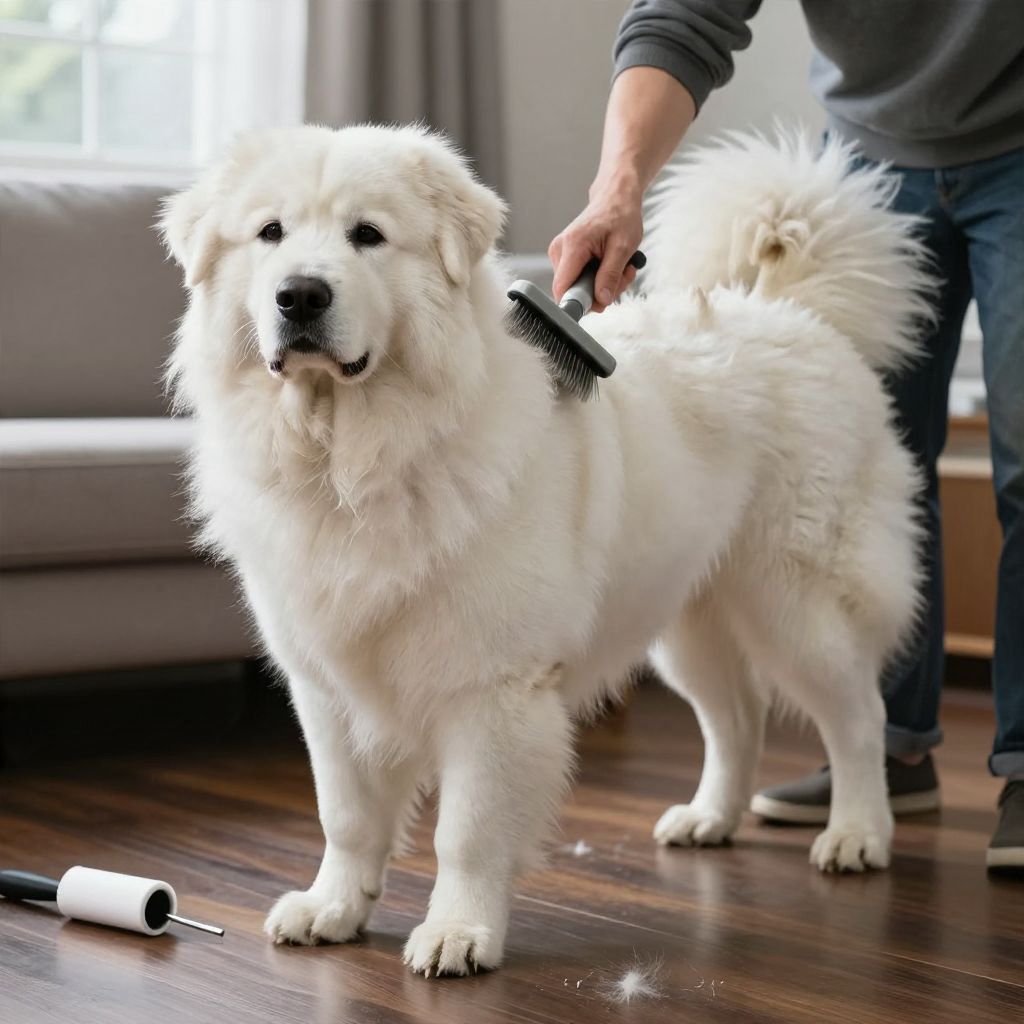
If you’re asking, “Do Great Pyrenees shed?” the short answer is yes—often a lot. Their thick double coat naturally sheds year-round, and many owners notice heavier “coat blows” during seasonal changes.
That doesn’t mean a Great Pyrenees is a bad fit for your home. With the right grooming routine, vacuuming plan, and coat care, you can manage the shedding and keep your dog comfortable.
Do Great Pyrenees Shed?
Yes. Great Pyrenees are heavy shedders because they have a dense double coat that helps protect them from weather. They shed continuously, and many dogs shed even more during spring and fall coat changes. Regular brushing helps reduce loose hair, mats, and the amount of fur around your home.
Why Great Pyrenees Shed So Much
Their coat is designed for insulation and protection, not low-maintenance grooming. The outer coat and undercoat work together to help regulate temperature, so loose hair is normal and expected.
Double-coat shedding
A double-coated dog sheds both the topcoat and the softer undercoat. The undercoat is usually the biggest source of “fluff” on your clothes, furniture, and floors.
Seasonal coat blow
Many Great Pyrenees shed more heavily when daylight and temperature change. This is often when you’ll see tufts of hair coming out during brushing.
Individual variation
Not every Great Pyrenees sheds the same amount at the same time. Age, health, hormones, grooming history, and whether your dog spends more time indoors or outdoors can all affect shedding patterns.
What Shedding Looks Like in Daily Life
Normal shedding usually means loose hair, fluffy tumbleweeds, and hair on bedding, furniture, and your clothes. You may also notice more hair coming out when you pet or brush your dog.
What should not be ignored is a sudden change in coat quality. Heavy shedding by itself is normal, but patchy hair loss, bald spots, redness, itching, odor, or skin irritation can point to a medical issue.
How to Manage Great Pyrenees Shedding
You cannot stop shedding completely, but you can make it much easier to live with. The best approach is consistent grooming, good coat care, and a home routine that keeps loose hair under control.
Brush regularly
Brushing is the most useful tool for managing a Great Pyrenees coat. It removes loose undercoat before it ends up on your floors and helps prevent tangles and mats.
- Brush several times per week at minimum.
- During heavy shedding periods, brush more often if your dog tolerates it.
- Work in sections so you reach the undercoat, not just the surface hair.
Use the right grooming tools
Different tools serve different purposes. A slicker brush, undercoat rake, or comb may help depending on your dog’s coat condition and tolerance. If you are unsure, ask a groomer or veterinarian for tool guidance.
Avoid overbrushing or aggressive pulling. That can irritate the skin and make grooming unpleasant, which may create resistance over time.
Bathe when needed, not constantly
Bathing can help loosen dead hair, but too-frequent bathing may dry the skin. Use a dog-safe shampoo and make sure the coat is fully dried, especially in thick areas where moisture can linger.
Check for mats and debris
Great Pyrenees can collect burrs, dirt, and tangles in feathering, behind the ears, under the legs, and around the tail. Small mats can become painful if they tighten against the skin.
Support skin and coat health
Good coat condition starts with overall health. A balanced diet, parasite prevention, and routine veterinary care all matter. If your dog’s coat suddenly looks dull, brittle, or greasy, ask your vet whether an underlying issue could be involved.
Common Mistakes to Avoid
Some well-meaning grooming habits can make shedding worse or create skin problems. A few simple adjustments can save you and your dog a lot of trouble.
- Shaving the coat: This is usually not recommended for a double-coated breed unless a veterinarian specifically advises it for a medical reason.
- Ignoring mats: Mats can trap moisture and irritate the skin.
- Bathing too often: Overbathing may dry out skin and increase flaking.
- Brushing only the top layer: Loose undercoat is what often causes the biggest mess.
- Assuming all shedding is normal: Sudden hair loss or itchy skin deserves attention.
When Shedding May Be a Health Problem
Normal shedding is expected, but excessive shedding or hair loss can be linked to allergies, parasites, skin infections, endocrine disease, stress, poor nutrition, or other medical concerns. You should not try to guess the cause if the coat change is dramatic.
Call your veterinarian if you notice:
- Bald patches or thinning in one area
- Red, inflamed, or scabby skin
- Strong odor from the skin or coat
- Persistent scratching, licking, or chewing
- Greasy coat, dandruff, or excessive flaking
- Behavior changes along with coat changes
Seek urgent veterinary care if your dog has:
- Sudden swelling, hives, or facial swelling
- Open wounds, bleeding skin, or severe self-trauma from scratching
- Rapidly spreading hair loss with lethargy or fever
- Signs of pain when touched
- Vomiting, collapse, or trouble breathing along with skin symptoms
How Age and Lifestyle Affect Shedding
Shedding can vary over a dog’s lifetime. Puppies, adults, and seniors may all have different coat patterns, and changes in environment can also matter.
Puppies
Young Great Pyrenees may go through coat transitions as they mature. Their adult coat can become much thicker than the puppy coat, so grooming habits should start early to help them accept brushing.
Adults
Adult dogs often have the most predictable seasonal shedding pattern. This is usually when a steady grooming routine makes the biggest difference.
Seniors
Older dogs may groom themselves less effectively or develop skin issues that affect coat quality. If shedding seems worse in an older dog, it is worth a veterinary checkup.
Indoor vs. outdoor living
Dogs that spend more time indoors may shed year-round with less obvious seasonal change. Outdoor exposure, climate, and temperature shifts can influence how much loose coat you see.
Tips for Keeping Your Home Cleaner
If you live with a Great Pyrenees, some hair around the house is part of the package. A few practical habits can make cleanup much easier.
- Brush your dog before hair spreads through the house.
- Use washable blankets or covers on favorite resting spots.
- Vacuum carpets, rugs, and furniture regularly.
- Keep a lint roller near the door or car.
- Wash bedding often to reduce trapped hair and dander.
It also helps to groom in an easy-to-clean area, such as outdoors or on a mat you can shake out afterward.
Is a Great Pyrenees a Good Choice if You Don’t Want Dog Hair?
If you want a very low-shedding dog, a Great Pyrenees is probably not the best match. Their coat is beautiful and functional, but it requires commitment from you.
That said, many owners are perfectly happy with the breed because they are prepared for grooming and cleanup. The key is choosing a dog whose coat care needs fit your lifestyle, time, and tolerance for hair.
When to Ask for Professional Help
If grooming feels overwhelming, a professional groomer can help with coat care, de-shedding, and mat prevention. If your dog resists brushing, a positive-reinforcement trainer can help you build a calmer grooming routine.
If shedding seems abnormal, schedule a veterinary visit instead of assuming it is just “a lot of fur.” Catching skin or health problems early can make treatment simpler and more effective.
In short, yes, Great Pyrenees shed heavily, but regular brushing, sensible grooming, and attention to skin health can make the shedding manageable. If you want more coat-care guidance, you may also find why your dog may be shedding so much helpful, along with breed-specific grooming comparisons like do Great Danes shed.