
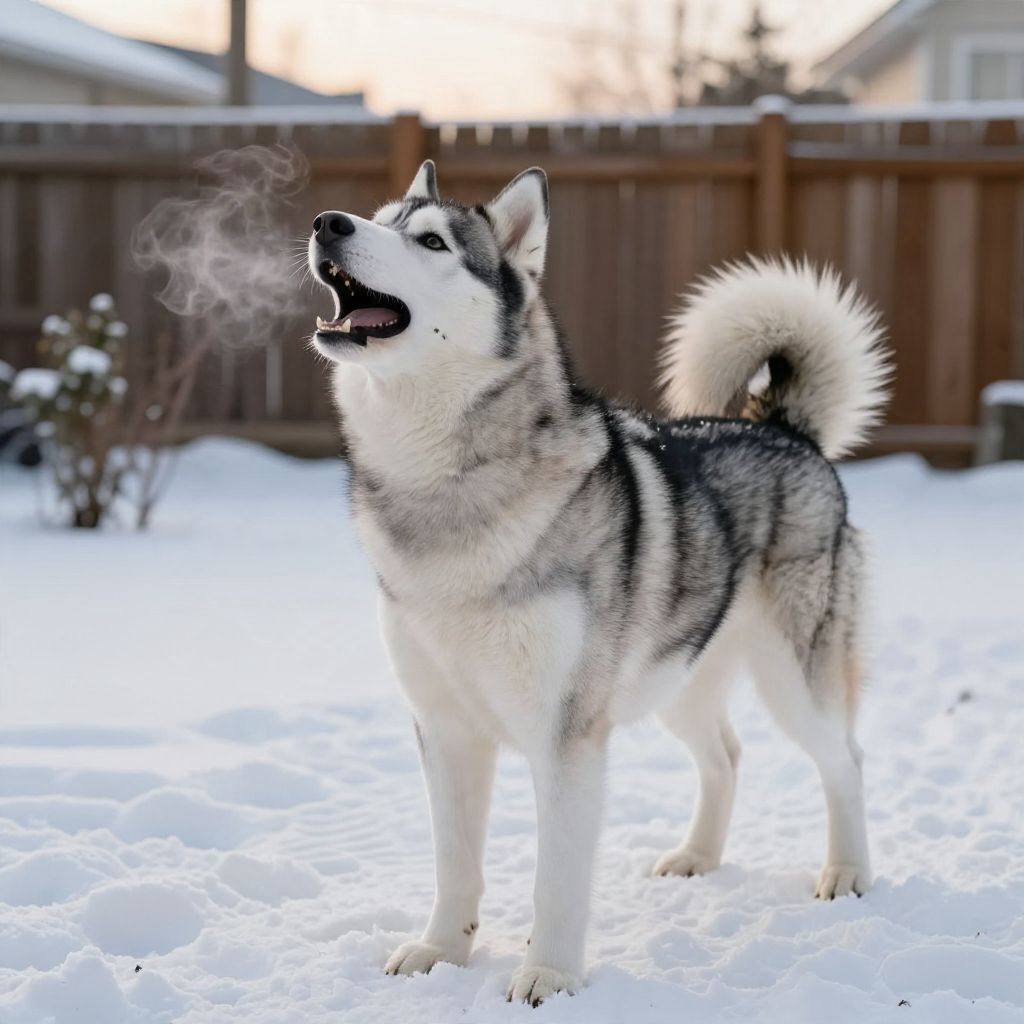
Why are Huskies so vocal? Many Huskies use howling, “talking,” whining, and other sounds to communicate excitement, boredom, frustration, or a need for attention. Some of this is normal breed tendency, but the amount and type of vocalizing can also reflect training, exercise, stress, or health.
If your Husky seems extra noisy, the goal is to figure out what the sound means and whether anything is driving it. Often, more exercise, mental enrichment, and consistent reward-based training help reduce unwanted noise without trying to silence a natural way of communicating.
Why are Huskies so vocal?
Huskies are often vocal because they are highly social, energetic dogs that tend to communicate with a wide range of sounds. Their vocalizing may be normal excitement, attention-seeking, frustration, anxiety, or a response to their environment. The amount varies by individual dog, age, training, and daily activity.
What kinds of sounds do Huskies make?
Not every Husky sounds the same. Some are quiet most of the day, while others “talk” constantly.
- Howling: Often a long-distance communication sound or a response to noises.
- Whining: Can mean excitement, stress, anticipation, or a request.
- “Talking” or grumbling: Usually expressive vocalizing that may happen during play or greeting.
- Barking: Less common in some Huskies than in many other breeds, but still normal in certain situations.
These sounds are not automatically a problem. They become a concern when they are excessive, sudden, or linked to distress.
Why do some Huskies vocalize more than others?
Breed tendencies matter, but individual differences matter too. A Husky’s vocal habits can be shaped by genetics, early socialization, daily routine, and what has been rewarded over time.
Common influences
- Energy level: Underexercised dogs often become noisier.
- Reinforcement history: If vocalizing gets attention, it may increase.
- Age: Puppies may whine more, while older dogs may vocalize because of discomfort or confusion.
- Environment: Noisy homes, visitors, wildlife, or other dogs can trigger responses.
- Temperament: Some dogs are naturally more expressive than others.
Is Husky vocalizing normal or a behavior problem?
Normal vocalizing is usually predictable, brief, and tied to a clear trigger such as greeting you, play, anticipation, or a sound outside. It becomes a behavior problem when it is frequent, hard to interrupt, or happens because the dog is bored, anxious, or not getting enough structure.
Ask yourself these questions:
- Does the noise happen at specific times, like meal prep or when you leave?
- Does it increase when your dog is under-stimulated?
- Does it stop when the trigger ends?
- Has it changed suddenly?
A sudden change in vocal behavior can be more important than the noise itself, especially if it comes with other symptoms.
What usually makes a Husky more vocal?
Many Husky owners notice the loudest periods happen when the dog is excited, frustrated, or seeking interaction. Common triggers include:
- Seeing you come home
- Waiting for food or a walk
- Being left alone
- Hearing sirens, music, or other dogs
- Not getting enough exercise or enrichment
- Feeling confined or unable to reach something they want
Some Huskies also become more vocal during adolescence, when energy and independence can increase. That phase often improves with consistent training and a predictable routine.
How can you reduce unwanted vocalizing?
The best approach is to teach your Husky what to do instead of simply trying to stop the noise. Reward calm behavior, manage triggers, and make sure your dog’s daily needs are being met.
Helpful steps
- Increase physical exercise. Many Huskies need more than a short walk to settle.
- Add mental enrichment. Puzzle feeders, scent games, and training sessions can help.
- Reward quiet moments. Calm behavior should get attention, treats, or access to what your dog wants.
- Avoid reinforcing whining. If you always respond to noise, your dog may learn that vocalizing works.
- Teach alternative behaviors. Ask for a sit, down, mat, or eye contact before giving attention.
- Use management. Reduce exposure to known triggers when possible.
Consistency matters more than intensity. Short, repeated practice is usually more effective than one long training session.
What training methods work best for a vocal Husky?
Reward-based training is the safest and most effective approach for most dogs. It helps your Husky learn that calm, quiet behavior pays off, while avoiding fear or conflict that can make vocalizing worse.
Training ideas to try
- Capture quiet: Mark and reward brief moments of calm before your dog starts vocalizing.
- Teach “settle”: Build a relaxed mat routine with gradual practice.
- Practice departures: If your dog vocalizes when alone, work on short absences and gradual alone-time training.
- Reinforce an incompatible behavior: A dog lying on a bed cannot be pacing and whining at the same time.
If your dog’s vocalizing is tied to separation distress, fear, or reactivity, a certified trainer or veterinary behaviorist can help you build a plan.
Could health issues cause a Husky to be more vocal?
Yes. Pain, discomfort, cognitive changes, hearing loss, urinary issues, digestive upset, and other medical problems can all change how much a dog vocalizes. This is especially important if the behavior starts suddenly or is paired with other symptoms.
Call your veterinarian if you notice
- Sudden increase in whining or howling
- Restlessness, pacing, or trouble settling
- Changes in appetite or thirst
- Stiffness, limping, or reluctance to jump
- Vomiting, diarrhea, or signs of abdominal discomfort
- Confusion, disorientation, or sleep-wake changes
Seek urgent veterinary care if your dog is crying out in pain, has trouble breathing, collapses, has a swollen abdomen, cannot urinate, or seems severely distressed.
How do age and life stage affect Husky vocalizing?
Age can change both the amount and the reason for vocalizing. Puppies often whine because they need attention, comfort, bathroom breaks, or help settling. Adolescents may be noisier because they are energetic and easily frustrated. Senior dogs may vocalize because of pain, anxiety, or cognitive decline.
Age-specific tips
- Puppies: Keep routines predictable and reward quiet, calm moments.
- Adults: Make sure exercise and enrichment match the dog’s energy level.
- Seniors: Watch for medical causes and make the home easier to navigate.
If an older Husky becomes noticeably more vocal, don’t assume it is “just aging.” A veterinary exam is a good idea.
What mistakes make vocalizing worse?
Some common responses can accidentally increase the behavior. The biggest mistake is giving attention every time the dog makes noise, even if you are trying to calm them down.
- Yelling or scolding
- Giving treats to stop whining in the moment
- Ignoring exercise and enrichment needs
- Using punishment-based tools or intimidation
- Expecting silence without teaching an alternative behavior
These approaches may suppress the sound briefly, but they do not address the reason behind it and can damage trust.
When should you get professional help?
Reach out for help if the vocalizing is interfering with sleep, work, neighbors, or your dog’s quality of life. A veterinarian can rule out medical causes, and a qualified trainer or veterinary behaviorist can help with behavior modification.
Professional support is especially useful if your Husky:
- Vocalizes when left alone
- Seems anxious or panicked
- Becomes reactive to sounds or visitors
- Has a sudden personality or behavior change
- Cannot settle even with exercise and routine
How can you live well with a vocal Husky?
It helps to accept that some Huskies are naturally expressive. The goal is not to eliminate every sound, but to keep vocalizing manageable and make sure your dog is healthy, exercised, and understood.
Build a daily routine that includes movement, training, rest, and enrichment. When your dog is calm, reward it. When the noise changes suddenly or seems tied to pain or distress, check with your veterinarian.
If you want more Husky-specific care tips, you may also find it helpful to read about why Huskies shed so much and other practical breed care topics.
In short, Huskies are often vocal because communication is part of how many of them interact with people and the world. With enough exercise, enrichment, and positive training, you can usually reduce unwanted noise while respecting your dog’s natural personality.