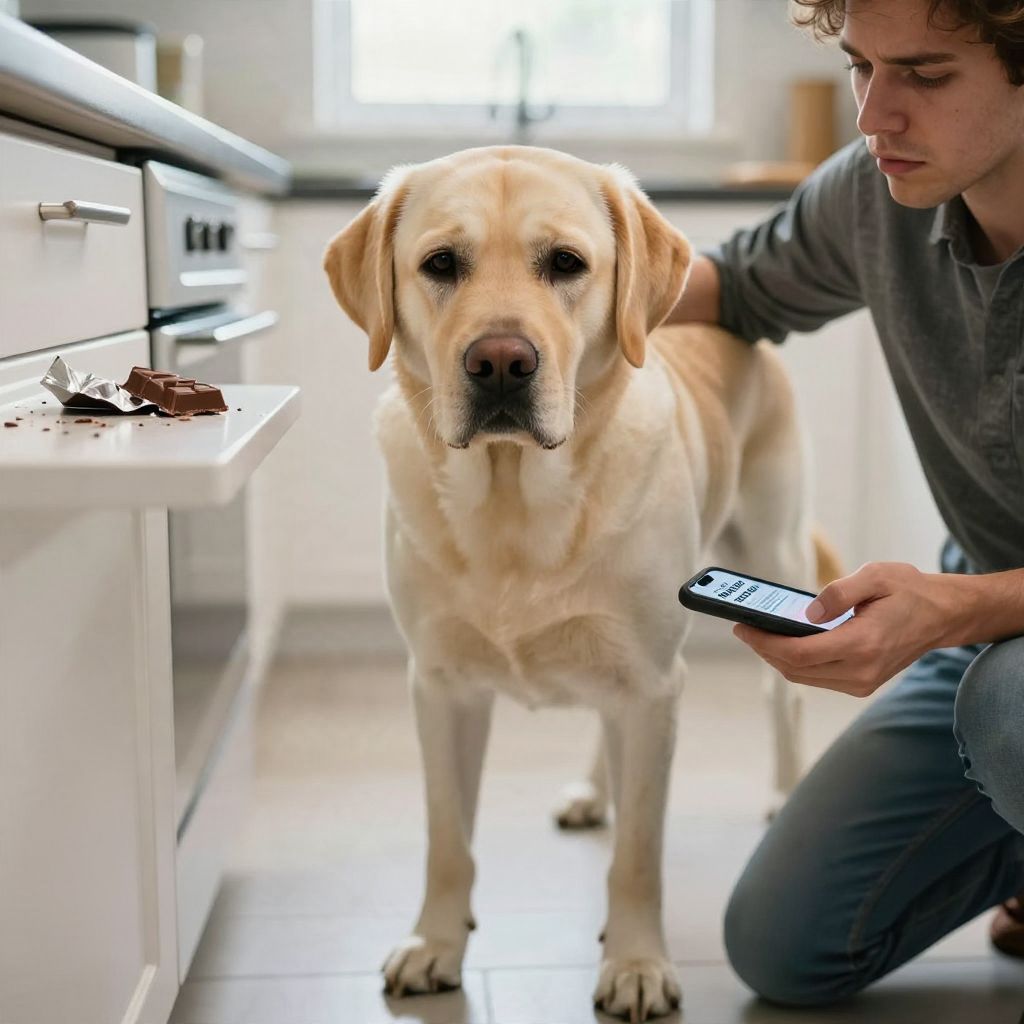
If your dog eats chocolate, treat it as a possible poisoning and act quickly. Chocolate can cause vomiting, restlessness, rapid heart rate, tremors, and, in severe cases, seizures or collapse.
What you should do next depends on the type and amount of chocolate, your dog’s size, and any symptoms already showing. When in doubt, call your veterinarian or a pet poison helpline right away.
What to do if dog eats chocolate?
Remove any remaining chocolate, note what kind it was and how much may have been eaten, and call your veterinarian or an animal poison expert immediately. Do not induce vomiting or give home remedies unless a vet specifically tells you to. If your dog is shaky, weak, vomiting repeatedly, having seizures, or struggling to breathe, go to an emergency clinic now.
Why chocolate is dangerous for dogs
Chocolate contains substances called theobromine and caffeine, which dogs process much more slowly than people do. That means even a small amount can cause problems, especially with darker chocolate or cocoa products.
The risk is influenced by several factors:
- Type of chocolate: cocoa powder, baking chocolate, and dark chocolate are generally more concerning than milk chocolate.
- Amount eaten: more chocolate means more toxin exposure.
- Your dog’s size: smaller dogs can be affected by less chocolate.
- Age and health: puppies, seniors, and dogs with heart disease or other medical issues may be more vulnerable.
Because these variables matter, there is no safe “one-size-fits-all” answer for every dog.
First steps to take right away
- Take the chocolate away so your dog cannot eat more.
- Check the wrapper or packaging to identify the type of chocolate and estimate how much is missing.
- Call your veterinarian or a pet poison resource for guidance.
- Watch for symptoms while you wait for instructions.
If possible, have this information ready when you call:
- Your dog’s weight
- The chocolate type, such as milk, dark, baking, or cocoa powder
- How much may have been eaten
- When it happened
- Any symptoms you have noticed
When chocolate exposure is an emergency
Some dogs need urgent veterinary care immediately, without waiting for symptoms to worsen. Seek emergency help if your dog has any of the following:
- Seizures or collapse
- Tremors, severe agitation, or inability to settle
- Repeated vomiting
- Fast or irregular heartbeat
- Difficulty breathing
- Extreme weakness, wobbliness, or confusion
Even if your dog seems normal at first, symptoms can develop later. Chocolate-related signs may start several hours after ingestion and can last longer depending on the amount and type eaten.
What not to do
Well-meaning home treatment can make things worse. Avoid these common mistakes:
- Do not induce vomiting unless a veterinarian tells you to do so.
- Do not give salt, oil, milk, or other home remedies to “counteract” the chocolate.
- Do not wait for symptoms if you know your dog ate a meaningful amount.
- Do not give human medications unless specifically prescribed for your dog by a veterinarian.
The safest next step is professional advice based on your dog’s exact situation.
What a veterinarian may do
If you contact a vet quickly, they may recommend monitoring, bringing your dog in for an exam, or taking steps to reduce absorption if the exposure was recent. The right plan depends on timing, the chocolate type, and your dog’s condition.
At the clinic, treatment may include supportive care for vomiting, heart rate changes, tremors, or dehydration. In more serious cases, your dog may need observation and ongoing monitoring.
Signs to watch for after your dog eats chocolate
Some dogs show mild signs first, while others become ill more quickly. Watch for:
- Vomiting or diarrhea
- Restlessness or pacing
- Thirst or frequent urination
- Rapid breathing or panting
- Elevated heart rate
- Muscle tremors
- Hyperactivity followed by weakness
If your dog develops any of these signs, call your veterinarian promptly. If the signs are severe, go to an emergency hospital.
Why size, age, and health matter
Two dogs can eat the same chocolate and have very different outcomes. A small dog may react to an amount that would not visibly affect a larger dog, and a puppy may be more sensitive because of its size and developing body.
Older dogs or dogs with heart conditions, seizures, or other chronic illnesses may also be at higher risk of complications. That is why it is important not to guess based on breed alone. Individual body weight, health status, and the chocolate type all matter more than stereotypes.
How to prevent chocolate accidents
Prevention is the best protection, especially around holidays, parties, and family gatherings when chocolate is often left within reach.
- Store chocolate in closed cabinets or high shelves.
- Keep candy bowls, desserts, and baking supplies out of reach.
- Remind guests and children not to share chocolate with your dog.
- Use secure trash cans with tight-fitting lids.
- Supervise your dog around backpacks, purses, and picnic bags.
For dogs that are especially food-motivated, management matters even more. A dog that scavenges on walks or countersurfs may need extra supervision and training to reduce future risks.
Training and management that help
You cannot train away the danger of chocolate, but you can reduce the chance of access. Reward-based training is the safest approach for teaching useful habits.
Helpful skills
- Leave it to move away from dropped food
- Drop it to release unsafe items
- Place to settle on a mat during meals or gatherings
- Crate or pen comfort when you need to keep your dog safely separated from food
These skills work best when practiced before an emergency, not after one. Keep training calm and reward-based rather than using punishment or intimidation.
Special notes for puppies and senior dogs
Puppies often explore with their mouths and may grab food quickly, so they need close supervision around chocolate. Their smaller size can also make accidental ingestion more concerning.
Senior dogs may have slower metabolism, dental issues, or ongoing health problems that make them less resilient. If your older dog eats chocolate, it is wise to call a veterinarian even if the amount seems small.
Common questions about chocolate and dogs
Is white chocolate safe?
White chocolate contains much less theobromine than dark or baking chocolate, but it is still not a healthy snack for dogs. It can cause stomach upset and may be risky in larger amounts because of its fat and sugar content. If you want more detail, see is white chocolate bad for dogs.
What if my dog seems fine?
Do not assume your dog is safe just because there are no symptoms yet. Some signs can be delayed, and the amount eaten may still matter. Call your veterinarian for advice based on the exact chocolate type and your dog’s weight.
Should I wait and see?
Only if a veterinarian tells you to monitor at home after reviewing the details. If you are unsure, it is safer to call right away than to wait for vomiting, tremors, or other signs to appear.
When vomiting happens after chocolate ingestion
Vomiting can be one of the first signs of chocolate toxicity, but it can also happen for many other reasons. If your dog vomits after eating chocolate, contact your veterinarian, especially if the vomiting repeats, your dog seems weak, or other symptoms appear. For broader guidance on this sign, you may also find why dogs throw up helpful.
Bottom line
If your dog eats chocolate, act quickly: remove the chocolate, identify what was eaten, and call your veterinarian or a pet poison expert right away. Do not use home remedies or wait for severe symptoms. Fast, informed action gives your dog the best chance of staying safe.