
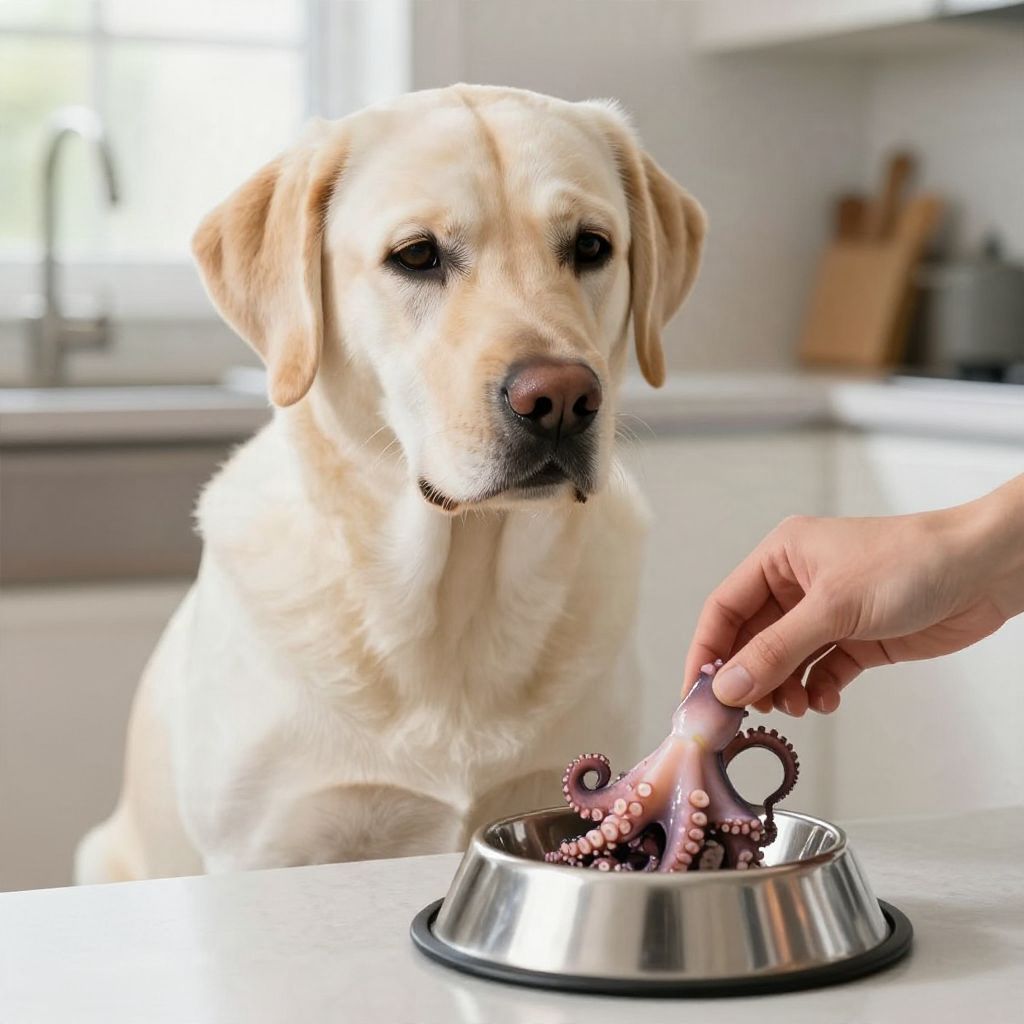
Can dogs eat octopus? In small amounts, plain, fully cooked octopus is not inherently toxic to dogs, but it is not an ideal everyday treat. The main concerns are choking, digestive upset, seasoning, and contamination from raw seafood.
If you want to share, keep it simple: no salt, garlic, onion, butter, or sauces, and only offer a tiny piece that is soft and easy to chew. When in doubt, ask your veterinarian first, especially if your dog has a sensitive stomach or a medical condition.
Can Dogs Eat Octopus?
Yes, dogs can eat a small amount of plain, fully cooked octopus occasionally. It should be unseasoned, cut into very small pieces, and served as a treat rather than a meal. Raw octopus, heavily seasoned octopus, and large or chewy pieces can create health and safety risks.
Is Octopus Safe for Dogs?
Octopus is a seafood protein, and many dogs can digest it in moderation if it is prepared safely. The biggest issue is not the octopus itself, but how it is served and how your individual dog tolerates it.
When Octopus May Be Okay
- It is fully cooked.
- It is served plain, with no seasoning or sauces.
- The portion is very small.
- Your dog has no history of seafood allergy or food sensitivity.
When to Avoid It
- If it is raw or undercooked.
- If it contains garlic, onion, chili, butter, oil, or salt-heavy seasoning.
- If your dog tends to gulp food or choke easily.
- If your dog has pancreatitis, a sensitive stomach, or a veterinarian has recommended a special diet.
Why Raw Octopus Is a Bad Idea
Raw seafood can carry harmful bacteria or parasites, and dogs are not protected from foodborne illness just because they can eat meat. Raw octopus can also be slippery and difficult to chew, which raises the risk of choking or stomach upset.
If you are considering any raw seafood for your dog, it is safer to skip it and choose a vet-approved treat instead.
What Risks Come With Feeding Octopus to Dogs?
Even when cooked, octopus can cause problems if it is not prepared carefully or if your dog eats too much. The most common risks are digestive upset, choking, and reactions to added ingredients.
1. Choking or Blockage
Octopus can be chewy and rubbery, especially if it is not cooked until tender. Large pieces may be hard for dogs to break down, particularly for small dogs, puppies, seniors, and dogs that swallow food quickly.
2. Upset Stomach
Any new food can cause vomiting, diarrhea, gas, or abdominal discomfort. Rich preparation methods, such as frying or adding oil and butter, can make stomach upset more likely.
3. Seasoning Toxicity
Many human seafood dishes include ingredients that are unsafe for dogs. Garlic and onion are especially concerning, and salty sauces can be hard on your dog’s system.
4. Allergic or Sensitivity Reactions
Some dogs do not tolerate seafood well. A food sensitivity may show up as itching, ear irritation, vomiting, loose stool, or repeated paw licking after eating.
How to Serve Octopus to a Dog Safely
If your veterinarian says your dog can have octopus, keep the serving simple and minimal. Think of it as an occasional novelty treat, not a regular part of the diet.
- Cook the octopus thoroughly until tender.
- Do not add salt, spices, garlic, onion, butter, or sauces.
- Let it cool completely.
- Cut it into tiny, bite-sized pieces.
- Offer only a small amount the first time.
- Watch your dog afterward for stomach upset or unusual behavior.
How Much Is Too Much?
There is no universal serving size that fits every dog, and it is best not to invent one based on body weight alone. A toy breed, a puppy, and a large adult dog may all react differently. Start with just one or two tiny pieces, then stop if your dog shows any digestive issues.
Which Dogs Should Be Extra Careful?
Some dogs are more likely than others to have trouble with octopus, even when it is cooked properly. Individual health matters more than breed labels, but certain dogs need extra caution.
Puppies
Puppies have smaller airways, developing digestive systems, and less experience chewing safely. They are more likely to gulp food, so octopus is usually not a good first treat.
Senior Dogs
Older dogs may have dental problems, slower digestion, or chronic health conditions. Chewy seafood can be harder for them to manage, especially if they already have trouble eating.
Dogs With Medical Conditions
If your dog has a history of pancreatitis, food allergy, inflammatory bowel disease, kidney disease, or a prescribed low-fat or limited-ingredient diet, ask your veterinarian before offering octopus.
Dogs That Eat Too Fast
Dogs that inhale food rather than chew it are at greater risk of choking. For these dogs, even a small piece of chewy seafood may be a poor choice.
Signs Your Dog Did Not Tolerate Octopus Well
Watch your dog closely after trying any new food. Mild digestive upset may pass on its own, but some symptoms need veterinary attention.
- Vomiting
- Diarrhea
- Excessive drooling
- Gagging or repeated swallowing
- Abdominal pain or bloating
- Itching, hives, or facial swelling
- Refusing food or acting unusually tired
Get Urgent Veterinary Help If You See:
- Choking, trouble breathing, or blue gums
- A swollen face or sudden collapse
- Repeated vomiting or severe diarrhea
- A swollen, painful abdomen
- Signs of severe pain, weakness, or dehydration
- Any concern that your dog ate raw seafood or a toxic seasoning
Common Mistakes to Avoid
Most problems happen because the octopus is prepared like human food instead of dog-safe food. A few simple mistakes can turn a harmless treat into a risky one.
- Giving fried, breaded, or heavily seasoned octopus
- Offering raw or undercooked seafood
- Serving large, chewy chunks
- Using octopus as a meal replacement
- Assuming a dog can tolerate it just because another dog did
Is Octopus Good for Dogs Nutritionally?
Octopus does provide animal protein, but that does not make it a necessary or superior dog food. Dogs need a complete and balanced diet formulated for their life stage, and treats should stay under a small portion of daily intake.
If you want to use seafood as an occasional treat, many dogs do better with simple, vet-approved options that are easier to portion and less likely to be chewy or salty.
What If Your Dog Already Ate Octopus?
If your dog ate a small amount of plain, cooked octopus, monitor them for stomach upset and make sure they have fresh water. If the octopus was seasoned, raw, or served in a dish with unsafe ingredients, call your veterinarian or a pet poison helpline for guidance.
Do not wait if your dog is choking, struggling to breathe, or showing severe vomiting, diarrhea, or weakness.
Safer Treat Alternatives
If you want a seafood-style treat without the same level of risk, ask your veterinarian about safer options that fit your dog’s needs. The best choice depends on your dog’s age, size, chewing style, and health history.
- Small pieces of plain cooked lean protein
- Commercial dog treats made for sensitive stomachs
- Vet-approved training treats with simple ingredients
Bottom Line
Can dogs eat octopus? Yes, but only in a small amount, fully cooked, and completely plain. Because of choking risk, seasoning concerns, and possible stomach upset, it is best treated as an occasional novelty, not a regular snack. If your dog has health issues or reacts badly, skip it and ask your vet.
If you are comparing seafood treats for dogs, you may also find these helpful: can dogs eat oysters and can dogs eat sushi.